Choosing tubing sounds simple until pressure ratings, tolerances, and delivery windows collide. Specs get strict, costs rise, and delays hurt. The fix is understanding how zavariti i neprekinut tubes are made—so you can match method to job and buy with confidence.
A welded tube is made by cold forming steel strip into a cylindrical shape and then welding the seam to create a continuous tube. A neprekidna cijev is pierced from a hot billet with no seam. Use welded for availability, shapes, and cost; choose seamless for the smallest diameter, highest pressure, or the tightest mechanical properties and tolerance needs.
A zavarena cijev starts as steel strip (coil). Forming rolls curl the strip into a hollow tube; the edges meet and a zavariti joins them. The line then sizes OD, controls debljina zida, and, if required, removes the inner bead near the zavariti. After straightening and test, cut lengths ship.
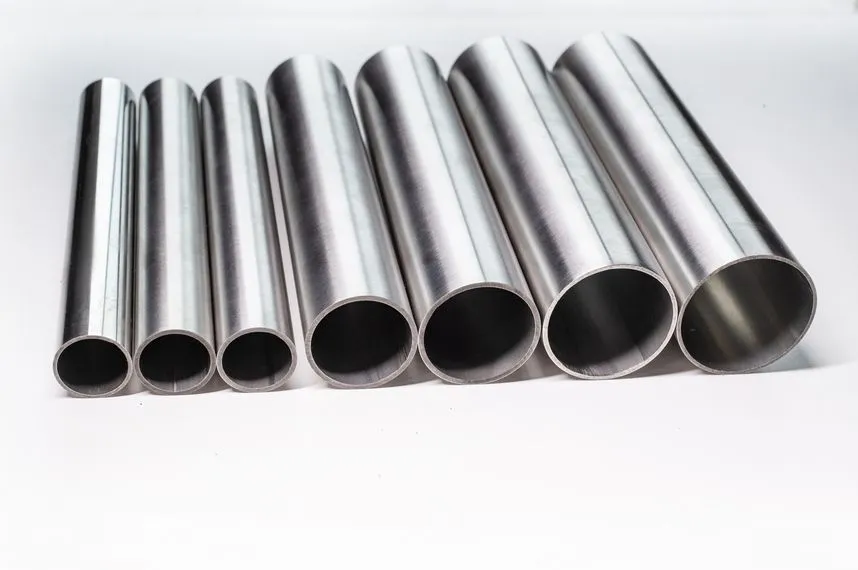
Because production is continuous, welded lines offer broad size range and fast turnaround. If you’re browsing common round sizes, this stainless steel tube (round) overview is a handy reference for diameters and uses (round sizes guide).
Key points
A neprekidna cijev begins as a round billet. The billets are heated, then pierced to form a seamless hollow (mother tube) which is elongated over a mandrel. Further reductions come by cold drawing, pilgering, ili cold rolling until final diameter i debljina zida are reached. There is no seam to inspect along the length.
Izaberi neprekinut when you need very small diameter tubing, the highest pressure capability, or ultra-tight concentricity. In these cases the resistance of seamless to line-type flaws is advantageous. For a broad “catalog” view of families and sizes, see this stainless sanitary tubing collection (sanitary & category index).
Think in terms of risk, geometry, and timing.
At-a-glance comparison
| Faktor | Welded tube | Seamless tube |
|---|---|---|
| Make method | Strip formed + zavariti | Billet pierced; no seam |
| Smallest practical diameter | Larger | Smaller |
| Shapes beyond round | Square, rectangle, oval (often longitudinally welded) | Mostly round |
| Pressure & fatigue | Good | Najbolje |
| Cost & availability | Lower & faster | Higher & longer |
If your project needs shaped sections for frames or guards, browse kvadratna cijev od nehrđajućeg čelika specs for typical loads and finishes (square profiles) and stainless steel rectangular tubing for doors, conveyors, and enclosures (rectangular profiles).
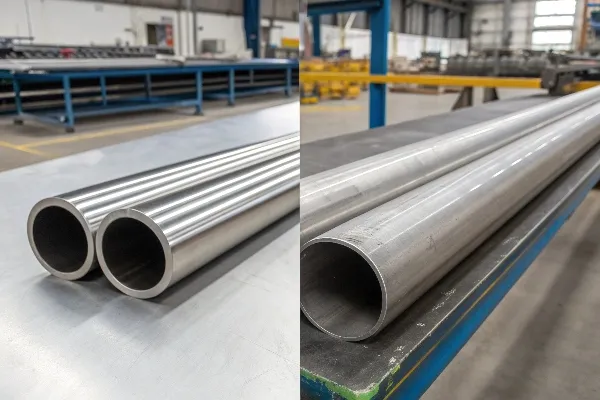
On welded lines, the welding process is typically electric resistance welding (ERW). Edges heat by electric resistance; pressure closes the weld. The narrow heat-affected zone and high speed suit production.
For thin gauges and premium finish, laser welding produces a very precise zavariti.
For fittings, flanges, or repair work, arc welding (GTAW/SMAW) is common.
Why process choice matters
Regardless of technique, quality control verifies the weld seam via eddy current or ultrasonic test. For flow lines, removing the inner bead around the zavariti improves cleanliness.
Welded tubing is manufactured roughly as follows: uncoil → edge trim → cold forming to round → zavariti → size → scarf bead if specified → normalize/anneal → straighten → NDT → cut. This production process is efficient and supports long “continuous tube” runs.
Besprekorno tube manufacturing method: heat billet → pierce → elongate over mandrel (sometimes extrude) → reduce by cold drawing ili pilgering → normalize if needed → straighten → NDT → cut. Some mills add rolling and forging methods or combined cold rolling and forging methods to dial in mechanical properties.
Terminology you might hear on mills:
Engineers often ask what’s the difference from a material standpoint. In welded, the longitudinal weld running the tube length is a fusion line. In properly run lines, zavariti metal strength equals parent metal, and codes accept it after tests. In neprekinut, there’s no fusion line, so one inspection target (the seam) simply doesn’t exist.
Two important notes
Fit, fatigue, and corrosion all track back to diameter, debljina zida, i surface finish.
If you need round stock in common grades, the okrugla cijev od nehrđajućeg čelika pages are a helpful reference for 304 series details (304 round tube reference). For design-forward work, many shops keep oval stainless tube on hand for handrails and trims (oval & elliptical overview).
U nerđajući čelik, otpornost na koroziju depends most on grade selection (e.g., 304 vs 316), finish, and the medium (chlorides, acids, temperature). After zavariti, proper pickling/passivation restores the protective oxide layer, so a good zavariti shows comparable korozija performance to the parent metal in most services.
Design helps too: avoid crevices around the zavariti root and ensure drains/vents remove stagnant fluids. Where hygiene is strict, ID bead removal and polishing improve cleanability.
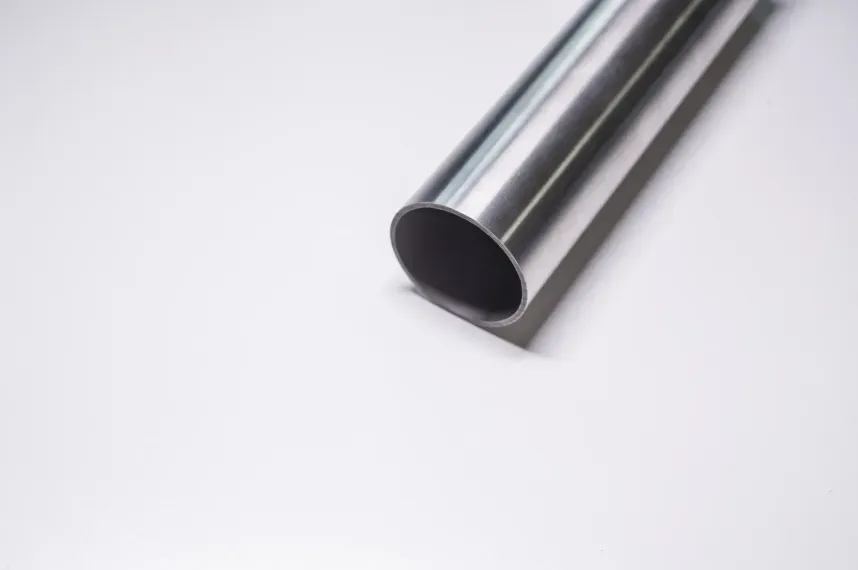
Because strip-to-zavariti lines run fast, welded products typically ship quicker and at lower cost. Besprekorno depends on billet schedules and multiple reduction steps, so pricing and lead can be higher. This is why many buyers default to welded for frames, guards, and architecture, then specify neprekinut for high-pressure fluids or rotating shafts.
Illustrative bars (availability vs. pressure)
Availability  | Welded   ███████████████
Availability  | Seamless ███████
Pressure Cap  | Welded   ███████
Pressure Cap  | Seamless ███████████████
Most industrial users select nerđajući čelik for its balance of strength and corrosion control. But carbon steel ili mild steel can be economical for dry, indoor structures. In catalogs and prints, you’ll also see steel pipes i welded pipes called out by schedule; čelična cijev i steel tubing use actual OD and debljina zida.
If you’re weighing shapes for frames or conveyors, cross-check loads and finish on stainless steel rectangular tubing (rectangular profiles) and on kvadratna cijev od nehrđajućeg čelika (square profiles) to find the best section modulus for weight.
Common references include:
Non-destructive test (eddy current/UT) scans the weld zone or full body. Hydro, flattening, and flaring checks address mechanical properties. Positive Material Identification (PMI) confirms grade. These routines explain why welded stainless i bespivena nehrđajuća both appear in code books as acceptable choices when they meet the manufacturing process and test requirements.
Further reading:
For quick browsing by shape or grade, many buyers keep the stainless steel tube (round) guide open (round sizes guide) while also checking oval stainless tube options for handrail or trim transitions (oval & elliptical overview).
Is welded tube as strong as seamless?
For many services, yes—when the zavariti is well controlled and tested. For high-cycle fatigue or very high pressure, neprekinut is commonly preferred.
Can the weld bead be removed inside the tube?
Yes. Many lines scarf the inner bead around the zavariti to improve flow and cleaning.
When should I pick square or rectangular instead of round?
When flat faces help mounting or enclosure design. See kvadratna cijev od nehrđajućeg čelika (square profiles) and stainless steel rectangular tubing (rectangular profiles) for typical sections.
What standards apply to stainless tubing?
ASTM A269/A249 for tubing; ASTM A312 for pipe. EN/ISO equivalents exist. Most buyers specify OD, debljina zida, grade, finish, and test level.
Can welded tubing also be drawn?
Yes—welded tubing can also be cold drawing reduced and annealed, often improving tolerance and making it behave “like seamless tubing.”
Do I need ERW, laser, or arc?
For production rounds, ERW (electric resistance welding) is common. Laser welding is great for premium finish; arc welding handles attachments and odd jobs.
Note: This article draws on shop-floor practices and audits at a long-running stainless tubing producer in China, alongside published standards and metallurgy references. It is intended as neutral, practical guidance.
Welded vs Seamless Stainless-Steel Tubes at a Glance
Quick visual guide comparing zavareno i neprekinut tubing for availability, pressure rating, and typical shapes.
Key Differences
| Faktor | Zavareno | Besprekorno |
|---|---|---|
| Manufacturing | Strip + weld seam | Billet pierced |
| Smallest Ø | ≈ 9 mm | < 4 mm |
| Shapes | Round, square, rectangle, oval | Mostly round |
| Pressure Cap (Max) | 400 bar | 690 bar |
| Average Lead-Time | 2–3 weeks | 5–6 weeks |
šta je šta