Choosing the wrong pipe can lead to early corrosion, costly downtime, and unexpected replacement. For bulk buyers, contractors, and OEM manufacturers, that risk grows fast. The right stainless steel pipe helps solve this with stronger durability, cleaner performance, and a longer working life.
Stainless steel pipes typically last 50 to 100 years depending on grade, installation quality, water chemistry, temperature, and maintenance. In clean indoor or well-managed water systems, stainless steel 304 can offer a long service life, while 316 or higher grades are better for chloride, marine, acidic, or more corrosive environments.
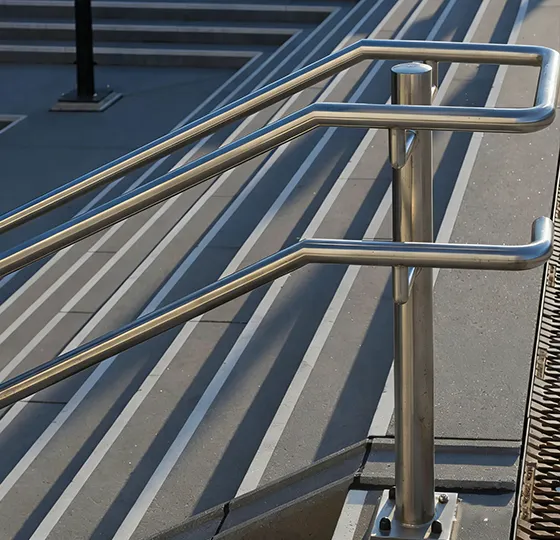
How long does stainless steel piping last?
What affects the lifespan of stainless steel pipe?
Why does stainless steel resist corrosion so well?
Is stainless steel 304 pipe enough for long life?
Stainless steel vs carbon steel, cast iron, PVC, and galvanized steel
Does seamless stainless steel pipe last longer?
How do fittings affect pipe durability and leak risk?
Can stainless steel pipe withstand high temperature and industrial piping use?
How can buyers extend the lifespan of stainless steel piping?
Why should B2B buyers consider using stainless steel from a reliable China supplier?
In many normal indoor and industrial applications, stainless steel piping can offer a lifespan of 50 to 100 years. This is why many engineers see it as a long-lasting and cost-effective material, especially when downtime, replacement labor, and leakage risk matter. The exact lifespan is not one fixed number. It changes with grade, installation, fluid type, pressure, temperature, and cleaning practice.
As a professional stainless steel manufacturer and exporter based in China, we usually tell buyers one simple truth: a good pipe is not just about the purchase price. It is about performance and longevity. A lower-cost material may look attractive at first, but if it is more susceptible to corrosion, the total project cost can rise quickly.
The life expectancy of stainless steel is mainly supported by its passive protective surface. Stainless steels gain their “stainless” property when chromium content is above 10.5%, forming a protective chromium oxide passive film that gives the material its superior corrosion resistance.
The lifespan of stainless steel depends on several practical conditions. The most important are environmental conditions, fluid chemistry, temperature, pressure, installation quality, and cleaning frequency. A pipe used for clean water indoors may last much longer than a pipe exposed to seawater, chemicals, or trapped deposits.
A simple way to judge expectancy of stainless steel pipes is to ask these questions:
| Faktor | Zašto je važno |
|---|---|
| Grade | 304, 316, duplex, and other grades have different otpornost na koroziju |
| Fluid | Chloride, acidic liquids, and chemicals can increase korozija risk |
| Temperature | High temperature may affect stress, scaling, and chemical reaction speed |
| Surface finish | Smooth surfaces reduce buildup and wear or corrosion |
| Welding and fitting quality | Poor welding or a weak prikladno may cause a leak |
| Inspekcija | Regular inspection helps catch early damage |
For buyers, the key is not only asking “how long do pipes last?” A better question is: “Which stainless steel pipe grade and structure fit my project conditions?” That is where supplier experience becomes important.
The main reason is chromium. When stainless steel meets oxygen, a thin protective oxide film forms naturally. This chromium oxide layer protects the surface of stainless steel and slows rust and corrosion. The British Stainless Steel Association explains that chromium creates a passive layer on the surface, helping prevent further surface corrosion.
This layer on the surface is very thin, but it is powerful. If scratched, it can often reform when oxygen is present. That is why using stainless steel is common in food and beverage, chemical processing, construction, and many residential and industrial projects.
Still, stainless steel is not magic. Chloride, poor drainage, low oxygen areas, and trapped dirt can damage the passive layer. Nickel Institute notes that chloride can damage the chromium-rich oxide layer and lead to localized pitting corrosion or crevice corrosion.

Stainless steel 304 is one of the most widely used grades because it offers good mechanical properties, clean appearance, and reliable corrosion resistance for many normal environments. For indoor water lines, architectural use, general equipment, and many light industrial uses, 304 can be a smart choice.
However, 304 is not always the best option. If your project involves high chloride, seawater, strong cleaning chemicals, or more corrosive substances, 316 or other higher-alloy grades may be better. Nickel can improve formability, weldability, ductility, and corrosion resistance in certain stainless applications.
For bulk buyers and fabricators, this matters because the typical lifespan of stainless steel depends on the match between grade and environment. A good supplier should not simply quote the cheapest grade. We should help you choose the right grade, wall thickness, surface finish, and fitting type.
Compared with carbon steel, cast iron, pvc, and galvanized steel, stainless steel usually offers stronger durability and resistance in demanding environments. Carbon steel can be strong, but it often needs coating or painting to reduce corrosion. Cast iron pipes are heavy and can suffer from internal buildup or aging in some systems. Standard pvc is light and low cost, but it may not suit high pressure, high heat, or some industrial fluids.
Here is a simple B2B comparison:
| Materijal | Main Strength | Main Concern |
|---|---|---|
| Stainless steel pipe | Strong resistance to corrosion, clean, durable | Higher initial cost |
| Carbon steel | Strong and common | Needs protection against korozija |
| Cast iron | Rigid and traditional | Heavy; older cast iron pipes may age badly |
| PVC | Light and easy to install | Limited heat and industrial chemical range |
| Galvanized steel | Zinc-coated protection | Coating can wear over time |
For contractors and wholesalers, stainless may cost more at purchase, but it can reduce replacement frequency, maintenance requirements, and project risk. This is why many buyers see it as cost-effective over the full service period.
A seamless stainless steel pipe has no welded seam along the body. This can help in high-pressure or critical use because the structure is more uniform. Many buyers choose seamless pipe for chemical lines, pressure systems, boilers, heat exchangers, and precision equipment.
That does not mean welded pipe is bad. Welded stainless pipe can also perform well when produced correctly. The real question is application. Seamless pipe is often preferred where pressure, temperature, or safety margins are higher. Welded pipe may be suitable for lower-pressure structural or fluid transfer use.
For industrial distributors, stocking both welded and seamless options can serve more customers. For OEM/ODM buyers, seamless stainless pipe is often selected when stable tolerance, pressure performance, and clean internal flow are important.
A strong pipe can still fail if the fitting is poor. Many leaks do not start in the straight pipe body. They start near joints, bends, welds, threads, flanges, or a mismatched fitting. That is why fitting selection is not a small detail.
A good stainless fitting should match the grade, size, pressure rating, and end connection of the pipe. For example, using a lower-grade fitting in a chloride environment can create a weak point. Poor welding can also damage the passive layer and increase local corrosion risk.
For project buyers, we recommend checking:
Good fitting control helps prevent a leak, reduces repair cost, and improves overall longevity.
Yes, stainless steel can withstand many demanding conditions, including high temperature, pressure, moisture, and cleaning cycles. This is why it is common in industrial piping, heat systems, chemical transfer, food processing, and equipment manufacturing.
The properties of stainless steel make it useful across many fields. It has good strength, good toughness, clean surface quality, and strong versatility. In the food and beverage industry, stainless steel is valued because it is easy to clean and does not easily contaminate the product.
For industrial buyers, the correct grade matters again. Temperature, pressure, fluid type, and outside environment all affect final service life. A stainless line handling hot clean water is different from one handling hot acidic liquid or chloride-rich process water.
To extend the lifespan of stainless steel piping, buyers should start before installation. Choose the right grade, right wall thickness, right fitting, and right surface finish. Avoid over-focusing on low price only. A slightly better grade may save years of trouble.
Maintenance is also simple but important. Stainless steel has minimal maintenance requirements, but it still needs care. Remove deposits, avoid long-term contact with chloride-rich liquids, check welds, and inspect high-stress areas. A planned inspection schedule can catch early wear and tear before it becomes a leak.
Practical steps include:
These actions help protect exceptional durability and keep the piping system stable for decades.
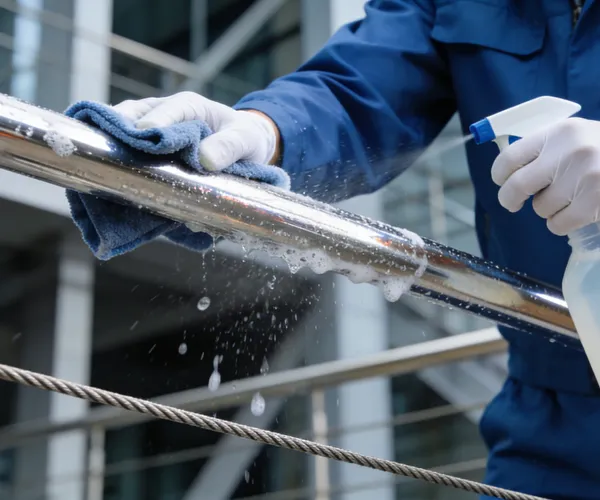
Kako čistiti rukohvate od nehrđajućeg čelika?
If you are an industrial distributor, steel wholesaler, contractor, fabricator, importer, or OEM manufacturer, your supplier choice affects every shipment. A reliable China-based stainless steel manufacturer should provide consistent quality, clear specifications, competitive factory pricing, and export-ready service.
For bulk orders, buyers usually care about more than one price sheet. They need stable material grade, size tolerance, surface finish, packaging, loading support, documentation, and communication. For custom-cut stainless steel, they also need flexible processing and reliable delivery.
A professional supplier can support:
When the goal is long project life, choosing the right supplier is part of choosing the right material.
| Buyer Type | Best Concern to Focus On | Recommended Action |
|---|---|---|
| Steel wholesaler | Stable grade and repeat supply | Stock common 304/316 pipe sizes |
| Engineering contractor | Project safety and long life | Confirm pressure, fluid, and environment |
| OEM manufacturer | Dimensional accuracy | Request custom-cut pipe and tolerance control |
| Importer / trading company | Price and export stability | Choose supplier with clear documents and packaging |
| Infrastructure developer | Lifecycle cost | Compare long-term durability, not only first cost |
How long does stainless steel piping usually last?
Stainless steel piping can usually last 50 to 100 years in suitable conditions. The final lifespan depends on grade, fluid, temperature, installation quality, and exposure to corrosion risks.
What is the life expectancy of stainless steel compared with carbon steel?
The life expectancy of stainless steel is often longer in wet, clean, or corrosive environments because stainless forms a protective passive layer. Carbon steel may need coatings, painting, or more maintenance to fight corrosion.
Does chloride reduce the lifespan of stainless steel pipe?
Yes. Chloride can damage the passive film and may cause localized pitting corrosion, especially in grades not designed for chloride-rich service. For these environments, buyers often choose 316 or higher-performance stainless grades.
Is seamless stainless steel pipe better than welded pipe?
Seamless pipe is often better for high-pressure, high-temperature, or critical systems because it has no longitudinal weld seam. Welded pipe can still work well for many normal applications if manufacturing and welding quality are controlled.
Can stainless steel pipe rust?
Stainless steel resists rust, but it can still suffer staining or localized corrosion under poor conditions. Long exposure to chloride, deposits, chemical attack, or oxygen-starved crevices can create problems.
What maintenance does stainless steel pipe need?
Stainless steel has low maintenance requirements, but it should still be cleaned and checked. Remove deposits, avoid harsh chemical misuse, inspect fittings, and repair early signs of wear or corrosion.
Stainless steel pipes typically last 50 to 100 years, depending on grade, environment, and maintenance.
The chromium oxide layer gives stainless its strong corrosion resistance.
Stainless steel 304 works well for many normal uses, but chloride or marine environments may need 316 or higher grades.
Seamless stainless steel pipe is often preferred for pressure, heat, and critical industrial systems.
Poor fittings, welding, and installation can shorten pipe life and cause leaks.
Stainless steel may cost more at first, but its durability, low maintenance, and long life can make it more cost-effective for B2B projects.
šta je šta