Kabelska ograda može godinama izgledati uredno, ali loš materijal, slaba instalacija, slana voda i zanemareno održavanje mogu skratiti njen vijek trajanja. Mogu se pojaviti rđa, opuštanje kabela, labavi spojevi i nesigurno zatezanje ograde. Rješenje je odabrati pravi nehrđajući čelični kabel i pravilno ga održavati.
Cable railing usually lasts 25 to 50 years when made with high-quality stainless steel cable, properly installed posts, correct fittings, and regular maintenance. In dry indoor spaces, it may last longer. In coastal, poolside, or industrial environments, 316 stainless steel, good drainage, cleaning, and proper tensioning are important for long service life.

How long does cable railing last?
What factors affect the lifespan of cable railing systems?
Why does stainless steel cable improve railing longevity?
Is 316 stainless steel better for outdoor and coastal deck railing?
How do installation and cable tension affect lifespan?
What maintenance tips help cable railings last longer?
How does cable railing compare with wood, vinyl, aluminum, and metal railing?
What are the pros and cons of cable railing?
When should cable railing be repaired or replaced?
How can B2B buyers choose a reliable stainless steel cable railing supplier?
A good kablovsko ogradište can last for decades. In many residential and commercial projects, a well-made stainless steel cable railing system can serve for about 25 to 50 years with proper care. The exact lifespan depends on the cable grade, post material, coating, installation quality, climate, use frequency, and maintenance schedule.
For a dry indoor stairway, balcony, or office guardrail, the railing may last much longer because there is less moisture and less corrosion risk. For an outdoor deck, patio, or seaside balcony, the railing faces rain, salt, dust, UV, and temperature changes. That environment can shorten the service life if the material is not selected correctly.
As a professional stainless steel manufacturer and exporter based in China, we often tell B2B buyers one simple rule: lifespan is not decided by cable alone. The post, fitting, handrail, mount type, installation method, cleaning plan, and local building requirements all work together.
Many factors that affect cable railing lifespan are easy to see. Others are hidden until the railing starts to sag or corrode. For example, a beautiful deck railing may look strong at first, but if the cable fitting is low quality or the post spacing is too wide, the system may lose tension over time.
The most important factors include material grade, cable diameter, cable strand structure, post strength, fitting quality, environmental exposure, installation accuracy, and maintenance. Stainless steel is widely used because it resists corrosion; stainless steels are iron alloys containing at least 10.5% chromium, and other alloying elements can improve performance.
| Faktor | Zašto je važno | Buyer Tip |
|---|---|---|
| Stainless steel grade | Affects corrosion resistance | Use 316 stainless near salt or moisture |
| Cable diameter | Affects strength and visual style | Match code and project needs |
| Fittings | Hold cable tension | Choose precision-machined fittings |
| Posts | Resist cable pulling force | Use strong metal posts or reinforced wood |
| Mount style | Affects structure and appearance | Plan fascia mount or surface mount early |
| Environment | Salt and moisture affect corrosion | Match material to site exposure |
| Održavanje | Keeps the railing clean and safe | Clean and inspect regularly |
For B2B buyers, these details are not small. They decide whether the railing systems create long-term value or future complaint costs.
Stainless steel cable is popular because it is strong, clean-looking, and corrosion-resistant. Compared with ordinary carbon steel cable, stainless steel cable is better for railing systems because it can handle moisture and outdoor air more effectively.
A stainless steel cable railing system usually uses multi-strand wire rope. The strand construction gives the cable strength and flexibility. This makes it suitable for deck, balcony, stairway, and exterior ograda projects where the design goal is an open view and a modern look.
Stainless steel also supports low maintenance design. It does not mean “no maintenance,” but it does reduce the need for constant repair. Aperam describes stainless steel as corrosion-resistant, easy to maintain, highly durable, and widely used in construction and other industries.
For project contractors and fabricators, this is why stainless steel cable is often chosen for high-end homes, hotels, public spaces, coastal villas, and commercial buildings.
Yes. 316 stainless is often a better choice for outdoor deck railing, balcony railing, poolside railing, and coastal projects. The reason is corrosion resistance. 316 stainless steel contains molybdenum, which helps improve resistance to chloride-rich environments such as coastal air or pool areas.
304 stainless steel may work well for many indoor and mild outdoor applications. But near the sea, salt can attack lower-grade metal faster. In these cases, 316 stainless steel cable and 316 fittings usually give a longer lifespan and better appearance.
Here is a simple material selection table:
| Project Environment | Recommended Cable Material | Bilješke |
|---|---|---|
| Indoor stairway | 304 stainless steel may be enough | Low corrosion exposure |
| Covered balcony | 304 ili 316 nehrđajući čelik | Depends on humidity |
| Outdoor deck | 316 stainless steel recommended | Better weather resistance |
| Coastal balcony | 316 stainless steel strongly recommended | Salt exposure is high |
| Poolside railing | 316 stainless steel strongly recommended | Chloride exposure matters |
| Industrial site | 316 or special alloy | Check chemical exposure |
| Budget project | Galvanized cable may be considered | Shorter corrosion resistance |
If the buyer asks for the lowest price, galvanized cable may look attractive. But for exterior railing systems, stainless steel cable often provides better long-term value. Lower replacement cost over time can be more important than a small saving at purchase.
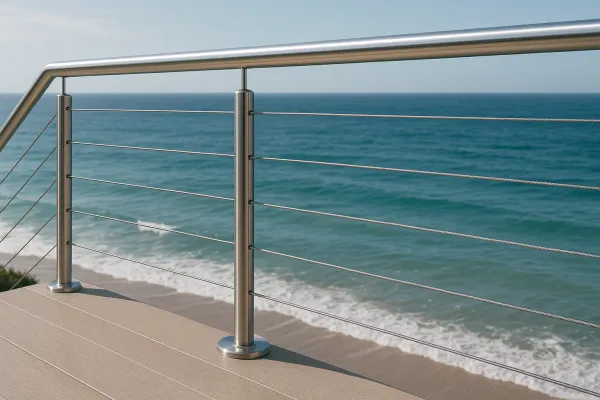
Good installation is just as important as good material. A cable railing system works by tension. The cable must be tightened correctly, and the posts must resist the pulling force. If the posts are weak or spaced too far apart, the cable may sag.
The fitting is also important. A poor fitting can loosen, slip, or corrode. A strong fitting holds tension and helps the railing stay safe. Buyers should check terminal fittings, cable bullets, turnbuckles, swage fittings, and end caps before placing bulk orders.
Cable railing must also meet local building code. In many guardrail designs, openings should not allow a 4-inch sphere to pass through; this rule is commonly used to reduce fall and child safety risks. Because cable can deflect, installers often use closer spacing and proper tension to stay compliant. Always check local building code before installation.
Key installation points:
A cable railing kit may be easy to install for experienced users, but large deck, balcony, and commercial projects should involve a qualified contractor.
Good maintenance helps cable railings last longer. The work is simple: clean the cable, check the fittings, tighten loose parts, and remove dirt or salt before it causes corrosion. A little care can protect a long-lasting railing system.
For outdoor cable railing, clean the stainless steel surface with fresh water and mild soap. Avoid harsh chemicals, steel wool, or chlorine cleaners. In coastal areas, cleaning should be more frequent because salt can build up on the cable and fittings.
Practical maintenance tips:
| Maintenance Task | Frequency | Purpose |
|---|---|---|
| Rinse cable with fresh water | Monthly in coastal areas | Remove salt and dust |
| Wash with mild soap | Every few months | Keep metal clean |
| Inspect fittings | 2–4 times per year | Find loose parts early |
| Tighten sagging cable | As needed | Keep railing safe |
| Check posts and mounts | Every season | Prevent movement |
| Remove rust spots early | Immediately | Stop surface corrosion |
| Inspect deck structure | Annually | Confirm rail support |
Minimal maintenance does not mean no care. It means the railing is easier to keep in good condition compared with many wood or painted systems.
Cable railing is different from wood, vinyl, aluminum, and traditional metalna ograda. Each material has its own lifespan, appearance, cost, and maintenance level. The best choice depends on the project.
Wood looks warm but needs sealing, staining, and repair. Vinyl can resist moisture, but it may not give the same premium appearance or strength as metal. Aluminum is lightweight and corrosion-resistant, but some buyers prefer stainless steel cable for a cleaner and stronger look. Metal railing can be very durable, but the coating must be maintained if the base metal is not stainless.
| Tip ograde | Lifespan Potential | Maintenance Level | Najbolja upotreba |
|---|---|---|---|
| Kabelska ograda | Long, often 25–50 years | Low to medium | Decks, balconies, view areas |
| Drvena ograda | Srednje | Visoko | Warm residential design |
| Vinyl railing | Srednje | Nisko | Budget residential use |
| Aluminijska ograda | Long | Nisko | Lightweight outdoor systems |
| Galvanized metal railing | Medium to long | Srednje | Industrial or budget projects |
| Ograda od nehrđajućeg čelika | Long | Low to medium | Premium outdoor and commercial use |
Cable railing is especially attractive when the view matters. It uses thin steel cable instead of bulky balusters, so it gives a more unobstructed view from a deck, balcony, patio, or stairway.
The pros and cons of cable railing are clear. The main advantages are modern style, open view, long lifespan, and strong material options. The main concerns are cost, tension maintenance, code compliance, and installation accuracy.
For homeowners and contractors, cable railing is a popular choice because it looks clean and makes a deck feel more open. For B2B buyers, it is also a good product category because it supports premium residential, hotel, public space, and commercial railing projects.
| Prednosti | Nedostaci |
|---|---|
| Modern, minimal look | Higher upfront cost than basic wood |
| Long lifespan with stainless steel | Needs correct cable tension |
| Unobstructed view | Must follow spacing code |
| Good for deck and balcony | Poor installation can cause sag |
| Works with metal or wood posts | Coastal sites need 316 stainless |
| Suitable for DIY kits | Large projects need skilled installation |
A good supplier should help the buyer reduce these risks. That means stable cable quality, accurate fittings, proper packaging, and clear installation support.
Cable railing should be repaired when the cable sags, fittings loosen, posts move, or rust spots appear. It should be replaced when corrosion is deep, posts are structurally weak, or the system cannot meet local building requirements.
Small surface stains are not always a serious problem. They can often be cleaned. But if the cable is frayed, broken, badly corroded, or no longer tight, replacement is safer. A railing is not just decoration. It is a safety system.
Watch for these warning signs:
For public projects, hotels, apartments, and commercial buildings, inspection should be scheduled and documented. This protects both safety and long-term maintenance planning.
B2B buyers should choose a supplier that understands stainless steel, fabrication, export packaging, and project requirements. A cable railing supplier should not only sell cable. It should help buyers match cable, fittings, posts, handrail, and mounting method.
Kao profesionalac nerđajući čelik manufacturer and exporter based in China, we support industrial distributors, steel wholesalers, engineering contractors, fabricators, OEM/ODM manufacturers, construction developers, importers, trading companies, and B2B buying offices. Buyers often need bulk stainless steel cable, cut-to-length cable, fittings, railing kits, metal posts, and custom stainless components.
Supplier checklist:
| Buyer Need | What to Ask the Supplier |
|---|---|
| Bulk quality | Can you provide stable material grade and batch control? |
| Custom fabrication | Can you cut, polish, drill, weld, or package to drawing? |
| Coastal projects | Do you offer 316 stainless cable and fittings? |
| OEM/ODM products | Can you support private label and custom packaging? |
| Contractors | Can you supply project-ready lengths and accessories? |
| Importers | Can you support export documents and mixed orders? |
| Developers | Can you provide consistent appearance across batches? |
For cable railing, quality control matters. Cable diameter, surface finish, tensile strength, fitting accuracy, and packing quality all affect customer satisfaction.
A project contractor needed cable railing for a seaside apartment balcony. The first offer used standard stainless steel cable at a low price. It looked fine on paper, but the project faced high salt air exposure.
We recommended 316 stainless steel cable, matched 316 fittings, strong metal posts, and regular cleaning guidance. The contractor also adjusted installation details to keep correct cable spacing and tension.
The result was a better long-term choice. The upfront cost was higher, but the expected maintenance risk was lower. For a coastal project, that is the kind of decision that protects the developer’s reputation.
| Prijava | Cable Grade | Post Option | Maintenance Level |
|---|---|---|---|
| Indoor stairway | 304 nehrđajući čelik | Wood or metal posts | Nisko |
| Residential deck | 316 stainless preferred | Metal or reinforced wood | Low to medium |
| Coastal balcony | 316 nehrđajući čelik | 316 stainless or coated metal | Srednje |
| Poolside patio | 316 nehrđajući čelik | Stainless or aluminum | Srednje |
| Commercial stairway | 316 nehrđajući čelik | Metal posts | Scheduled inspection |
| Public walkway | 316 nehrđajući čelik | Structural metal posts | Scheduled maintenance |
| Industrial platform | 316 or special alloy | Heavy-duty metal posts | Depends on exposure |
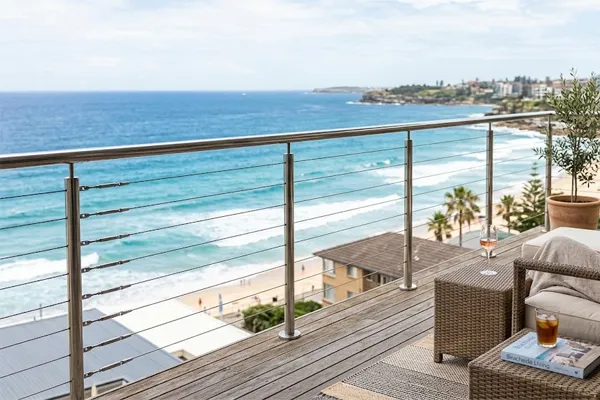
This chart gives a simple starting point. Final selection should follow project drawings, local code, structural needs, and environmental exposure.
How long does cable railing last?
Cable railing can last about 25 to 50 years when made with high-quality stainless steel cable, strong posts, correct fittings, and regular maintenance. Indoor systems may last longer, while coastal and industrial environments need more care.
How long do stainless steel cable railings last?
Stainless steel cable railings last longer than many basic wood or painted metal systems. With 316 stainless steel and proper care, they can deliver decades of service in outdoor spaces.
Does cable railing rust?
Cable railing can show rust stains or corrosion if the wrong material is used or if salt and dirt stay on the surface. 316 stainless steel reduces this risk, especially in coastal and poolside environments.
Is cable railing good for a deck?
Yes. Cable railing is a good deck railing option when the buyer wants a modern look, open view, and long-lasting system. The deck structure must be strong enough to support posts and cable tension.
Does cable railing need maintenance?
Yes, but the maintenance is simple. Clean the cable, rinse off salt, inspect fittings, tighten loose cable, and check posts. Coastal sites need more frequent cleaning.
Is cable railing better than wood railing?
Cable railing usually lasts longer and needs less maintenance than wood railing. Wood can look warm and traditional, but it needs sealing, staining, and more frequent repair.
Can cable railing be DIY installed?
Some cable railing kits are suitable for DIY installation, especially for small residential projects. Large commercial, balcony, deck, and stairway systems should be installed by trained contractors.
Cable railing can last 25 to 50 years with good material, proper installation, and regular maintenance.
Stainless steel cable improves railing longevity because it resists corrosion and provides strong tension performance.
316 stainless steel is usually better for outdoor, coastal, poolside, and high-humidity projects.
Cable railing lifespan depends on cable grade, fittings, post strength, mount type, environment, and maintenance.
Correct installation prevents sagging, loose fittings, and unsafe rail performance.
Regular cleaning, especially in coastal areas, helps prevent rust stains and corrosion.
Cable railing gives a modern look and unobstructed view, but it must meet local spacing and safety code.
Compared with wood, vinyl, and basic metal railing, stainless steel cable railing offers strong long-term value for many premium projects.
B2B buyers should choose suppliers that can provide stable stainless steel material, custom fabrication, bulk export support, OEM/ODM packaging, and project-ready accessories.
The best cable railing system is not only long-lasting. It is also safe, easy to maintain, and matched to the real project environment.
šta je šta