Ograda od nehrđajućeg čelika izgleda premium, ali pogrešan kvalitet, loša ugradnja ili pogrešan dizajnerski izbor mogu dovesti do viših troškova, zagrijavanja, ogrebotina i iznenađenja pri održavanju. To brzo postaje skupo. Rješenje je razumjeti stvarne nedostatke ograda od nehrđajućeg čelika prije nego što odaberete sistem ograda.
The main disadvantages of stainless steel railings are higher initial investment, visible scratches, heat on exposed surfaces, possible staining in harsh coastal environments, and the need for proper cleaning and correct grade selection. Still, stainless steel railing can offer excellent corrosion resistance, long-term value, and a sleek, low-maintenance finish when it is specified and installed correctly.

What are the disadvantages of stainless steel railings?
Why is the cost of stainless steel railing higher?
Do stainless steel railings show scratches and fingerprints easily?
Can stainless steel railing become hot in outdoor space?
Are corrosion and saltwater still a concern for stainless steel?
How do cable railing systems add both value and extra challenges?
Is stainless steel railing better than wood railings or aluminum railings?
What maintenance tips reduce the cons of stainless steel?
When is stainless steel railing still the best choice?
How can B2B buyers choose the right railing system supplier?
The biggest disadvantage of a Ograda od nehrđajućeg čelika is not weakness. In fact, stainless steel is known for strength and durability. The real issue is fit. Stainless steel is a premium railing material, so it may not be the best choice for every budget, every site, or every home design.
The main disadvantages of stainless steel railings usually include a higher initial cost, visible scratches, heat on exposed surfaces, and the need for proper cleaning in harsh conditions. If the wrong grade is used in coastal environments, tea staining or surface discoloration may appear, especially where salt and high humidity are present. Stainless steel owes its corrosion resistance to a chromium-rich passive layer, but grade selection and environment still matter.
That means the pros and cons of a railing system depend on the application. A high-end balcony, public project, hotel, or infrastructure project may benefit greatly from stainless steel. A low-budget residential deck may prefer wood or aluminum instead.
The cost of stainless steel railing is often the first concern buyers mention. Compared with wood railings, aluminum railings, or some powder-coated mild steel options, stainless steel usually comes with a stronger upfront price. That is because the raw material, polishing, welding, fitting precision, and fabrication quality all matter.
For contractors and distributors, the material cost is only part of the story. Stainless steel railing often includes precision posts, fittings, caps, handrail components, and careful finishing. If the project uses stainless steel cables, tensioners, and a cable railing system, machining and installation details add even more value and cost.
Still, price and value are not the same. A low-cost railing choice may need repainting, replacement, or more upkeep later. In many railing projects, stainless steel offers better cost-effectiveness over time because it is long-lasting, corrosion-resistant, and suitable for indoor and outdoor use.
| Materijal za ogradu | Početni trošak | Upkeep | Long-Term Value |
|---|---|---|---|
| Ograda od nehrđajućeg čelika | Više | Low to medium | Visoko |
| Drvena ograda | Srednje | Visoko | Srednje |
| Aluminum picket | Srednje | Nisko | Medium to high |
| Kovano željezo | Medium to high | Medium to high | Srednje |
| Powder-coated steel railing | Srednje | Srednje | Srednje |
For B2B buyers, the right question is not only “What is the cheapest railing?” It is “Which railing gives the best long-term value for this project?”
Yes. One common disadvantage of stainless steel is appearance sensitivity. A polished stainless steel railing can show scratches, fingerprints, and smudges more easily than textured or matte railing materials. This matters in high-traffic areas such as shopping centers, hotels, public stairs, and busy residential buildings.
A mirror or bright polish can look premium, but it also makes small marks more visible. A brushed finish often hides wear better. That is why buyers should match the finish to the real use condition, not just the catalog photo. For example, a flat top handrail in a busy corridor may benefit from a brushed finish rather than a high-gloss finish.
This is not a structural problem. It is a design and maintenance issue. If your project needs a pristine appearance with very little visible handling, surface finish selection should be part of the early design discussion.
Yes. A stainless steel handrail or top rail can become hot in direct sun, especially in summer and in exposed outdoor applications. This is one of the most practical cons of stainless steel in open decks, rooftops, balconies, and public walkways.
Dark finishes, direct sun, and little shade make the effect stronger. In some climates, a metal surface can feel uncomfortable to touch during peak afternoon heat. That does not mean the whole railing system is wrong. It means the designer should think about location, sun exposure, finish, and whether a different handrail material or shape is better for human contact.
For example, some projects combine stainless steel posts with wood or composite top rails. Others use cable and glass layouts to reduce visual mass while keeping the primary structural components in stainless steel. When choosing the best system, small comfort details matter.

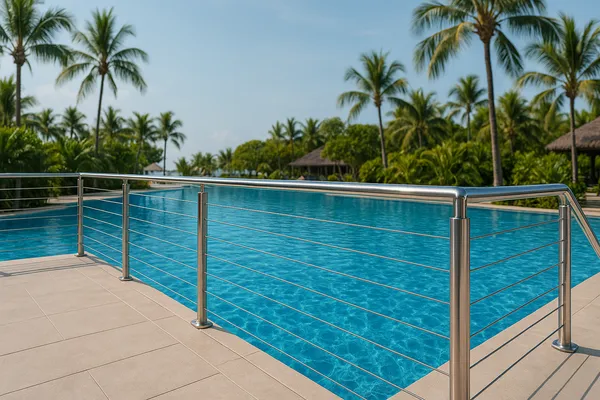
Yes. Stainless steel is corrosion-resistant, but that does not mean it is immune to every environment. In saltwater, poolside, marine, and high-humidity conditions, the wrong grade may stain or suffer surface attack. Grade 316 generally offers better pitting and crevice corrosion resistance than 304 because molybdenum improves chloride resistance.
This is why coastal railings need extra care. British Stainless Steel Association guidance notes that cleaning frequency should increase based on site exposure and that routine cleaning is important for external stainless steel applications, especially in urban and marine locations.
So the issue is not that stainless steel fails everywhere. The issue is poor specification. If a project near the ocean uses the wrong grade, poor finish, or weak maintenance planning, surface staining can appear earlier than expected.
| Environment | Better Choice | Main Risk |
|---|---|---|
| Indoor dry area | 304 may work well | Nisko |
| Outdoor urban site | 304 or 316 | Moderate dirt and moisture |
| Coastal environments | 316 preferred | Salt and tea staining |
| Poolside / corrosive environments | 316 preferred | Chloride exposure |
| Industrial outdoor site | 316 or higher | Chemical exposure |
For buyers, choosing the right grade is one of the most important decisions in stainless steel railing procurement.
A kablovsko ogradište layout looks open, modern, and elegant. It creates an airy feel and an unobstructed view, which is why many deck, balcony, and patio projects prefer it. A cable railing system can look lighter than picket systems and fit a sleek and minimalist home design.
But cable railing also brings extra challenges. Cable tension must be correct. Posts must be strong enough to withstand pulling force. The top rail must stay rigid. If the cable spacing is too wide or the structure is weak, the system may sag or fail visual and code expectations. That is especially important in deck and railing combinations where end posts take high force.
This means stainless steel cable railings are not just about thin lines and clean views. They are engineered systems. Good design needs strong posts, correct mount method, accurate fitting selection, and quality stainless steel cables. In some projects, an internal cable handrail systems page or similar product family is useful because buyers can compare structure, fitting options, and mount methods early.
There is no one perfect answer. Stainless steel railing has strong advantages of stainless steel: excellent corrosion resistance, modern appearance, exceptional durability, and low-maintenance performance in many applications. But it is not always the best answer for every budget or style.
Wood railings can feel warmer and more traditional. They may better suit rustic, farmhouse, or natural deck designs. But wood can splinter, weather, fade, and need regular sealing or repainting. Aluminum railings are lightweight and corrosion-resistant, and aluminum picket systems are often easier for mid-range residential projects. But aluminum may not always deliver the same premium feel, weight, or fabrication flexibility as stainless steel.
Here is a practical comparison:
| Materijal | Best Strength | Main Drawback |
|---|---|---|
| Ograda od nehrđajućeg čelika | Durability and corrosion resistance | Higher initial investment |
| Wood railings | Warm visual style | Higher upkeep |
| Aluminum railings | Light and low-maintenance | Less premium feel in some projects |
| Kovano željezo | Traditional appearance | Maintenance and corrosion risk |
| Cable and glass combinations | Open modern view | Higher complexity |
This is why railing choices should follow both function and style. The best system is the one that best suits your needs, your climate, and your budget.
One reason stainless steel is popular is low maintenance. But “low” does not mean “zero.” Good maintenance tips help protect appearance and extend service life.
The basic rule is simple: keep the surface clean. Dirt, salt, and pollution can sit on the surface and increase the chance of staining. Routine washing with mild detergent and clean water is commonly recommended for stainless steel. BSSA and Nickel Institute maintenance guidance both emphasize routine cleaning and more frequent washing in aggressive environments.
Practical maintenance tips include:
| Maintenance Action | Zašto pomaže |
|---|---|
| Regular cleaning | Reduces staining and surface buildup |
| Occasional cleaning in mild climates | Keeps appearance strong |
| More frequent cleaning in marine air | Helps manage salt deposits |
| Checking fittings | Protects safety and stability |
| Cleaning after rain + dust cycles | Keeps finish brighter |
With proper care, stainless steel railing can deliver strong long-term value.
Even with its potential drawbacks, stainless steel is still often the best option for public infrastructure, premium residential decks, hotel balconies, commercial stairs, and modern exterior railings. Why? Because it offers a rare mix of appearance, strength, and service life.
Projects in high-traffic areas benefit from its structural reliability. Modern architecture benefits from its clean lines. Contractors like its ability to work with cable, glass, or picket layouts. Developers like its premium look. Importers and distributors like its broad B2B demand.
A few situations where stainless steel often wins:
For buyers who want a project-ready option, a stainless steel railing or modern steel railing system product line can help compare configurations faster.
A good supplier does more than sell metal. A good supplier helps the buyer avoid mistakes in material selection, fitting matching, mount method, finish choice, and fabrication details.
As a professional stainless steel manufacturer and exporter based in China, we work with industrial distributors, steel wholesalers, engineering contractors, OEM/ODM manufacturers, construction developers, and B2B buying offices. These buyers usually care about five things: consistent quality, competitive factory pricing, custom fabrication, export reliability, and long-term cooperation.
B2B supplier checklist:
| What to Check | Zašto je važno |
|---|---|
| Grade selection support | 304 vs 316 must match environment |
| Fabrication ability | Custom-cut, welded, polished parts save time |
| Konsistencija serije | Important for large railing projects |
| Packaging and export handling | Protects finish and reduces claims |
| System knowledge | Needed for cable, picket, glass, and top rail details |
| Drawing and sample support | Helps make an informed decision |
For project buyers, custom fabrication service is often just as important as raw material supply. For final conversion, a contact page or RFQ path should be easy to find.
A contractor chose a lower-cost metal railing for a coastal residential project because the client wanted to reduce the initial investment. The system looked good at installation, but within a short period the surface began to stain and the owner complained about upkeep.
The project was later upgraded to a stainless steel railing system with better fittings and a better finish. The initial price was higher, but the long-term service performance was much better.
This is the real lesson behind the advantages and disadvantages discussion: the cheapest option is not always the most cost-effective one over the full life of the project.
What are the disadvantages of stainless steel railings?
The main disadvantages of stainless steel railings are higher upfront cost, visible scratches, heat in direct sun, and the need for regular cleaning in harsh or coastal environments.
Does stainless steel railing rust?
It resists rust very well, but it can still stain or show corrosion in harsh conditions if the wrong grade is used or maintenance is ignored.
Is stainless steel railing better than wood or aluminum?
It depends on the project. Stainless steel usually offers better durability and corrosion resistance, while wood offers a warmer look and aluminum often costs less.
Are stainless steel cable railings hard to maintain?
Not usually. Stainless steel cable railings are often low-maintenance, but they still need occasional cleaning and cable tension checks, especially outdoors.
Why is stainless steel railing expensive?
The material cost, fabrication quality, fittings, polishing, and installation precision all raise the upfront price. However, its long-term value can be strong.
Is 316 stainless better than 304 for railing?
Yes, especially in coastal environments, poolside locations, and corrosive environments, because 316 offers better chloride resistance.
Can stainless steel railing become hot?
Yes. In direct sun, stainless steel handrails and top rails can become hot, especially in exposed outdoor spaces.
The main disadvantages of stainless steel railings are higher initial cost, visible scratches, heat in sun, and cleaning needs in harsh environments.
Stainless steel still offers excellent durability and corrosion resistance when the correct grade is used.
316 stainless is usually better than 304 in coastal environments and saltwater exposure.
Cable railing adds modern style and open views, but it also needs proper tension, strong posts, and careful installation.
Wood railings, aluminum railings, and wrought iron all have their own pros and cons, so the best choice depends on project needs.
Regular cleaning helps protect the finish and reduce staining, especially in marine or polluted locations.
The higher initial investment of stainless steel can often be balanced by better long-term value and lower maintenance costs.
B2B buyers should focus on grade selection, fabrication ability, batch consistency, packaging, and supplier experience when choosing a railing system.
šta je šta