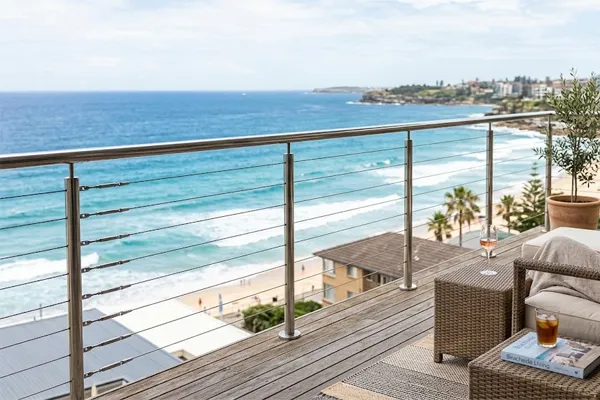
Тросовые перила могут выглядеть чистыми годами, но некачественный материал, слабая установка, соленый воздух и пренебрежение уходом могут сократить срок их службы. Могут появиться ржавчина, провисание троса, расшатанные фитинги и небезопасное натяжение перил. Решением проблемы является выбор правильного троса из нержавеющей стали и правильный уход за ним.

Перила из нержавеющей стали выглядят премиально, но неправильный выбор марки, некачественная установка или неверный дизайн могут привести к увеличению стоимости, нагреву, царапинам и неожиданностям в обслуживании. Это быстро становится дорогостоящим. Решение заключается в том, чтобы понять реальные недостатки перил из нержавеющей стали до того, как вы выберете систему перил.
Buying the wrong stainless steel grade can cause costly problems. A part may look the same on the surface, yet fail faster in salt, chemical, or humid service. The solution is to learn how to check 304 and 316 stainless steel correctly before you buy, fabricate, or install.
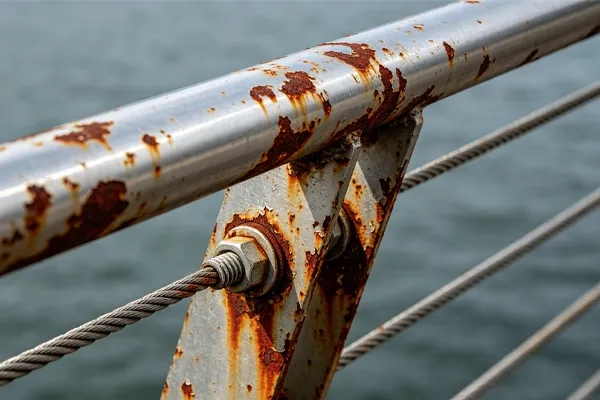
Новые тросовые перила могут выглядеть чисто, современно и почти не требуют обслуживания. Однако многие покупатели опасаются, что воздействие внешней среды, влаги и соленого воздуха со временем приведет к появлению ржавчины. Хорошая новость заключается в том, что правильно подобранные тросовые перила из нержавеющей стали при правильном уходе могут прослужить долгие годы с отличными эксплуатационными характеристиками.

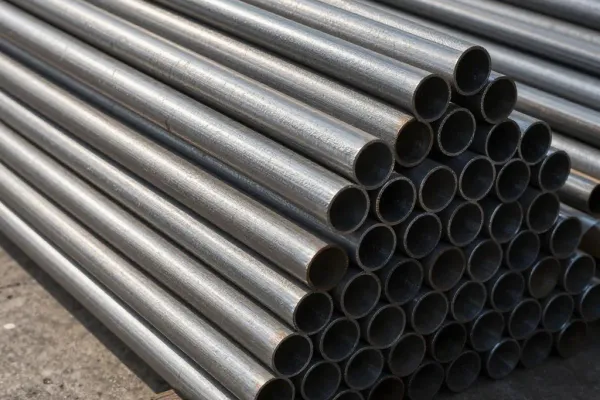
Plain steel pipe can fail fast when moisture, air, or chemicals reach the surface. That leads to stains, weak spots, and expensive repair work. The practical solution is to galvanize the steel, but buyers still need to know what protection galvanized pipe really gives and where its limits begin.


Jiuguang Metal recently completed the production and delivery of stainless steel stair and handrail components for an indoor and outdoor precinct project in Australia. The project covered multiple zones within the development, including interior staircase areas, outdoor walkway sections, public transition spaces, and guardrail-supported access points. As a result, the material selection, surface treatment, structural stability, and finish consistency of the stainless steel products all played an important role throughout the project.
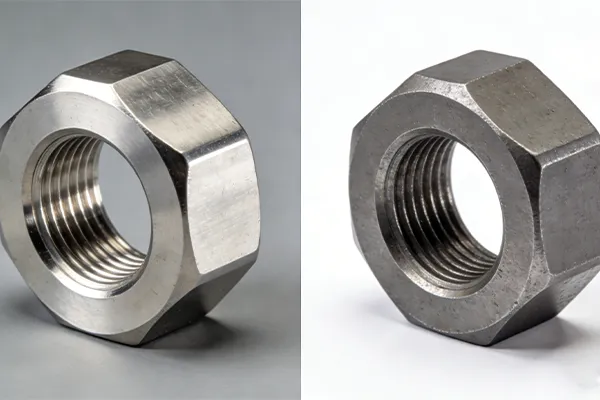
You can often identify stainless steel and mild steel by checking surface finish, rust behavior, magnet response, weight, spark test results, and material certificates. In simple terms, stainless steel contains at least 10.5% chromium, which forms a protective chromium oxide layer for corrosion resistance, while mild steel is a low-carbon carbon steel that rusts more easily in moisture.
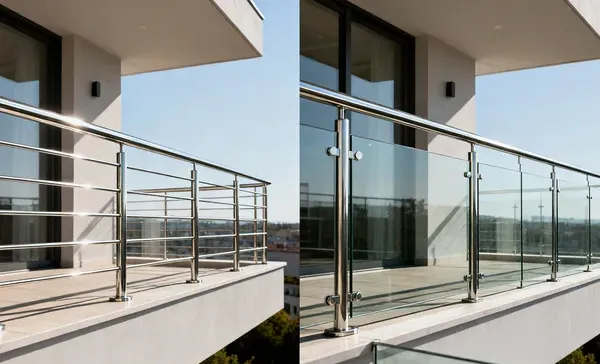
A balcony is a platform that projects from a building, while a balustrade is the protective barrier made of posts, rails, and often balusters placed along a balcony, staircase, terrace, or landing. A railing is a broader term for a safety barrier or handrail system. In short, a balcony is the space itself, and a balustrade or railing is what helps protect that space.
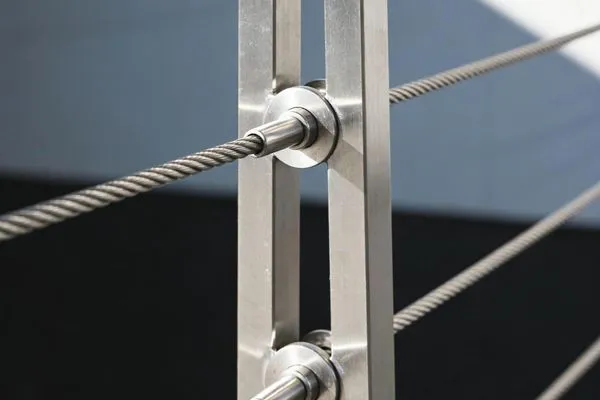
For most projects, the practical answer is that cable openings must be tight enough that a 4-inch sphere rule test is met, because guards generally cannot allow a 4-inch sphere to pass through. Since cable can flex, many manufacturers recommend spacing horizontal cable runs about 3 inches apart and using closer post support to control sag and cable deflection. Always confirm with the IRC, IBC, and your local building authority before installing.