A fall edge can turn into a costly problem fast: blocked views, failed inspections, and rework that burns time. The fix is not “more metal.” The fix is a properly specified gradeamento de vidro with the right safety glass build, tested hardware, and clear site notes.
A sistema de guarda-corpos em vidro é um sistema de proteção that uses a painel de vidro como o glass infill to protect people at edges while keeping an vista desimpedida. In practice, the system is designed to provide safety first, then deliver the clean aesthetics owners want.
One simple way to think about scope: glass railing system provides performance only when glass, hardware, anchors, and drawings are treated as one deliverable.
A gradeamento de vidro is a safety barrier used on edges like a varanda, platform, or landing. Instead of pickets, it uses a clear or tinted panel so people can see through it. That visibility is why a gradeamento de vidro é um escolha popular in hotels, offices, and public buildings: it keeps sightlines open and helps spaces feel brighter and more premium.
You’ll also see it outdoors. For a pavimento de vidro, a gradeamento do convés can protect guests while keeping the view open. The same concept works at a patio edge where owners want protection without blocking a landscape.
For buyers, the key is to remember you are not buying “glass.” You are buying a complete guard assembly with defined responsibility, measurable performance, and a predictable finish. When specified correctly, it can create a stunning visual with fewer visual barriers.

What is a glass railing
Todos gradeamento de vidro has a load path. People lean on it. Wind pushes on it. In busy corridors, equipment may bump it. A safe sistema de proteção transfers those forces from the panel, through clamps or channels, and into the slab edge or frame, where structural support is strong enough to resist movement.
In procurement terms, this is where failures start when scope is vague. If the substrate is weak or the anchor layout is guessed, even good parts can loosen and threaten structural integrity. In practice, the system combines three jobs: holding the panel securely, controlling deflection, and reducing damage risk during daily use.
A practical jobsite tip: ask who verifies edge conditions before drilling. When “someone else will check it” becomes the plan, rework becomes the result.
Before you sign off a submittal, confirm how the edge is built and who owns the interface detail. Common substrates include concrete slab edges, steel perimeter beams, and stair stringers. Each substrate changes anchor choice, embed depth, and the drilling method. It also changes what “flat” means: a slab edge can wave, a steel beam can twist, and waterproofing layers can add depth variation.
Also confirm what happens at transitions: corners, expansion joints, and drainage points. If there is waterproofing or insulation at the edge, you may need sleeves, sealants, or thermal breaks so you don’t compromise the envelope. These details are rarely “free,” but they are far cheaper to plan than to fix after installation.
First, the tipo de vidro must match your approval path, risk level, and use case. Most authorities treat guard glazing as safety glazing and require clear documentation. Always align the glass build with the project’s approval package.
Vidro temperado is heat-treated safety glass. It is strong, but if it fails it can estilhaçar into many small pieces. Many specs also call for vidro laminado, because the interlayer helps hold fragments together after impact. If you specify an interlayer build, confirm the interlayer type, such as pvb, and document it in the shop drawing notes.
One more rule that avoids disputes: keep glass and hardware scope together in a single submittal set, so the guard is reviewed as one system, not as separate materials.
Inspectors and engineers usually want three things in writing: the glass build, the edgework (holes/notches), and the hardware that connects the panel to the structure. If holes are required, show their position and diameter on the shop drawings, not only on a brochure image. If edges are exposed, specify the edge finish (arrissed, ground, or polished) so the final look matches expectations.
For projects with public access, some teams add additional quality controls such as heat-soak testing requirements or tighter dimensional tolerances. Whether you include those requirements or not, the important part is clarity: a clear submittal set reduces delays and avoids “we assumed” arguments later.
Owners often request a clean edge with minimal hardware showing. The most common approach is a frameless glass railing system, where the visible metal is reduced and the panel reads as one continuous plane for a clean look.
This approach can deliver a sleek and modern design e uma forte aspeto moderno, but it is less forgiving on rough slabs. Flatness, drilling accuracy, and small leveling room all matter. That is why you should confirm tolerance notes early and decide how much adjustability is needed.
If your site conditions are verified, the clean-line approach can be the perfect solution for high-end lobbies and premium circulation zones.
Choosing the mounting style drives risk, speed, and finish expectations:
On industrial jobs you may see steel posts for budget or site standardization. For many public-facing zones we supply stainless steel posts because they are resistente à corrosão and keep a stable finish.
If the slab edge is straight and you want the cleanest line, a continuous channel is often the easiest path to a consistent aesthetic. If the edge is uneven, posts are often an ideal solution because the fittings can hide small slab variations. If the site has many uneven edges or you need forgiving alignment, posts can reduce risk because small inconsistencies are hidden by the fittings. If you need a clear walking surface for drainage or cleaning, side mounting can keep the top surface free of floor fittings.
Think about future replacement too. Channels can allow panel replacement without removing many fittings, while point mounts may require more careful removal and re-setting. A short conversation on “serviceability” during design review can prevent long-term maintenance headaches.

which mounting method fits your site
Some architects want the top edge clear, meaning a continuous exposed top edge. Sometimes that works; sometimes it does not. The decision depends on your code path, guard height, and how the edge will be used (public access, children, crowd loads, and cleaning routines). When in doubt, verify interpretation with your local building authority early.
Even when a top cap is optional, a corrimão can improve grip and comfort on circulation routes. It also protects the top edge during cleaning and maintenance. Put simply, rail offers both comfort and a safer service life in many applications.
Buyers often ask for one number, like 12mm. In real jobs, the correct value depends on height, span, loads, and mounting style, so your engineer or consultant should confirm the final spec.
Still, your contract should lock one value across drawings, BOM, and packing labels. That’s where teams often stumble: they approve one value on a sketch, then production follows a different document. To prevent that, confirm glass thicknesses once in writing before production starts.
Details matter in the field. If you use posts, you may specify glass clamps. If the run follows a corrimão de escada angle on a escada, field measurement and shop drawings must agree, or holes and gaps won’t line up.
When you compare bids, pricing only makes sense with a consistent scope. Ask for a consistent quote por pé linear with written assumptions: mounting style, height, corner count, slope sections, substrate type, and what is included in packing.
Typical cost drivers include glass size and machining, hardware grade and finish, access conditions, and packaging level. The most expensive surprises usually come from scope gaps rather than material price.
A quick driver chart (relative impact, not a promise):
To make pricing comparable, align these items across all suppliers:
If any supplier refuses to write these assumptions, treat the quote as incomplete, even if the number looks attractive.
A guard is not only a product. It is also a repeatable job method. The processo de instalação usually follows the same logic: verify layout, drill and set anchors, level parts, set panels, tighten, then do a final torque check.
The biggest rework trigger is rushing alignment. A small error at the first meter grows across a long run. Also, do not ignore fastening torque and gasket compression; over-tightening can stress glass and distort hardware.
If your project includes a separate sistema de guarda-corpos de cabos de aço inoxidável area, confirm spacing rules and whether the cable runs are horizontal or vertical before ordering, because it changes labor time and inspection risk.
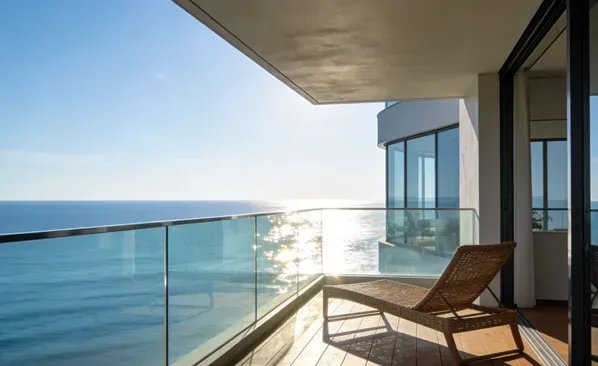
balcony glass railing
I’m a factory-side supplier focused on engineered hardware and supporting components. Our buyers include distributors, fabricators, contractors, OEM and ODM partners, developers, and importers. What they want is predictable output and clear documents, not surprises.
On real projects, the railing system offers value when it ships as a complete kit with stable labeling and a consistent packing method. That matters on a large railing project where multiple floors and zones must match. Here is the practical doc package we recommend:
If you want consistent results at scale, ask the supplier to confirm a simple, auditable QC flow:
This is especially important when you are ordering multiple floors or multiple buildings and want the same look everywhere. In short, the system perfect for you is the one that matches your substrate, traffic level, and maintenance reality.
| Goal | Best match | What to watch |
|---|---|---|
| Premium view | channel-based clean edge | slab flatness, leveling room |
| Fast retrofit | clamp-and-post build | visible hardware, hole patterns |
| Edge access is tight | side points | drilling accuracy and tolerances |
| Mixed zones | choose different systems | keep finishes consistent |
A contractor wanted a clean line for a coastal varanda and asked if “glass is best” for that exposure. We specified 316-grade fittings, added corner guards in packaging, and issued a simple site check list. The owner later said it was fácil de manter, and the finish stayed stable in commercial spaces with daily traffic.
Ask for drawings, material grades, finish details, test references, and a packaging plan. A supplier who can explain these clearly is more likely to deliver a kit that installs smoothly.
“Glass” is a raw material. A full kit includes fittings, gaskets, anchors, and documented scope. Treat it as a system purchase, not a commodity.
Most buyers report that glass railings offer a clean surface that wipes down quickly. With proper finish selection, the system can be manutenção reduzida in daily use, and still remain low-maintenance over the long term.
Avoid coatings that chip and need to retocar often. For outdoor zones, many buyers prefer grades de aço inoxidável because the finish is more stable.
Sim. A unique cable railing design can reduce cost and keep airflow in some areas, while glass keeps visibility where you need it. Review spacing and end details early so inspection goes smoothly.
Yes. You can choose a variety of glass finishes and also specify various glass options like clear, frosted, patterned surfaces, including colored glass. This is where personalização and accurate drawings matter.
If you share your drawings and the environment (indoor, outdoor, coastal), I can recommend soluções de gradeamento and quote a package that fits budget, lead time, and compliance needs.
Stainless Steel Stair and Handrail Systems Supplied for an Indoor and Outdoor Precinct Project in Australia
Stainless Steel Staircases and Handrail Systems Delivered for an Indoor and Outdoor Precinct Project in Australia
Which Type of Stainless Steel Is Good for Railings? Choosing the Best Stainless Steel Railing System for Long-Term Performance
How to Identify Stainless Steel and Mild Steel: Key Differences Between Stainless Steel and Mild Steel