A stainless steel pipe can look like the perfect answer for every project. But if you ignore cost, grade selection, welding limits, and chloride exposure, that choice can become expensive fast. The smarter approach is to understand the real advantages and disadvantages before you buy, design, or install.
The main disadvantages of stainless steel pipes are higher upfront cost, stricter grade selection, possible pitting or crevice corrosion in chloride-rich service, and more demanding fabrication in some cases. Even so, many buyers still use stainless steel because the material offers strong hygiene, long service life, and excellent performance when the right grade and process are selected.

1. Why Do Buyers Still Choose Stainless Steel Pipe if It Has Disadvantages?
2. Is Higher Cost the Biggest Disadvantage of Stainless Steel Pipe?
3. Can Stainless Steel Pipe Still Corrode in Real Service?
4. Are Welding and Fabrication More Demanding for Stainless Steel Pipe?
5. Is Seamless Better Than Welded, and What Are the Trade-Offs?
6. How Does Stainless Steel Pipe Compare vs Carbon Steel Pipe in Water Supply Systems?
7. Do All Types of Stainless Steel Perform the Same?
8. When Do the Pros Still Outweigh the Cons of Stainless Steel?
9. How Should B2B Buyers Choose Stainless Steel Pipe and Pipe Fittings?
Before talking about any disadvantage, it helps to remember why stainless steel became so important in the first place. Stainless steels gain their “stainless” behavior when the chromium content exceeds about 10.5%, because a protective chromium oxide passive film forms on the surface. That passive layer is the core reason the material offers strong corrosion resistance in many everyday and industrial applications.
That is why a stainless steel pipe is widely used in sectors with high hygiene requirements, aggressive cleaning demands, and long service expectations. Outokumpu notes that standard austenitic grades are well suited for processing, storing, and transporting foodstuffs and beverages, while 316L grades are used in process industries, food and beverage equipment, pharmaceutical equipment, and the chemical industry.
So the story is not “bad material versus good material.” The real story is balance. The pros and cons of stainless depend on where the pipe is used, what media it carries, how it is welded, and whether the buyer chooses the right grade and finish for the job.
For many buyers, yes. The first disadvantage they notice is price. A stainless steel pipe usually costs more upfront than ordinary carbon steel because stainless includes alloying elements such as chromium and often nickel or molybdenum, and because the production and finishing requirements are tighter. The Nickel Institute notes that nickel is extensively used in stainless steel because it improves formability, weldability, ductility, and corrosion behavior, but those alloy benefits also mean the material is not a low-cost steel.
Outokumpu gives a useful example from structural work: in one bridge study, the stainless option had about twice the material cost of painted carbon steel, even though it later proved lower in life-cycle cost. That example is not a pipe project, but it clearly shows the same purchasing truth seen in piping: stainless often costs more at the start, even when it may become more cost-effective over a long service life.
This is why cost-sensitive buyers still compare carbon steel pipe and vs stainless steel pipe so often. If the service is mild, the budget is tight, and the owner accepts coating, repainting, or shorter life, carbon steel may still win on initial spend. But if corrosion, hygiene, or maintenance risk are big concerns, the higher first cost of stainless steel can still make business sense.
Yes. This is one of the most misunderstood points in the whole pipeline discussion. Stainless is corrosion-resistant, but it is not corrosion-proof. The passive oxide layer protects the metal, yet the material can still corrode under the wrong conditions, especially where chlorides, crevices, deposits, or poor fabrication are involved.
Chloride is especially important. World Stainless notes that chloride ions can trigger pitting initiation, and Euro Inox guidance says that in drinking water and similar water, unfavorable conditions can lead to pitting or crevice corrosion and, with high temperature and chloride concentration together, even stress corrosion cracking. In wastewater and water-related guidance, 304 is described as satisfactory below about 200 mg/L chloride, while 316 is preferred for more demanding cases and can tolerate higher chloride levels than 304 in many applications.
So one real disadvantages of stainless steel pipes issue is false confidence. A buyer may assume stainless means “no rust or corrosion risk,” then specify the wrong grade for a chloride-rich environment, hot water system, or crevice-prone design. The result can be pitting, localized attack, or an embarrassing failure in a system that was supposed to look premium and last long.
They can be. Stainless is weldable, but it is not always as forgiving in fabrication as many buyers expect. Outokumpu notes that austenitic grades have great weldability and can be welded by common processes such as TIG, MIG, FCAW, PAW, and SAW. That is the good news. The less comfortable news is that welding quality and heat control matter a lot more than many buyers think.
ASSDA explains why. Austenitic stainless steel combines high thermal expansion with low thermal conductivity, and that combination can cause severe distortion during weld work if heat input is not controlled. Its FAQ notes that 304/304L and 316/316L need special precautions in design and fabrication, and that austenitic grades have about 30% of the thermal conductivity of carbon steel while expanding more.
This matters in real factory life. If a project needs many elbows, reducers, pipe fittings, and welded spools, stainless may need better heat control, cleaner shop practice, and more experienced fabricators than carbon steel. That does not mean stainless is hard to fabricate. It means bad fabrication is less forgiving, especially when the application demands appearance, hygiene, or pressure reliability.

Many buyers assume seamless is always the premium answer. Sometimes it is. But not always. Outokumpu points out that in subsea umbilical work, seamless tube has traditionally been preferred because there is no seam, but it is costly to produce and the maximum length of individual tubes is limited, which means butt welding may still be required to reach the final length. Those extra welds can themselves become potential weak points and increase manufacturing complexity and cost.
That example is from a demanding offshore application, but the lesson is broader. In many projects, seamless and welded products are both valid, and the right choice depends on pressure, inspection requirements, delivery length, budget, and fabrication route. A blanket rule like “always buy seamless” can raise cost without automatically improving the full piping system.
So the real disadvantage is not that one form is bad. It is that the buyer has to understand what the specification is trying to solve. If the project is over-specified, the pipe becomes expensive to manufacture and harder to source. If it is under-specified, performance risk rises. That is why professional B2B procurement has to look beyond labels and ask how the material used, the joint method, and the service conditions fit together.
In water supply service, the comparison is rarely simple. Carbon steel pipe is cheaper, but stainless often wins on hygiene and corrosion durability. At the same time, stainless steel water pipes are not automatically perfect. Chloride content, water temperature, joint design, and fabrication quality still matter. World Stainless and Euro Inox both show that chloride level is a real selection factor, especially for 304 in hot water and for crevice-prone designs.
This is also where the phrase stainless steel water sometimes gets misunderstood. Stainless is very attractive for hot and cold water, potable systems, and water transportation where cleanliness and long life matter, but the grade still has to match the environment. In normal drinking-water situations, Euro Inox notes that combinations of stainless steel, copper, copper alloys, and red brass have been used successfully in cold-water and hot-water systems without galvanic damage in many cases. That means mixed-metal systems are possible, but design and environment still matter.
From a fabrication point of view, another cons of stainless steel issue appears in heat-related work. Austenitic stainless has poor thermal conductivity compared with carbon steel, which can be a drawback in some heating-related fabrication and can make welding distortion more likely. So when buyers compare steel pipe advantages and disadvantages for plumbing, utility, or process water, they should compare not only corrosion life but also heat behavior, welding practice, and cost.
No. This is one of the biggest reasons buyers make mistakes. Outokumpu says clearly that the right grade depends on the service conditions, including corrosion resistance, mechanical strength, fabricability, physical properties, and surface considerations. In other words, “stainless steel” is a family name, not one material.
Among the common types of stainless steel, 304 is often the entry-point workhorse, while 316 stainless is widely chosen where corrosion demand is higher because molybdenum improves resistance in more aggressive environments. Outokumpu notes that 316L is its most widely used molybdenum-alloyed austenitic stainless steel and is used in process industries and more aggressive environments with higher than average corrosion resistance requirements.
This is why choosing stainless steel is sometimes harder than choosing carbon steel. A buyer may need to compare 304, 316, ferritic, duplex, or even other alloy steel families depending on chloride, temperature, pressure, and fabrication route. If you do not choose the right grade, the expensive pipe may still fail in service.
Quite often. Even after discussing the drawbacks, stainless remains a strong choice in many sectors because the performance of stainless steel is hard to replace where hygiene, appearance, chemical exposure, and long service matter. Outokumpu highlights uses in food and beverage, pharmaceutical, textile, pulp and paper, and process sectors, while the material’s passive protective film is the reason it performs so well in many of those applications.
That is why food processing plants, water installations, and the petrochemical industry still use stainless heavily. It is also why buyers often accept the higher price in systems where shutdown, leakage, contamination, or repainting would cost more than the pipe itself. In those settings, the argument is not “cheap vs expensive.” It is “higher first cost vs lower service risk.”
So the real answer is balance. If the application is highly corrosive, hygienic, or maintenance-sensitive, stainless steel pipe advantages often outweigh the disadvantages. If the service is mild and the budget is tight, other metal pipes may be more practical. Good engineering starts by being honest about both sides.
For B2B buyers, the safest method is to make the selection decision in layers. First, define the service: potable water, process fluid, chemical washdown, hot water, or chloride-bearing media. Second, compare grade options: 304, 316, ferritic, duplex, or another suitable material. Third, choose the product form: seamless, welded, or a mix based on pressure, length, and fabrication method. Outokumpu’s general selection guidance supports exactly this service-condition approach.
Then check the full package, not just the tube price. The pipe, the fitting, the valve, the weld method, and the finishing practice all affect final performance. A strong pipe with poor pepejala paip or sloppy welding is still a weak system. In chloride-sensitive service, the buyer should also ask whether 304 is enough or whether 316L or a more resistant grade is needed.
From a sourcing view, this is where a professional manufacturer and exporter adds real value. A serious supplier should help buyers compare seamless and welded, explain what the grade can and cannot do, and build the offer around the true service conditions instead of selling one grade for every project. That is how a stainless steel pipe becomes a reliable solution instead of an expensive guess.
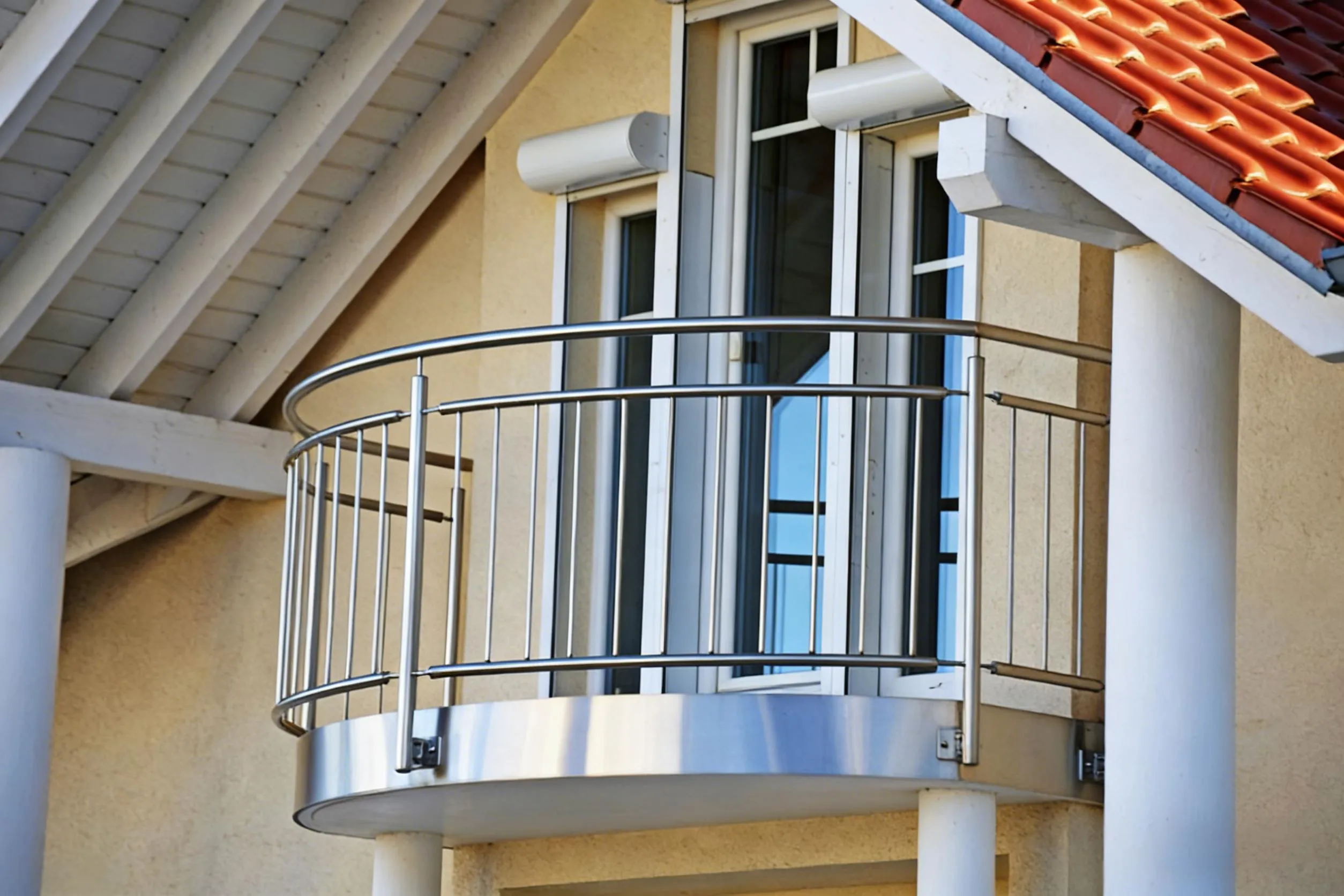
Pagar keluli tahan karat untuk balkoni
Are stainless steel pipes more expensive than carbon steel pipes?
Usually yes, at the initial purchase stage. Stainless typically costs more because of alloying content and manufacturing demands, although long service life can reduce lifecycle cost in the right applications.
Can stainless steel pipe rust or corrode?
Yes. Stainless is highly corrosion-resistant, but it can still suffer pitting, crevice corrosion, or other localized attack, especially in chloride-rich or poorly fabricated environments.
Is 316 better than 304 for water pipes?
In many chloride-sensitive or more aggressive environments, yes. World Stainless and Outokumpu both indicate that 316/316L is often preferred where chloride content is higher or where corrosion resistance demand is stronger.
Is seamless stainless steel pipe always better than welded pipe?
No. Seamless can be useful in some demanding services, but it can also be more costly and length-limited. In some applications, welded tube is a practical and well-controlled alternative.
Why is stainless steel harder to weld than carbon steel in some cases?
Because many austenitic grades combine low thermal conductivity with high thermal expansion, which can increase distortion and make heat control more important during welding.
Are stainless steel water pipes a good choice for drinking water?
Often yes, but grade selection and chloride level still matter. Guidance cited by World Stainless indicates 304 is commonly suitable for lower-chloride potable water, while 316 is preferred in more demanding cases.
So, what are the real disadvantages of stainless steel pipes? The biggest ones are higher initial cost, greater sensitivity to wrong grade selection, possible chloride-driven localized corrosion, and more demanding fabrication in some projects. None of those points make stainless a poor material. They simply mean it is a material that rewards correct engineering and punishes lazy selection.
For industrial distributors, fabricators, OEM/ODM manufacturers, and project buyers, the better question is not “Is stainless good or bad?” It is “Where does stainless create the most value, and where does another material make more sense?” When that question is answered honestly, stainless often becomes the right long-life solution, especially for clean service, process systems, and demanding water or chemical work.
As a professional stainless steel manufacturer and exporter based in China, the best sales conversation is never just about price per ton. It is about matching grade, form, welding route, and service condition so the buyer gets the right pipe for the real job. That is where strong sourcing decisions start.
The main disadvantage of a stainless steel pipe is usually higher upfront cost compared with carbon steel.
Stainless is corrosion-resistant, not corrosion-proof; chloride can cause pitting and crevice attack if the wrong grade is used.
Austenitic stainless has low thermal conductivity and high thermal expansion, which can increase welding distortion and make fabrication more demanding.
Seamless is not automatically better than welded in every case; it can be costlier and length-limited in some applications.
304 and 316 do not perform the same; 316L is widely used where higher corrosion resistance is required.
Good grade selection, fabrication, and joint design matter just as much as the pipe material itself.