You need strong, clean-looking round stainless that won’t rust or warp. Yet specs like OD and wall thickness feel confusing—and a wrong call costs time and money. Here’s a clear, practical guide to choose the right stainless steel round tube and avoid costly rework.
A stainless steel round tube is a circular hollow steel tube made from corrosion-resistant alloys such as 304 atau Pewagangan tahan karat 316. Choose seamless for higher pressure, welded for cost efficiency. Specify OD (outside diameter), inside diameter, dan ketebalan dinding, plus finish (mill, kemasan berus, atau polishing). Match standards like ASTM A554, ASTM A269, atau ASTM A249 to your application.
A stainless steel round tube is produced from a chromium-nickel aloi designed for high strength dan tahanan kakisan. In daily ordering, tube sizes are typically specified by OD dan ketebalan dinding; paip is often specified by nominal size and schedule. If you’re selecting handrails, frames, or structural applications, choose stainless tube (tight, aesthetic tolerances). For process lines, stainless steel pipe and schedules may be more common.
For quick browsing of shapes beyond round, see our round steel tubes and related sections for square and rectangular options.
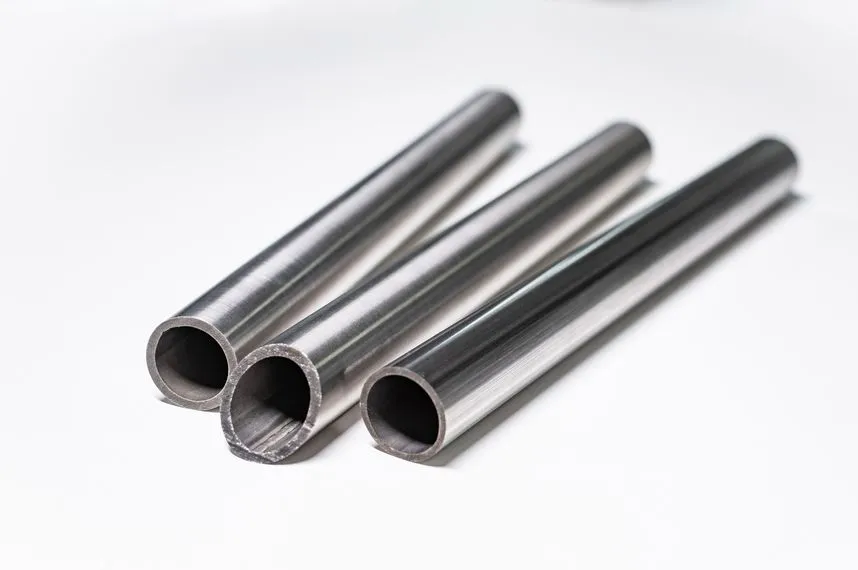
Tiub Bulat Tanpa Jahitan
Pewagangan tahan karat 304 is the workhorse of the 300 series, balancing cost, formability, and weldability. It handles most indoor and mild outdoor environments. When chlorides or marine splash are present, Pewagangan tahan karat 316 (often called 316 grade) offers greater strength at elevated temperatures and superior pitting resistance thanks to molybdenum.
If your spec mentions 304 dan 316, weigh cost versus environment. For railings and architectural work, Tabung keluli tahan karat 304 is common; for coastal projects and food-process splash zones, step up to 316L variants for extra margin.
Seamless stainless steel round tube is pierced and drawn without a weld seam. It’s ideal for pressure lines, heat exchangers, and critical bending. Welded stainless steel tube is rolled and fusion-welded—excellent for aesthetics, structural frames, and cost efficiency. Many architectural projects specify paip keluli tahan karat yang dikimpal to control budget and appearance.
As a rule of thumb, pick tiub tanpa jahitan for higher pressure and welded tube for appearance and value. For heavy-duty frames, large diameter stainless steel round tube provides stiffness with manageable weight.
Example: 50.8 mm OD with 1.5 mm ketebalan dinding gives ~47.8 mm inside diameter. For precise projects (e.g., automated jigs), ask for tighter tolerances to simplify sesuai and welding. If loads are high, specify a thickened pipe wall to reduce deflection.
To compare profiles or transition a design to angles and flats, explore tiub segi empat sama keluli tahan karat dan rectangular stainless steel tubes.
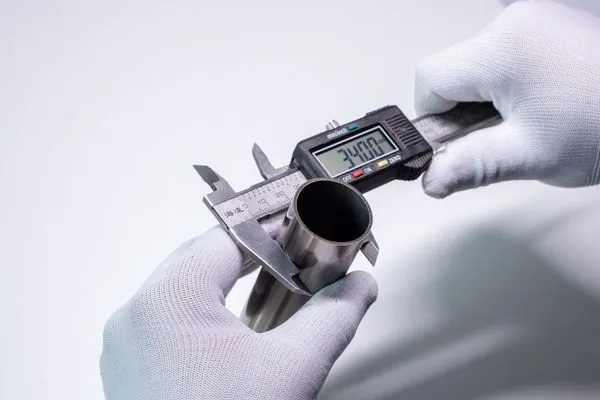
OD (outside diameter)
Nota: ASTM B280 refrigeration ACR tubing covers copper—not stainless. Don’t confuse it with stainless specs. When you need round handrail sections with precise cosmetics, check A554; for process lines, review A269/A249.
Finish matters. A mill finish hides inside machinery but shows blemishes in visible frames. A kemasan berus (e.g., 180–320 grit) diffuses reflections and hides fingerprints. Polishing to a mirror creates a smooth surface that’s easier to sanitize. Finishes also impact slip at clamp interfaces and can affect measured OD slightly; confirm surface after finishing when a sliding sesuai is involved.
For curved handrails or visible frames in retail, consider oval elliptical stainless steel tubes for a premium touch.
Untuk 304, tensile strength commonly exceeds 515 MPa with yield around 205 MPa (typical values). Cold work increases high strength, and annealing restores ductility for forming. In mildly corrosive environments, Pewagangan tahan karat 304 performs well; in chlorides, Pewagangan tahan karat 316 dan 316L offer strength and corrosion resistance with better pitting performance. Where welding is extensive, 304L dan 316L (low carbon) help prevent sensitization.
If you need round bar to match tube accessories, our bar bulat keluli tahan karat lineup complements tube builds.
Good outcomes start with clean cuts and controlled heat. Use fine-tooth saws or abrasive methods for tube cutting; deburr to protect operators and ensure accurate sesuai. For mengimpal prep, keep edges clean; match filler to type of stainless (e.g., ER308L for 304). Plan fixturing to limit distortion; adjust parameters for greater strength in critical joints without overheating.
When tolerances are tight (automation, sliding sleeves), specify custom cut lengths, CNC coping, and end-forming to shorten install time. See company details under stainless steel tube manufacturers for integrated processing and QA.
Below are sample metric sizes often requested for railings, frames, and light structural applications. Ask for od 304 stainless steel dimensional charts if your region uses imperial sizes.
Typical 304 stainless steel round tube size snapshot
| OD (mm) | Wall (mm) | Approx. ID (mm) | Nota |
| 25.4 | 1.2 | 23.0 | Lightweight posts, guards |
| 38.1 | 1.5 | 35.1 | Common handrail OD |
| 50.8 | 1.5 | 47.8 | Balustrades, frames |
| 63.5 | 2.0 | 59.5 | Stiffer spans |
| 76.2 | 2.0 | 72.2 | Large rail sections |
| 101.6 | 3.0 | 95.6 | Heavy frames, signage |
For heavier loads, specify a thickened pipe wall and confirm tighter tolerances after finishing. If your design shifts shape mid-run, matching finishes across rounds, squares, and rectangles is simple with stainless steel tube sizes.
If you’re bending tight radii, running high pressure, or sanding a finish where a bead could telegraph, tiub keluli tahan karat tanpa jahitan provides uniform structure. In long, straight rails or architectural frames, welded stainless steel tube keeps costs lean with excellent appearance (per ASTM A554). Many buyers combine both: seamless where performance demands it and welded where value matters—i.e., seamless and welded stainless steel in the same project.
Need a clean visual match across sizes? Our round steel tubes page shows options that align across diameters and finishes.
“304 stainless steel round” is the everyday pick for indoor frames and general outdoor use. 304L (low carbon) is better for heavy welding to resist carbide precipitation. By contrast, 316L resists chloride pitting and is popular in coastal or de-icing regions. All three form and mengimpal well; if you expect abrasive cleaners or salt fog, budget for Pewagangan tahan karat 316/316L early.
For matched fittings, elbows, and elbows-to-post transitions, check compatible accessories under our stainless steel tube manufacturers overview.
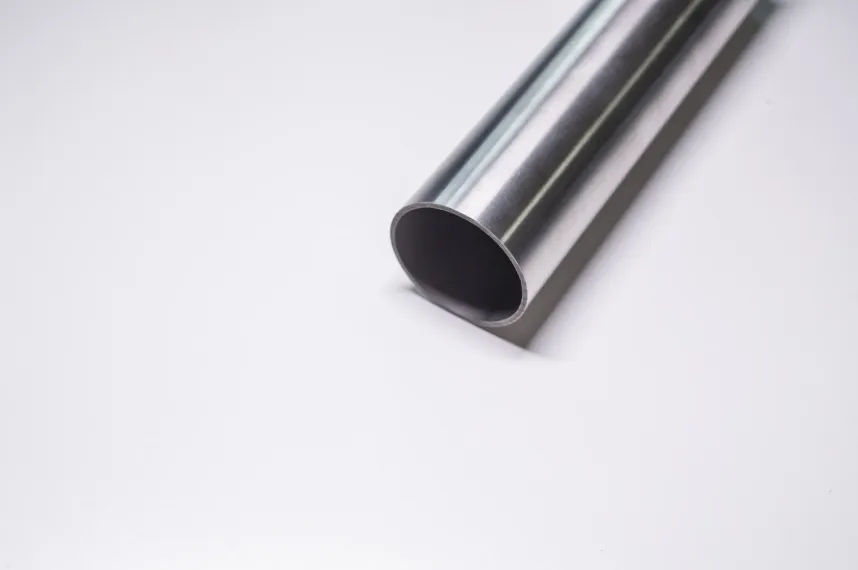
304 stainless steel round
It’s easy to mix categories. Stainless steel round tubing is not the same as aluminum round tube; aluminum is lighter but lacks stainless’ durability and greater strength at heat. And bella bays copper tubing atau ASTM B280 refrigeration ACR tubing are copper references—great for HVAC, not for structural rails. Electrical sleeves like dowire heat shrink tubing protect wiring, not frames.
For catalogs and peripherals that keep looks consistent across your project—rounds, squares, rectangles—see rectangular stainless steel tubes dan tiub segi empat sama keluli tahan karat.
When you want consistent cosmetics across shapes, match profiles on round steel tubes and consider coordinated bars and flats for mounts.
Both routes can be custom cut dan tube cutting can include miters and copes to speed assembly on site. Many buyers also request end-forming for hidden spigots and quick sesuai alignment.
For a public transit concourse with de-icing salts, we used Pewagangan tahan karat 316 with 50.8 mm OD and 2.0 mm wall. Straight sections specified welded stainless steel tube, while tight spiral returns used seamless stainless for reliable bend quality. Final finish was 240-grit kemasan berus for anti-glare safety and easy field touch-ups. The result: durable rails with low lifecycle cost.
For similar rail projects, see size ideas on round steel tubes and related shapes on tiub segi empat sama keluli tahan karat.
To compare families and related parts, browse our stainless steel tube sizes library.
Is 304 stainless steel enough for outdoor railings?
Usually yes for mild environments. Near oceans, pools with chlorides, or de-icing chemicals, pick Pewagangan tahan karat 316/316L for better pitting resistance and longer service life.
When should I insist on seamless instead of welded?
Pilih seamless stainless steel for pressure lines, tight bends, or critical cyclic loads. For straight railings and frames where appearance and budget matter, welded stainless steel tube is excellent.
How do I avoid rust tea-staining?
Specify a suitable finish (e.g., kemasan berus or polished), rinse periodically, and avoid carbon-steel contamination during fabrication. Use low-carbon grades (304L/316L) for heavy weldments.
What’s the difference between tube and pipe in ordering?
Tube is sized by OD dan ketebalan dinding; pipe by nominal size and schedule. For frames and railings, tube is standard; for process flow, pipe dominates.
Can I get custom cut lengths and end-forming?
Yes—ask for custom cut lengths, coping, and end-forming to speed installation and ensure sesuai alignment. It reduces scrap and improves site productivity.
Do you stock shapes to match my round tube design?
Yes. Consider rectangular stainless steel tubes dan tiub segi empat sama keluli tahan karat to keep visual lines consistent across your project.
If you need a quick spec review for a quote, send your OD, wall, length, finish, and end-work requirements. We’ll return a clear, cost-effective recommendation aligned to Pewagangan tahan karat 304/Pewagangan tahan karat 316 and your project timeline.