Choosing the wrong stainless steel pipe or tube risks leaks, rust, and costly downtime. Those headaches grow as specs get messy—OD, wall thickness, grade, weld quality. Here’s a clear, practical way to select stainless steel you can trust, first time.
Stainless steel tubes and pipes are corrosion-resistant, high-strength round or shaped hollow products used for fluid transport, structural applications, and fabrication. Pick 304 for general use, 316 when chlorides demand greater resistance to corrosion, and choose seamless for high pressure or critical service and welded for cost-efficient, consistent sizes. Match diameter and wall thickness to your specification and end use.
In plain terms, paip is sized for flow, tube is sized for fit. Pipe uses nominal sizes and schedules for pressure and flow of water, air, oil, or gas. Tube uses precise OD dan ketebalan dinding for frames, heat exchangers, structural members, and instruments. Both are diperbuat daripada keluli tahan karat, but they are specified differently.
When you need tight fit-ups, jigs, or clean architectural lines, you’ll typically choose tiub keluli tahan karat. For pumps, chillers, CIP lines, and compressed air headers, you’ll typically choose stainless steel pipe. If you’re building railings or machine guards, look first at round steel tubes with controlled diameter dan tolerance (see our round stainless steel tubes for dimensional data and finishes).
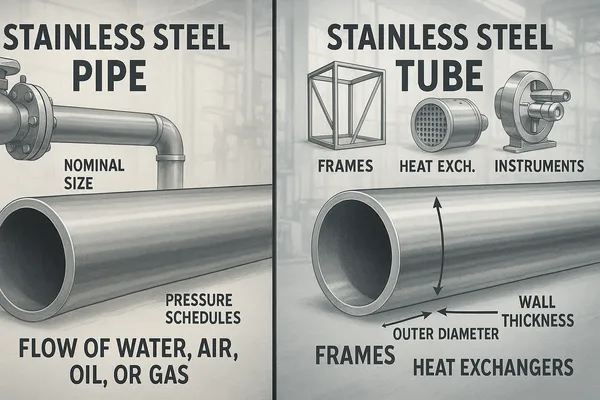
What is the difference between stainless steel pipe and stainless steel tube
304 is the all-round aloi with excellent formability and weldability. 316 adds molibdenum untuk greater strength at the grain boundary and notably better performance in salty or corrosive splash zones. In short: Pewagangan tahan karat 304 works for most interiors; Pewagangan tahan karat 316 shines on coastal jobs, wash-downs, and food/chemical plants demanding high reliability and resistance to pitting.
Quick picks
Explore sizes in 304 dan 316 tubes, finishes, and cut-to-length options: Tabung keluli tahan karat 304 dan Tiub keluli tahan karat 316.
“Measure twice, cut once—then passivate.” Simple prep and post-weld cleaning protect the passive layer and improve corrosion-resistant performance.
Welded stainless steel tube is rolled and joined along a seam; it offers excellent dimensional control and competitive economics. Seamless starts as a solid billet pierced and drawn—no weld seam—ideal where pressure cycling, high purity, or extreme reliability matter.
Rule of thumb
Check large-size options and heavy-duty sections in seamless stainless steel and large OD: large diameter stainless steel round tube.
Pipe and tube sizing trips up teams. Here’s the quick decode:
| Item | Size System | OD (mm) | Wall (mm) | Nota |
| 2″ Sch10 paip | Nominal/Schedule | 60.3 | 2.77 | Flow-oriented |
| 50.8 mm tube | Metric OD | 50.8 | 1.5 | Fit-oriented |
| 25.4 mm tube | Metric OD | 25.4 | 1.2 | Enteng structural |
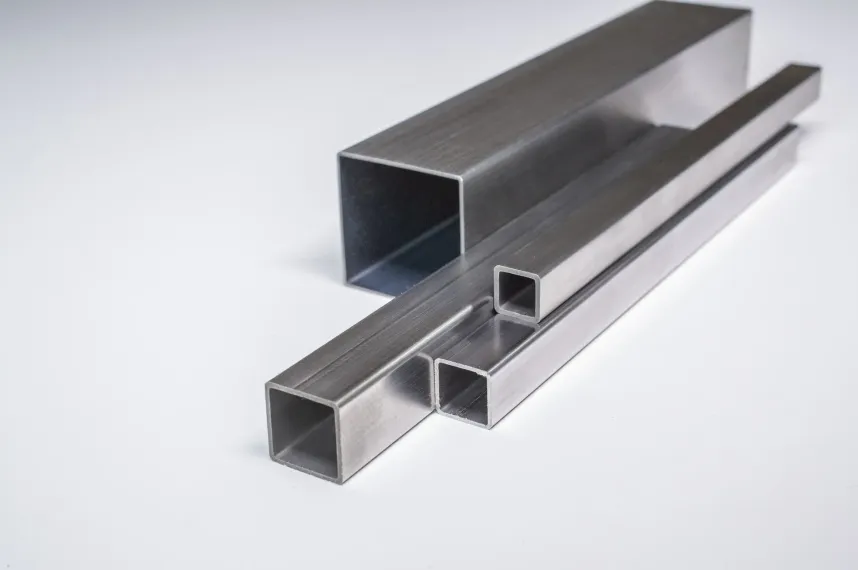
Need neat OD-based rail or machine guards? See square and rectangular sections here: rectangular stainless steel tubes dan tiub segi empat sama keluli tahan karat.
Choosing thickness is a balance of rigidity, load, and lightweight targets. Thicker walls resist denting and vibration; thinner walls cut weight and price. Always verify spesifikasi limits for buckling and pressure. For tight raceways or long spans, increase ketebalan dinding or add supports to keep lines plumb.
Practical tip: For frames, test one mock-up: load it, note deflection, and step up wall if needed. For flow lines, check pressure and velocity models. If you require precision bends, consider tubing products with consistent elongation and yield.
Compare popular rectangular sizes and wall options here: stainless steel square tube dan rectangular stainless steel tubes.
Finish affects cleanability and looks. Mill finish suits hidden structural frames. Polishing (e.g., 180–600 grit) improves cleanability and light reflectance, great for food lines and retail fixtures. For architectural work, ornamental stainless with brushed or mirror finishes delivers the desired functionality and aesthetics.
For display furniture, kiosks, and retail rails, consistent brushed finishes in 304 dan 316 are common. Explore finishing notes and polishing ranges on our OD-controlled pages: round stainless steel tubes and high-finish options linked from Tabung keluli tahan karat 304.
Beyond round, rectangular and square sections offer flat faces for brackets and quick jointing in structural applications. Oval and ellipse control airflow drag in automotive and conveyor guards while staying sleek. Micro-size capillary tubes serve instruments and dosing lines.
Explore shapes and dimensional charts:
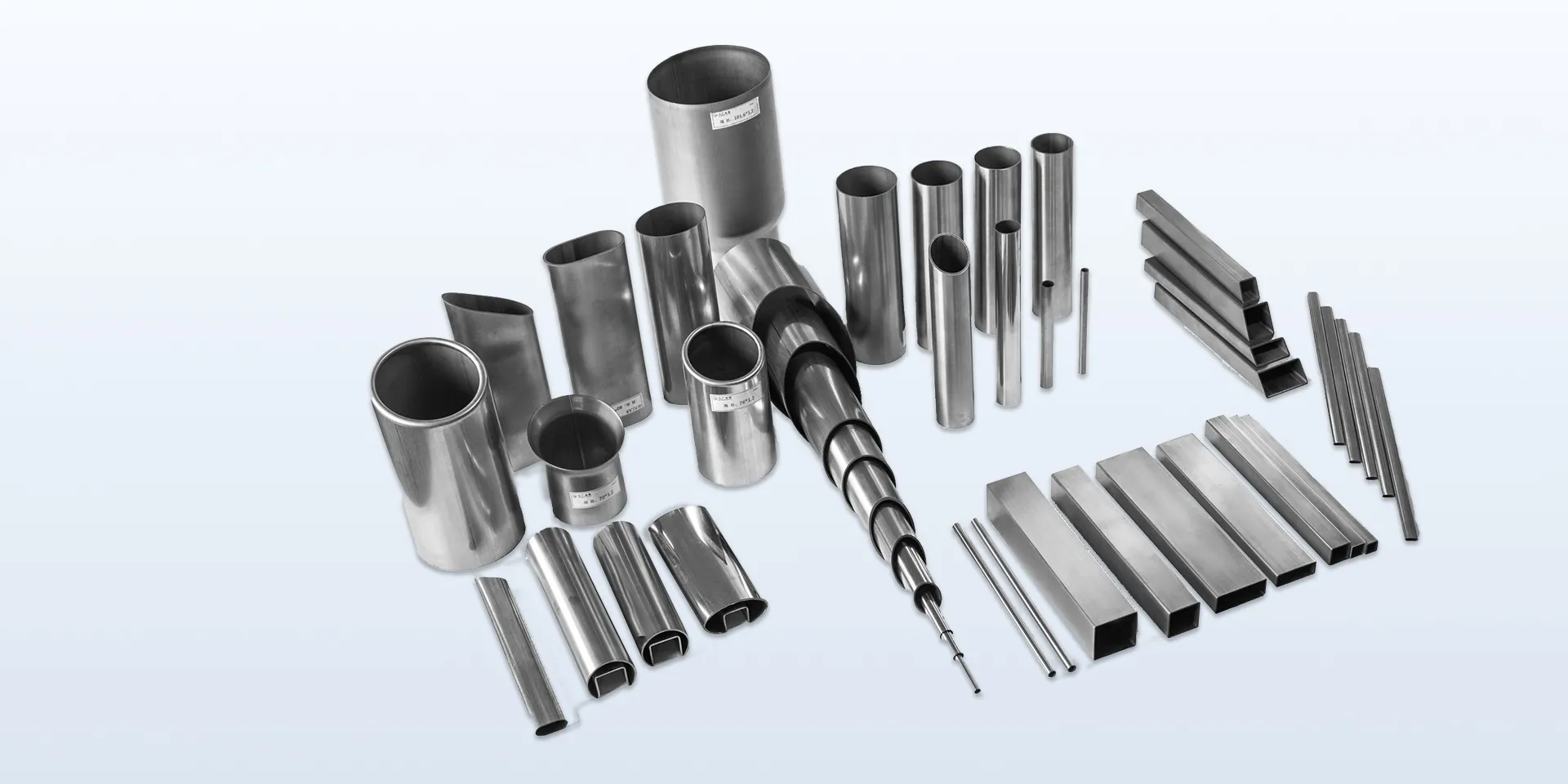
Different shapes of stainless steel tube
Project success depends on smart inventory planning. Hold fast-moving SKUs; release slower lines JIT. For continuous fabrication, slit coil feed can boost yield and transport efficiency. Keep back-orders minimal by forecasting seasonal spikes and standardizing lengths.
Kami inventory of stainless steel covers popular rounds and shapes, with custom cut lengths and bundled deliveries. See the full products and services scope and certificates on our company profile. As a leading supplier of stainless, we align mill runs to stabilize lead time and stock for repeat call-offs.
Step 1: End use
Step 2: Grade
Step 3: Form
Step 4: Spec
Step 5: Finish
Step 6: Procurement
| Gred | Cr (%) | Ni (%) | Mo (%) | Penggunaan Tipikal |
| 304 | ~18 | ~8 | — | General frames, railing, light process |
| 316 | ~16–18 | ~10–14 | ~2–3 | Chloride splash, food/chemical wash-down |
| Duplex 2205 | ~22 | ~5 | ~3 | Higher strength + chloride stress |
Why it matters: Mo in 316 improves pitting resistance; duplex adds ferrite for greater strength with good tahanan terhadap kakisan in brackish zones.
Common grades snapshot
A packaging line needed clean frames and fluid lines near a brine wash. We used 50.8 mm OD tube 1.5 mm thickness dalam 304 for guards, and 1½” Sch10 paip dalam 316 for rinse lines. Welded guards kept weight low; seamless spools handled pump discharge. Results: easy clean-down, no leaks, and a neat, plumb install.
What codes or specs should I name when I request stainless pipe?
Ask for spesifikasi like ASTM A312 (pipe) or A269/A554 (tube), list OD, inside diameter or schedule, ketebalan dinding, gred, and finish. Include pressure/temperature if relevant.
When is seamless mandatory?
Use seamless for high pressure, repeated thermal cycles, critical purity, or when you will machine the OD/ID heavily. Otherwise, welded pipe atau welded tube usually meets the need with better economics.
Can I mix 304 and 316 in the same system?
Yes, but keep wetted parts 316 where chlorides attack. Use 304 for frames and guards nearby. Tie the system together with compatible sesuai choices and avoid galvanic couples.
How do I keep my stainless installs straight and true?
Fixture well, tack frequently, and check plumb and level after each mengimpal pass. Clean heat tint and passivate to maintain the passive film and long-term tahanan kakisan.
Do you cut to exact length?
Yes—list your custom cut tolerances, deburring, and end prep (square cut, bevel, or adapter ready).
What about thin-gauge sanitary or instrument lines?
Ask for polished, inspected paip keluli tahan karat with defined Ra, purge backing during mengimpal, and consider micro capillary for dosing.
If you’d like help selecting sizes or scheduling mill runs, we’re a professional stainless steel manufacturer and exporter in China—happy to share application experience and cut lists for your next project.