Guardrails are essential safety and boundary protection facilities widely used in municipal roads, residential communities, industrial parks, villas, bridges, scenic spots and construction sites. Choosing theright guardrail material directly affects service life, safety performance, maintenance cost and aesthetic effect. Many project contractors and property managers struggle with material selection, as different scenarios require specific strength, weather resistance and anti-corrosion capabilities.
This article systematically analyzes the 3 mainstream metal guardrail materials on the market: hot-dip galvanized steel, stainless steel, and aluminum alloy. We compare their advantages, disadvantages, durability, and applicable environments, sorting out professional selection guidelines for commercial, municipal, residential, and scenic engineering projects, helping you pick the most suitable metal guardrail for your scenario.
1. Hot-Dip Galvanized Steel Guardrail (Zinc Steel Guardrail)

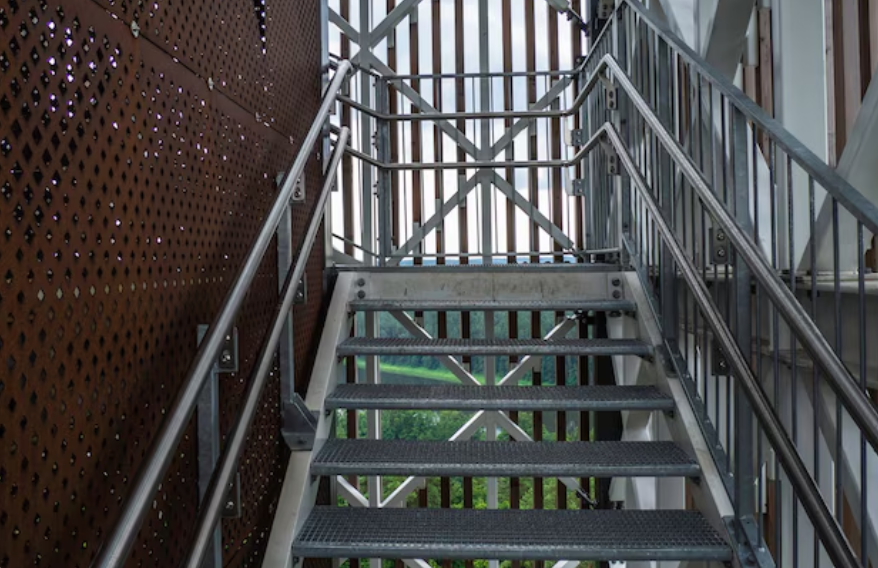
Hot-dip galvanized steel guardrail is the most cost-effective and widely used mainstream material in modern guardrail projects. It adopts high-quality Q235 steel base material, processed by hot-dip galvanizing, phosphating, electrostatic spraying and high-temperature curing multi-layer anti-corrosion technology, with excellent outdoor weather resistance.
Core Advantages
Strong durability: Resists high temperature, rain, snow and ultraviolet radiation, service life up to 15-20 years
Zero daily maintenance: No rust, no fading, no need for regular repainting
High structural strength: Good anti-collision and anti-deformation performance, stable protection
Modular installation: No on-site welding, fast assembly, flexible size adjustment
Rich colors: Supports white, blue, black, green and customized colors to match environmental style
Disadvantages
Simple and modern styling, limited complex artistic carving capabilities, not suitable for retro high-end decorative scenarios.
Best Usage Scenarios
Municipal road isolation, residential community fences, school and kindergarten perimeter protection, factory park enclosures, urban green belt isolation, ordinary residential balcony guardrails. It is the preferred material for most outdoor public infrastructure projects.
Material Classification & Applicability
304 nehrđajući čelik: Basic anti-rust and anti-corrosion performance, cost-effective, suitable for conventional urban indoor and outdoor environments
316 nehrđajući čelik: Added molybdenum element, super resistance to salt spray and acid-base corrosion, specially designed for high-humidity and coastal environments
Core Advantages
Smooth surface, easy to clean, no dirt accumulation
Extremely strong oxidation resistance, long service life
High hardness, stable structure, good safety performance
Disadvantages
Higher cost than zinc steel guardrails; single metallic color, poor personalized decoration performance.
Best Usage Scenarios
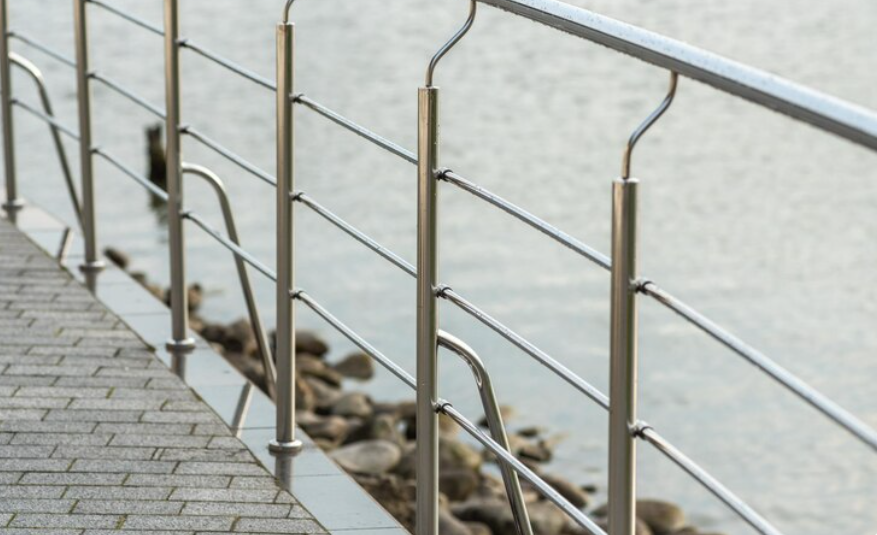
Indoor stair handrails, building balcony guardrails, commercial mall corridors, river and lake water guardrails, coastal city road protection, swimming pool surrounding isolation, high-standard public buildings.
3. Aluminum Alloy Guardrail

Aluminum alloy guardrail is a high-end lightweight protective material, forged from high-purity aluminum alloy profiles, with integral die-casting molding process. It perfectly balances light weight, high strength and high appearance.
Core Advantages
Light weight & high strength: Easy to transport and install, no burden on building structures
Permanent anti-corrosion: Natural oxidation film prevents rust, suitable for all climate zones
High aesthetic: Smooth lines, diverse styles, supports frosted, brushed and color spraying customization
No welding gap, overall safety is higher
Disadvantages
High unit price, not suitable for low-budget large-area municipal projects.
Best Usage Scenarios
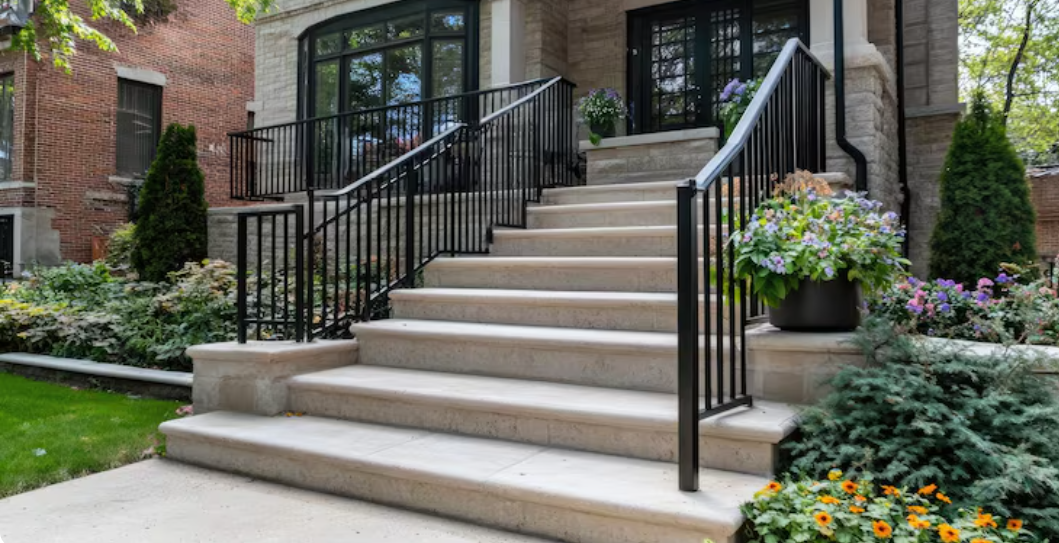
High-end villa courtyards, scenic spot viewing platforms, luxury community balconies, hotel landscape guardrails, bridge decorative protection, high-grade residential perimeter fences.
Quick Selection Guide: Match Metal Guardrail Material with Scenario
To help customers quickly determine the optimal solution, we summarize the targeted selection rules for mainstream engineering scenarios:
Municipal road & public park & residential community: Priority to hot-dip galvanized steel guardrail (low maintenance, durable, high cost performance, suitable for large-scale outdoor engineering)
High-end villa & landscape & hotel scenic projects: Priority to aluminum alloy guardrail (high aesthetic value, corrosion-resistant, lightweight and high-grade)
Coastal & high-humidity & salt spray environment: Priority to 316 stainless steel guardrail (super salt spray and acid-base corrosion resistance, extreme weather adaptability)
Indoor stair & mall corridor & building balcony: Priority to 304 stainless steel guardrail (safe, clean, easy to maintain, stable structure)
Frequently Asked Questions (FAQ)
Q1: Which guardrail material has the longest service life?
316 stainless steel guardrails and aluminum alloy guardrails have the longest service life (more than 20 years in standard environments), followed by hot-dip galvanized steel guardrails (15-20 years). All three metal materials far outperform non-metal guardrails in durability and environmental adaptability.
Q2: What is the best guardrail for seaside projects?
Seaside areas have strong salt spray corrosion. Ordinary zinc steel and wrought iron guardrails are easy to rust. It is recommended to use 316 stainless steel guardrail or high-standard hot-dip galvanized steel guardrail with double anti-corrosion coating.
Q3: Which guardrail is the most cost-effective for community projects?
Hot-dip galvanized steel guardrail is the most cost-effective metal guardrail for community projects. It balances affordable pricing, strong outdoor durability and zero daily maintenance, with lower comprehensive long-term cost than stainless steel and aluminum alloy guardrails, making it ideal for large-scale community fence and perimeter protection projects.
Q4: Do outdoor guardrails need regular maintenance?
All three mainstream metal guardrails (hot-dip galvanized steel, stainless steel, aluminum alloy) require no daily maintenance. They feature rust resistance, fade resistance and weather resistance, only needing occasional routine cleaning to maintain a clean and neat appearance.
Zaključak
For metal guardrail selection, there is no one-size-fits-all best material—only the most suitable option for your specific usage scenario and environment. Hot-dip galvanized steel guardrails are the optimal choice for conventional municipal, community and public infrastructure projects with cost-effective and durable demands. Aluminum alloy guardrails excel in high-end landscape, villa and boutique scenic projects that prioritize appearance and quality. Stainless steel guardrails, especially 316 grade, are irreplaceable for high-humidity, coastal and high-standard indoor public spaces.
Reasonable selection of metal guardrail materials can effectively improve safety performance, extend service life, reduce long-term engineering maintenance costs, and ensure stable and beautiful operation of guardrail facilities in all weather conditions.