A new cable railing can look clean, modern, and almost maintenance-free. But many buyers worry that outdoor exposure, moisture, and salt air will eventually cause rust. The good news is that the right stainless steel cable railing system, with the right grade and upkeep, can last for years with excellent performance.
نعم, درابزين كابل من الفولاذ المقاوم للصدأ can develop rust under certain conditions, but high-quality systems made with the correct grade of stainless, especially 316 stainless steel, offer strong corrosion resistance for decks, stairs, balconies, and exterior projects. The key is choosing the right material, installing it correctly, and following simple cleaning and maintenance steps.
What is stainless steel cable railing?
Does stainless steel cable railing rust?
Why does stainless steel resist corrosion better than ordinary steel?
Is 316 better than 304 for cable railing systems?
Why do cable railings rust faster in coastal areas?
What are the early signs of rust and corrosion?
How should you clean and maintain a cable railing system?
What mistakes make cable railings rust sooner?
How do fitting quality, tension, and installation affect service life?
How do you choose the right railing materials for your project?
A cable railing system uses horizontal or sometimes vertical cable lines instead of traditional balusters. These cables are tensioned between posts to create a clean, open look that works well on a deck, balcony, stairway, or commercial walkway. Many architects and contractors choose this style because it feels modern, keeps views open, and fits both residential and commercial designs.
A typical cable railing system includes posts, top rails, tensioning hardware, and the cable itself. In many exterior applications, the cable and hardware are made from stainless steel because steel must handle weather, load, and long-term exposure better than lower-grade materials. When the system uses the right components, it can be strong, attractive, and relatively low maintenance.
That is why steel cable railing has become popular in high-end homes, public projects, hospitality spaces, and modern infrastructure. It gives a refined appearance without making the structure feel closed in. For B2B buyers, it also offers a good balance of aesthetics, performance, and code-friendly design.
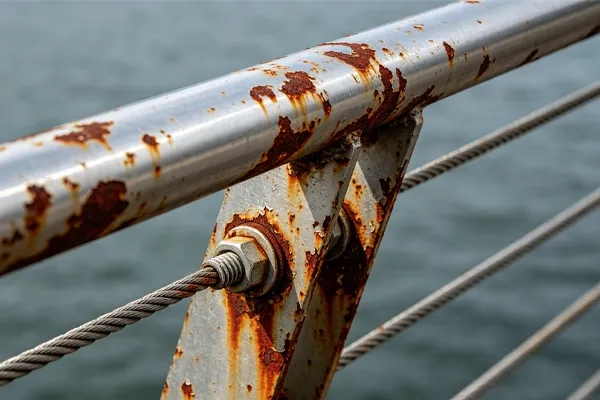
The honest answer is yes, it can. Cable railings can rust in some environments, especially when the material grade is wrong, the product quality is poor, or the railing is exposed to salt, pollution, or trapped moisture. So stainless does not mean “never rust.” It means the material is more resistant to corrosion than ordinary steel.
That said, a high-quality stainless cable railing system will usually perform very well. In most inland environments, good stainless materials can stay bright and strong for a long time. Problems are more likely when buyers use the wrong grade, skip cleaning, or place the railing in highly corrosive conditions without planning for them.
So the better question is not “Can it rust?” but “How likely is it to rust in this project?” That answer depends on grade, finish, installation, and environment. If the system is properly maintained, the risk drops significantly.
The reason comes down to chemistry. Stainless steel contains chromium, which forms a thin protective layer on the surface. This invisible film helps the metal resist attack from air, water, and contaminants. It is what gives stainless its natural resistance to corrosion.
By contrast, carbon steel has no such self-protecting surface behavior. Ordinary steel can corrode quickly when moisture and oxygen stay on the surface. That is why raw carbon steel often shows red rust much faster than stainless products used in the same location.
Still, stainless is not magical. If the environment is harsh enough, or if contaminants sit on the surface too long, even stainless may corrode. This is especially true where salt, pollution, or chloride exposure is high. That is why the exact grade of stainless matters so much in railing work.
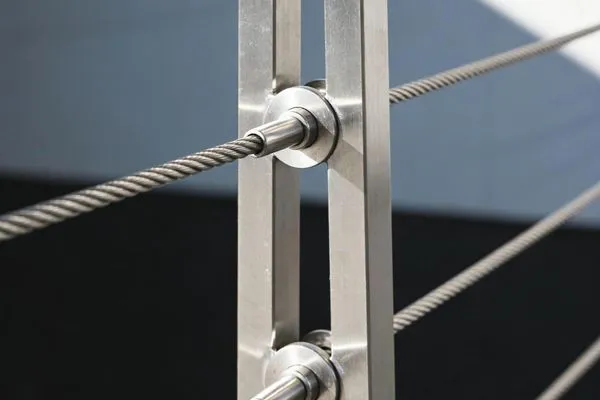
In many outdoor projects, yes. 316 فولاذ مقاوم للصدأ is usually the better choice for exterior cable railing because it offers stronger protection in harsher conditions. The main reason is molybdenum, which improves resistance to chloride-related attack and pitting.
This is why type 316 stainless steel is widely seen as the safer option for exterior and marine use. If your project is near the ocean, exposed to de-icing salts, or located in humid, polluted air, type 316 is generally more reliable than 304. Many buyers describe it as marine grade stainless steel for exactly that reason.
That does not mean type 304 is useless. It can work well in mild inland settings. But when buyers compare type 304 and type 316, the stronger outdoor choice is usually 316. For serious exterior work, especially in coastal areas, 316 is often the smarter long-term decision.
304 vs 316 for outdoor railing
| الصف | أفضل استخدام | Main advantage |
|---|---|---|
| 304 | Mild inland use | انخفاض التكلفة |
| 316 | Exterior, wet, coastal use | Better chloride resistance |
| 316 مقاوم للصدأ | High-moisture and salt exposure | Stronger long-term durability |
The biggest reason is salt. In coastal environments, airborne salt and moisture sit on the surface of the cable and hardware. This creates a more aggressive condition than simple rainwater. Over time, salt air and saltwater exposure can break down the passive layer on the stainless surface.
That is why coastal living requires more careful material selection. A system that works perfectly inland may show staining, pitting, or surface attack faster near the sea. This is also why many reputable suppliers recommend marine-grade or 316 stainless steel for oceanfront and near-shore projects.
It is not only about being right on the beach. Wind can carry salt quite far inland. So if your project is in a marina, island property, harbor district, or salt-heavy region, you should treat it as a coastal case. In those settings, material grade and maintenance matter more.
One of the first warning signs is small discoloration. You may notice tea-colored marks, dull patches, or tiny rust spots around cable ends, fasteners, or exposed hardware. These are often the early signs of rust that buyers should not ignore.
Another sign is roughness around a fitting, post contact point, or cable end. If dirt, salt, or trapped moisture stays in those areas, the finish may begin to degrade. On some systems, the first problem appears where the cable enters the post or where the tensioner hardware holds moisture.
These signs do not always mean the whole railing is failing. Often, early maintenance can stop the problem from getting worse. The key is to notice the issue quickly and perform rust removal, cleaning, and inspection before deeper corrosion develops.
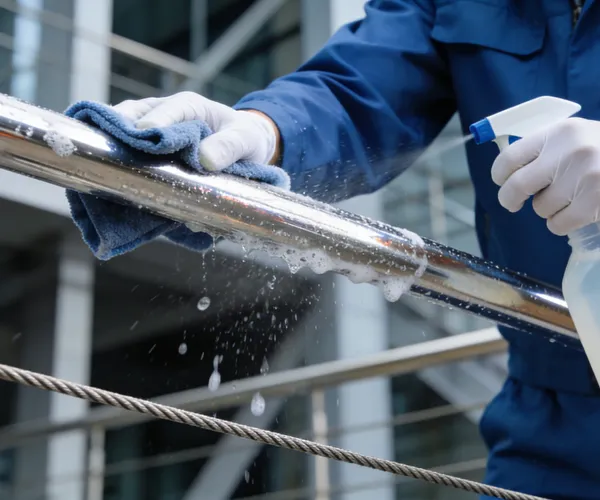
جيد درابزين الكابلات maintenance is simple but important. The most basic step is regular washing to remove dirt, salt, and residue before they stay on the surface too long. For most installations, regular cleaning and maintenance can greatly extend appearance and service life.
A gentle cleaning routine usually works well. Use clean water, a soft cloth, and mild dish soap for normal dirt or salt deposits. Avoid harsh chemicals that may damage the finish or leave harmful residue. For many property owners, this small routine is enough to help prevent buildup and staining.
If you want a practical rule, clean your cable more often in severe environments and less often inland. Oceanfront projects need more frequent attention than protected interior staircases. This simple schedule keeps the system looking better and lowers long-term upkeep.
Basic cleaning steps
The biggest mistake is choosing the wrong material grade. If the system is installed near the coast and the buyer uses a lower grade than needed, the railing may develop problems sooner. Another common issue is mixing incompatible components, especially when cheap hardware does not match the cable material quality.
Poor cleaning is another mistake. Some owners assume stainless needs no care at all. That is not true. Even good systems need regular maintenance to remove salt, dirt, and pollutants. Without that, the surface can stay wet or contaminated longer than it should.
A third problem is using damaging cleaners or tools. Abrasive pads, chlorine-heavy products, and other harsh chemicals may hurt the surface finish. Good maintenance is not aggressive. It is consistent, gentle, and suited to stainless materials.
Quality hardware matters just as much as the cable. A weak fitting or low-grade end terminal can become the failure point even when the cable itself is strong. That is why a good steel cable railing system should use matched components from a reliable supplier.
Installation also affects performance. Proper tension keeps the cable straight and secure, but the system must not be over-tightened. Good cable tension helps the railing look better and perform better, while proper tension also supports long-term hardware reliability.
Project teams should also check building codes and manufacturer instructions during installation. The cable spacing, post layout, and tensioner setup all matter. A new railing that is poorly installed may have higher maintenance needs from the beginning, even if the material itself is good.
Start with the environment. Is the railing inland, near a pool, or close to the sea? Will it face heavy rain, extreme weather, or constant moisture? These questions help determine the right grade of stainless steel and the correct system details.
Then think about use. A residential deck railing has different expectations than a public walkway or commercial balcony. Some buyers want a minimalist look. Others care more about durability and simpler upkeep. The best مواد السور match both the visual goal and the service conditions.
For most demanding exterior projects, high-grade stainless components remain one of the best choices. When you use high-quality materials, choose the right grade, and follow routine care, the railing can stay attractive and strong for years. That is the real value of a well-made stainless steel cable railing system.
Routine Maintenance Checklist
| المهمة | ما أهمية ذلك |
|---|---|
| Rinse salt and dust | Reduces corrosion risk |
| تحقق بقع الصدأ | Finds problems early |
| Inspect each التركيب | Prevents local failure |
| Confirm cable tension | Maintains system performance |
| Clean with mild products | Protects the finish |
| Avoid harsh tools | Reduces surface damage |
Does stainless steel cable railing rust?
Yes, it can, but quality stainless steel cable railing is much more resistant than ordinary steel. Correct grade selection and maintenance make a big difference.
Is 316 better than 304 for cable railing?
Yes. 316 is usually better for exterior and coastal use because it has stronger resistance to chloride-related corrosion than 304.
How do I prevent rust on cable railing?
To prevent rust, choose the right grade, clean the system regularly, remove salt and dirt, and inspect fittings and cable ends for early damage.
What is the best cleaner for stainless cable railing?
In most cases, mild dish soap, clean water, and a soft cloth are enough for basic cleaning stainless steel in normal service.
Can cable railing work near the ocean?
Yes, but for coastal areas you should strongly consider type 316 or other marine grade solutions and plan for more frequent cleaning.
Does cable tension affect corrosion?
Indirectly, yes. Good cable tension supports proper system performance, while poor installation can create stress, trapped moisture, or hardware issues that make maintenance harder.
Cable railing can rust under certain conditions, but good stainless systems perform very well.
The right grade of stainless steel matters, especially outdoors.
316 stainless steel is usually the better choice for coastal and wet environments.
Salt, moisture, and dirt are major causes of railing corrosion.
Early inspection helps catch rust spots before they spread.
Simple cleaning with mild products can greatly improve service life.
Good fittings, proper tension, and correct installation all matter.
High-quality materials reduce long-term maintenance problems.
A well-maintained system stays attractive and strong for years.
For exterior work, choose the grade and maintenance plan based on the real environment.
A Manufacturer of Stainless Steel Guardrails
Stainless Steel Square Tube For Power Rack:70*70*3/75*75*3 And Other Specifications
Stainless Steel Square Tube Guide: 304 & 316 Stainless Square Pipe for Structural and Industrial Projects
Stainless Steel Railing Guide: Handrail, Rail, Cable, and 316 Stainless Steel Railing System Components
واتساب