A lot of buyers, builders, and even homeowners mix up balustrade, railing, and balcony. That confusion can lead to the wrong material choice, design mismatch, or costly rework. The good news is simple: once you know how each term works, choosing the right stainless steel solution becomes much easier.
A balcony is a platform that projects from a building, while a balustrade is the protective barrier made of posts, rails, and often balusters placed along a balcony, staircase, terrace, or landing. A railing is a broader term for a safety barrier or handrail system. In short, a balcony is the space itself, and a balustrade or railing is what helps protect that space.
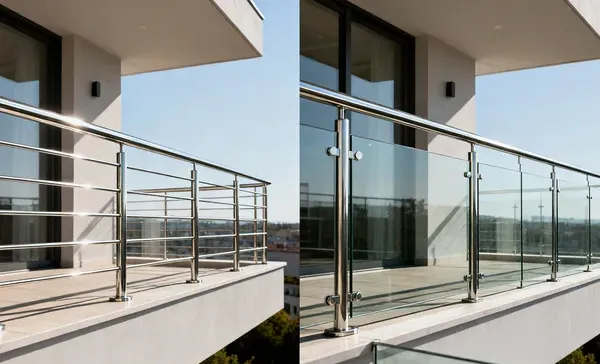
glass railing system vs stainless steel railing system
What is a balustrade?
What is a railing, and how is it different?
What is a balcony in building design?
Balustrades vs railing: what’s the difference?
What makes up a complete balustrade system?
Where are balustrades and railings used in a staircase, terrace, or deck?
Why is stainless steel a smart choice for modern railing systems?
How do design, safety, and visual impact work together?
What should buyers consider when choosing the right system?
Which option is better for a balcony, stairway, porch, or outdoor space?
A balustrade is a complete architectural barrier made to provide safety and style. It is usually made up of a top rail, balusters, support posts, and sometimes glass panels or infill bars. You will often see a balustrade system on a balcony, staircase, terrace, or raised platform where fall protection is needed.
In simple words, a balustrade is not just one rail. It is a complete system. In many traditional designs, the vertical parts are called balusters, and they sit between the top rail and the base or floor fixing. This is why the word balustrade often sounds more architectural than plain railing. It refers to a full decorative and functional structure, not only to the part your hand touches.
From our experience as a professional stainless steel manufacturer and exporter based in China, many buyers use “balustrade” when they want a more finished look, stronger design identity, and a product that serves as both a safety feature and an architectural detail. In commercial and residential projects, balustrades provide both protection and a touch of elegance and sophistication.
A railing is a more general term. It usually means a protective barrier installed along stairs, walkways, platforms, decks, porches, or balconies. A railing may include a handrail, vertical elements, horizontal bars, cable infill, or glass. In many projects, the word railing is used because it is simple, familiar, and practical.
That said, railings are often designed primarily for safety. They help prevent falls, guide movement, and create a safe edge along elevated areas. A railing can be very basic. For example, a handrail on a staircase may be part of a railing assembly, but not every railing is a full balustrade system.
This is why the two words are often used interchangeably, even though they are not exactly the same. If you are comparing railing vs balustrade, think of railing as the broader everyday term, while balustrade usually refers to a more complete architectural system composed of several visible and structural parts.
A balcony is the platform or projecting slab attached to the outside of a building. It creates usable outdoor space for people to stand, walk, or relax. The balcony itself is not the barrier. It is the floor area or platform. To make that platform safe, builders install grades de varanda or a balustrade around the edge.
This is the first big point people miss. A balcony is a place. A balustrade or railing is a barrier that protects that place. So when someone asks, “What’s the difference between a balcony and a balustrade?” the answer is easy: one is the structure you use, and the other is the protective barrier that surrounds it.
You will see this same idea on a terrace, deck, porch, or roof edge. The walking surface and the safety barrier are two different things. Understanding that helps buyers order the right product, especially when working on hotels, apartments, villas, public buildings, and mixed-use developments.
Now let’s look directly at balustrades vs railing. This is where the key differences matter most.
| Recurso | Balustrade | Trilhos |
|---|---|---|
| Significado | A complete architectural barrier | A general safety barrier term |
| Main parts | Top rail, balaústres, posts, fittings, infill | Handrail, posts, bars, cables, or glass |
| Design role | Safety + decorative value | Mostly safety, sometimes decorative |
| Common use | Balcony, escada, terrace, landing | Stairs, deck, porch, walkways, balconies |
| Style impression | More formal and detailed | More flexible and practical |
The key differences explained in plain language are these: a balustrade is usually more architectural, more decorative, and more complete in visual expression. A railing may be simpler, more direct, and sometimes easier to install and maintain. That is why many contractors choose railing systems for fast builds, while architects and designers may prefer balustrades for premium projects.
Another way to understand the differences between balustrades and railings is to look at intent. A balustrade often acts as a focal point in architectural design, especially in hotels, luxury homes, public buildings, and grand staircases. A railing may focus first on function and cost control. Both can be excellent. The best choice depends on use, style, and budget.
A complete balustrade usually includes structural posts, newel posts or support posts, a top rail, connection fittings, and infill elements such as vertical balusters, rods, or glass panels. In stair projects, it may also include a sloped rail section, corner connectors, and anchor plates for the landing and stair runs.
The heart of the system is support plus rhythm. The posts provide structural stability. The balusters are the vertical members between the rails. In some classic designs, one decorative baluster or spindle shape becomes a key visual feature. In modern work, stainless steel posts with clean glass or slim bars create a lighter appearance. Either way, the balustrade system is an architectural system composed of several coordinated pieces.
Below is a simple breakdown:
Top rail for grip and finishing
Posts or newel posts for strength
Infill such as bars or glass panels
Base plates or side-mount brackets
Connectors and fittings
End caps and trims for a finished look
This is why buyers should not price only one pipe or one post. They need to evaluate the complete system, installation method, finish, corrosion resistance, and how the final look matches the project.
Balustrades and railings are used anywhere people need edge protection or guidance. The most common places are interior staircases, outdoor stairs, balconies, terraces, decks, mezzanines, porches, and corridor edges. In all of these spaces, the goal is simple: create safe movement and reliable fall protection.
On a staircase, the system often includes a sloped handrail, intermediate posts, and infill sized to keep the design safe and visually balanced. On a terrace or deck, the railing may be straight, with stronger weather resistance and open views. On a porch, the choice may lean more decorative, especially in villas or boutique commercial projects.
For project buyers, this matters because one product type does not fit every application. A barrier along stairs needs different geometry from a balcony edge. A barrier along stairs must follow slope and movement, while a balcony or terrace system may emphasize open sightlines, drainage, and clean horizontal alignment.

stainless steel railing near the sea
For many buyers, stainless steel is one of the best materials for railing systems and balustrades because it combines strength, corrosion resistance, and a modern appearance. It works well in residential, commercial, hospitality, and infrastructure projects. It also fits both wood or metal mixed designs and fully contemporary layouts.
As a Chinese stainless steel manufacturer and exporter, we see strong demand from industrial distributors, steel wholesalers, engineering contractors, OEM/ODM product manufacturers, and construction developers because stainless steel can support long-term performance with low maintenance. Compared with painted mild steel, it often stays cleaner and more stable over time, especially in humid or coastal settings.
It also brings real design advantages. Stainless steel can offer clean lines, smooth finishes, and a premium feel. In especially in modern buildings, that matters a lot. Buyers want products that look sharp, install well, and stay reliable. That is why stainless systems are widely chosen for architectural railing, glass balustrades, and mixed metal-glass projects.
A good balustrade or railing must do more than meet a drawing. It should serve as both a safety solution and a strong visual feature. The best systems serve as both a safety component and a design asset. They protect users, guide movement, and improve the space at the same time.
This is where visual impact matters. A heavy decorative balustrade may suit classical architecture, stone facades, or formal villas. Slim stainless steel with glass may suit offices, hotels, shopping centers, and contemporary design. Some buyers want ornate lines inspired by carved stone traditions. Others want minimal framing and transparency. Good design comes from matching the system to the project style, not from copying one look everywhere.
Done well, balustrades offer strong aesthetic appeal, a clear final look, and real functional value. They can bring sophistication to any space, or simply create a safe, clean boundary with less visual noise. That is why architects and designers spend so much time on section profiles, post spacing, and finish choices.
There are several factors to consider when choosing the right solution. Start with the application. Is it for a balcony, stairway, terrace, deck, or interior feature stair? Then look at environment, load demands, style goals, and installation method. These are the important considerations that shape both performance and cost.
A useful checklist includes:
Project type: residential, commercial, public, or industrial
Location: indoor, outdoor, coastal, dry, or humid
Material grade and finish
Infill type: rods, tubes, cables, or glass panels
Style goals: classic, modern, industrial, minimal
Budget and long-term maintenance
Fabrication accuracy and lead time
Whether the system is designed and installed as modular or custom-cut
For many customers, stainless steel systems are easier to install when they come with pre-engineered fittings and clear drawings. For custom projects, OEM/ODM support is just as important. Engineering contractors and fabricators often need exact dimensions, custom-cut lengths, and reliable batch consistency. That is where an experienced factory partner makes a real difference.
There is no one answer for every project. For a balcony, many buyers prefer a stainless steel balustrade system with glass because it gives safety, durability, and open views. For a staircase design, a sloped stainless handrail with coordinated posts and infill often works best. For a porch or outdoor residential project, the choice may balance cost, weather resistance, and style.
If your project needs strong decorative character, a balustrade may be the better fit. It gives more decorative elements, stronger architectural identity, and a more complete presentation. If the main goal is fast installation and practical safety, a railing may be enough. In that sense, railings are typically more direct, while balustrades are typically more detailed and sometimes more expensive than railings.
For project owners and every homeowner, the smartest choice is the one that fits the site, use, and image of the building. A hotel entry stair may need a statement balustrade. A service stair may need a basic railing. A luxury outdoor space may need stainless steel plus glass for both performance and elegance.

| Project Need | Better Option |
|---|---|
| Premium residential or hotel escada | Balustrade |
| Budget-conscious functional stairs | Trilhos |
| Glass-heavy modern varanda | Balustrade system |
| Industrial access platform | Trilhos |
| Decorative villa terrace | Balustrade |
| Simple service corridor edge | Trilhos |
In our daily export work, we see one common pattern: buyers who define the use case clearly make better purchasing decisions. Industrial distributors want stable grades and repeatable dimensions. Engineering contractors need dependable fabrication and easy site installation. OEM/ODM manufacturers care about custom parts, precise tolerances, and consistent finishes. Importers and trading companies need a supplier they can trust for delivery, packaging, and communication.
That is why product knowledge matters. When a buyer says “I need balcony material,” the real question is often whether they need the platform structure, the balustrade, the railing, the posts, or the full accessory package. Once that is clear, sourcing becomes faster, quotations become more accurate, and the project moves with fewer problems.
Is a balustrade the same as a balcony?
No. A balcony is the platform or usable space outside a building. A balustrade is the barrier installed around that edge for safety and design.
Are balustrades and railings the same thing?
Not exactly. They are related, and the terms are often used loosely, but a balustrade usually means a more complete architectural assembly, while railing is a broader and more general safety term.
What are balusters in a balustrade?
Balusters are the vertical elements placed between the top rail and lower fixing point. They help support the system and shape its visual style.
O aço inoxidável é bom para grades de varanda?
Yes. Stainless steel is widely used for balcony railings because it is durable, corrosion-resistant, and visually clean. It works well in both modern and commercial projects.
Which is better for a staircase: balustrade or railing?
It depends on the project. A balustrade may suit premium or decorative stairs, while a simpler railing may be better where function, budget, and speed are the main priorities.
Can stainless steel balustrades be customized?
Yes. Many projects require custom-cut tubes, posts, brackets, finishes, and infill types. This is especially important for fabricators, contractors, and OEM/ODM manufacturers.
A balcony is the platform or space; a balustrade or railing is the barrier around it.
A balustrade is usually a more complete and decorative architectural system.
A railing is a broader term focused mainly on safety and support.
Balustrades and railings are used on balconies, terraces, decks, porches, and staircases.
Stainless steel is a strong choice for durability, appearance, and low maintenance.
The best system depends on use, environment, budget, and design goals.
For B2B buyers, clear drawings, material consistency, and factory support are just as important as price.
Balustrade vs Railing vs Balcony: Key Differences Explained for Stair, Terrace, and Balcony Design
What Is the Spacing for Stainless Steel Wire Balustrade? Cable Railing Spacing Code, Deck Rules, and Post Layout Explained
How Jiuguang Metal Presented Precision Stainless Steel Tube Solutions at the Shanghai International Fitness Expo
Jiuguang Metal Showcased Precision Stainless Steel Tubes and Structural Fabrication Capabilities at the Shanghai International Fitness Expo