Choosing a stair rail can feel simple—until you realize the wrong rail can look off, fail a building code check, or feel shaky when you’re climbing stairs. That stress adds up fast. I’ll show you a clear, safe way to choose the right stair railing—so you get a strong, good-looking result without guesswork.
To choose a stair railing, start with safety and code (handrail height, spacing, strength), then match the railing material to your space (indoor and outdoor), and finally pick a style that complements your home’s design. A great railing balances comfort, durability, and clean style—whether you prefer a modern stair rail, glass railing, cable railings, or classic metal.
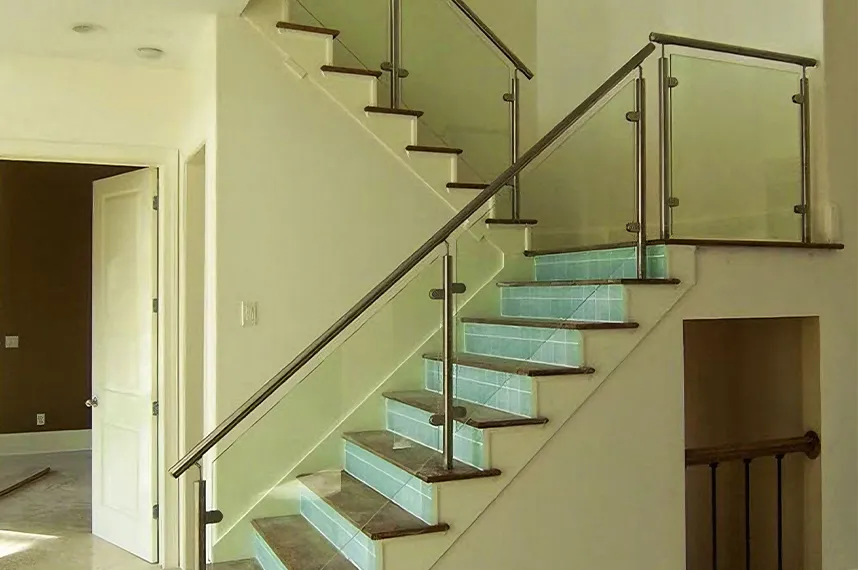
Glass SS Railing
Rail safety first: what does building code say about a stair rail and handrail?
Choosing the right stair: how do you measure your staircase and stair treads?
Railing material: metal railing vs wood stair railing vs glass railing—what lasts?
Modern stair railing ideas: how do you get clean lines without losing safety?
Cable railings and horizontal railings: are they safe for a staircase?
Vertical railings, balusters, and spacing: what is the 4-inch rule and why it matters?
Curve and staircase design: how do you handle corners and a curved stairway railing?
Right stair railing style: how do railing designs complement your decor and overall look?
Custom railing and railing systems: what should B2B buyers ask a supplier for?
Case study: choosing the perfect stair rail for construction and OEM projects
When it comes to stair railings, safety is not “nice to have.” It’s the baseline. Most projects need a handrail at a specific height, measured from the stair tread nosing (the front edge of the step). Many codes used in practice set stair handrail height around 34–38 inches.
If you work in industrial sites, OSHA also defines stair handrail heights (commonly referenced in workplace settings). OSHA’s fall protection standard states handrails are not less than 30 inches and not more than 38 inches measured from the stair tread leading edge.
Quick checklist (start here):
Confirm local building codes and inspection expectations (residential vs commercial can differ).
Verify handrail height and continuity (easy to grip, smooth surface).
Plan your staircase railing spacing to prevent falls (especially where kids are present).
“Start with code, then style.”
That’s my rule on every stair rail project—because a beautiful rail that fails inspection becomes an expensive redo.
Before you fall in love with a stair railing idea, measure your staircase. A rail is not one-size-fits-all. The staircase design (width, rise, run) affects the type of railing that will feel comfortable and look right.
Here’s what I recommend measuring:
Stair width (wall-to-wall or post-to-post)
Stair treads depth and stair risers height
Landing size (top and bottom)
Whether you need a straight run or a curve
Any “open side” that needs a guard rail (not just a handrail)
Why does this matter? Because your rail placement, post spacing, and the top rail alignment all impact the overall feel of your home—and the safety of daily use. When you know the details of your home, it’s easier to choose a rail that fits naturally.
If you’re building new or replacing a new stair railing, take photos and sketch a quick layout. It speeds up quoting and reduces mistakes.
Most buyers start with style. I start with railing material—because the material you choose decides lifespan, maintenance, and cost.
| Material | Best for | Pros | Watch-outs |
|---|---|---|---|
| Metal railing (stainless/aluminum/iron) | Modern and commercial | Strong, durable, many finishes | Needs good fabrication and anchors |
| Wood railing / wood handrail | Warm interiors | Comfortable grip, classic look | Can scratch, may need refinishing |
| Glass railing | Open, airy spaces | Clear views, modern look | Needs thicker glass + careful cleaning |
A wooden railing or wood stair railing can feel cozy in a traditional home. A metal railing often fits better in commercial and modern projects, especially where long-term durability matters. And glass stair railing looks high-end but needs careful handling and hardware.
As a professional stainless steel manufacturer and exporter based in China, we often support projects that want the strength of steel with a clean finish. Stainless works well for indoor and outdoor rail use because it resists corrosion and keeps its appearance with minimal upkeep.
Tip: If your staircase is near a pool, coastal air, or heavy humidity, metal selection and finish quality matter more than the railing style.
A modern stair railing is usually about clean lines, simple geometry, and fewer visual breaks. But “simple” should never mean “weak.”
If you want a modern staircase with clean lines, focus on these design choices:
Use fewer, stronger posts (engineered spacing)
Choose a sleek top rail profile that’s comfortable to grip
Keep transitions smooth at landings and corners
Avoid sharp edges—hands touch this rail every day
A modern railing can still be warm. Many people pair a stainless frame with a wood handrail to soften the look. That mix helps the rail complement both modern design and classic decor.
One smart approach: pick one strong design element.
Example: a matte metal rail with a warm wood top rail. It becomes a subtle focal point without shouting.
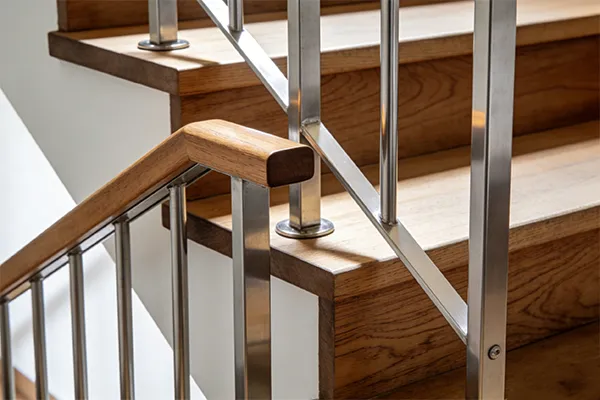
handle
Cable railings and horizontal railings look modern and open. They’re popular in contemporary stair projects. But they require careful spacing and tension so they stay compliant and safe.
The key issue is deflection. Cables can flex when pushed. Many installers recommend spacing closer than 4 inches (often around 3 inches) because force can widen the gap.
If you’re choosing the right stair railing for families or public spaces, think about:
Child safety (climbing risk is higher with horizontal lines)
Long-term maintenance (re-tensioning cables)
Proper end fittings and posts
Cable can still be a perfect railing choice when it’s engineered and installed correctly. It also fits indoor and outdoor projects, especially with corrosion-resistant materials.
This is one of the most important safety ideas in rail work: guard openings should not allow a 4-inch sphere to pass through (commonly referenced as the “4-inch sphere rule” in many code discussions).
That rule affects:
Balusters spacing
Glass panel gaps
Cable spacing choices
Decorative patterns in railing designs
Vertical railings are the classic solution. They reduce climbability and make spacing easier. If you like traditional looks, vertical balusters pair well with a wood handrail or a metal top rail.
Simple spacing table (easy reference):
| Railing style | Spacing risk | What to do |
|---|---|---|
| Vertical railings | Lower | Keep balusters tight and consistent |
| Horizontal railings | Medium–High | Consider child safety + code checks |
| Cable railings | Medium–High | Space closer to handle deflection |
| Glass railing | Medium | Use proper clamps + avoid large gaps |
If you want the best stair railing, treat spacing and anchoring as non-negotiable.
A straight stair rail is easier. A curved stairway railing is where planning matters most.
If your stair has a curve, you’ll need:
Accurate templates or site measurements
A plan for smooth hand transitions
Stronger posts at turning points
Clean joints (this is where rail failures often happen)
Curved rails can become an eye-catching stair railing feature. They also influence your overall design. A curved rail in stainless steel can look light and elegant, especially if you use glass railing infill.
Practical advice:
If you have a complex curve, don’t “guess” from drawings alone. Use a real site measure or a template process. It saves time, scrap, and delays.
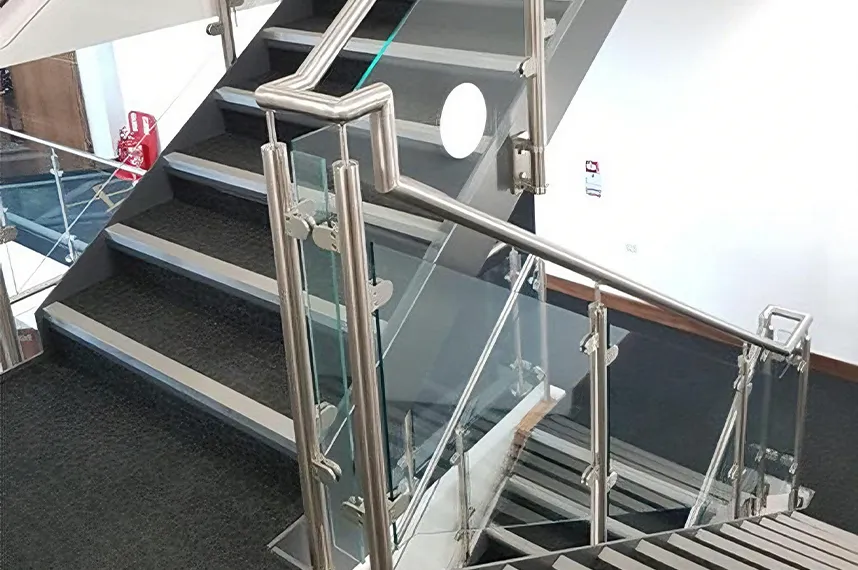
Glass SS Railing
Now we get to the fun part: style.
Choosing the right stair look means matching railing styles to the home’s style and the home design story you want:
Modern design: slim posts, simple lines, glass
Industrial: metal railing with bold posts
Traditional: wood stair railing with classic balusters
Transitional: mix wood handrail + metal supports
A rail should stair railing that complements the design of your home. When it matches, the rail feels “built in,” not “added on.”
Design ideas you can use:
White railing + light wood handrail for bright interiors
Black metal + warm wood for contrast
Stainless + glass for open views
Wrought iron accents (yes, wrought iron can still look modern when simplified)
Even small choices matter: the top rail shape, the stair posts size, and how the rail meets the landing. These details of your home shape the final overall look.
For distributors, contractors, OEM/ODM buyers, and importers, the hidden need is not “pretty.” It’s repeatable quality, stable lead time, and easy installation.
When you’re sourcing railing systems, ask for:
Material grade, thickness, and finish specs
Welding and polishing standards
Load/strength testing approach (where applicable)
Packaging method (to protect finishes)
Ability to customize your railing: cut-to-length, pre-drilled plates, pre-assembled sections
Drawings confirmation and QC checkpoints
Types of handrails also matter. A round, easy-to-grip profile often feels best in daily use. A flat rail might look sleek, but it must still be comfortable.
As a China-based stainless steel exporter, we often support:
Bulk rail supply for wholesalers
Custom-cut components for fabricators
OEM parts for product manufacturers
Project packages for construction and infrastructure developers
That’s how you reduce risk and keep projects moving.
Here’s a simple real-world example that mirrors what we see in export projects.
Case 1: Construction developer (durability + speed)
A developer needed a stair rail for a public building: strong, clean, and easy to maintain. They wanted a modern railing look, but also needed predictable installation.
Solution: stainless steel posts + wood handrail.
Why it worked:
Stainless structure held up to heavy use
Wood handrail improved grip comfort
Fabrication stayed consistent for batch production
Result: fewer site fixes, faster handover.
Case 2: OEM/ODM manufacturer (tailored components)
An OEM client needed custom brackets and rails for a prefabricated staircase product. They cared about tight tolerances and repeatability.
Solution: custom railing parts with fixed jigs and QC checkpoints.
Result: stable assembly time and fewer returns.
That’s the heart of choosing the perfect stair: pick what meets safety, style and budget, and production reality—at the same time.
How do I choose the right stair railing for my home?
Start with safety and building code, then choose the railing material for your indoor and outdoor needs, then pick a style that fits your home’s design. Handrail height commonly falls around 34–38 inches in many residential code references.
What handrail height is typically required for a staircase?
Many code discussions and interpretations commonly reference 34–38 inches for stair handrail height. OSHA workplace guidance also references a 30–38 inch range for stair handrails.
Are cable railings safe on stairs?
Yes, cable railings can be safe if they are engineered and installed correctly. Spacing often needs to be tighter than “4 inches” because cables can deflect under force.
What is the best material for a stair rail—wood or metal?
Wood feels warm and classic. Metal can be more durable and lower-maintenance, especially for heavy-use or outdoor exposure. The best choice depends on your staircase location, traffic, and desired look.
How do I keep balusters safe for children?
Use consistent spacing that follows common guard-opening rules (often discussed as the 4-inch sphere rule), and avoid designs that are easy to climb.
Can I customize a stair railing for projects or bulk orders?
Yes. Many suppliers offer custom railing packages: cut-to-length rails, custom brackets, pre-drilled plates, and finish matching. For B2B projects, confirm drawings, QC checkpoints, and packaging to reduce site problems.
Put safety first: confirm local building codes and handrail height rules.
Measure your staircase (treads, risers, landings) before choosing a rail style.
Choose the right railing material for wear, humidity, and indoor and outdoor exposure.
Want clean modern style? Use simple geometry, strong posts, and smooth transitions.
Be careful with cable railings and horizontal railings—spacing and deflection matter.
For B2B sourcing, ask for specs, QC checkpoints, and customization options to reduce project risk.
If you want, tell me whether your project is indoor or outdoor, straight or curve, and your target style (glass, cable, wood, or metal). I can turn this into a buyer-ready spec sheet and a “request for quote” checklist for your next bulk order.
How to Choose the Right Stair Rail and Handrail: Stair Railing Ideas That Fit Your Dream Home
Stainless Steel Railings for Balcony Railing: Which Steel Is Best?
Which Is Better for a Railing: Wrought Iron or Steel Railings? A Simple Guide to Durability, Rust, and Cost
How to Clean a Stainless Steel Wire Balustrade: Essential Maintenance Tips for Long-Lasting Cable Railings