تلاش برای خم کردن لولهٔ اشتباه با روش نادرست میتواند بهسرعت باعث هدررفت مواد شود. لوله ممکن است چروکیده شود، صاف شود، به حالت اول بازگردد یا حتی در نقطهٔ خمش ترک بخورد. راهحل ساده است: رفتار فولاد ضدزنگ ۳۰۴ را بشناسید و از ابزار مناسب برای این کار استفاده کنید.
Yes, you can bend 304 stainless steel tubing. In fact, 304 is an austenitic stainless grade known for good formability and weldability, and fully annealed stainless tubing is commonly supplied as suitable for bending and flaring. The real challenge is not whether you can bend it, but how to control springback, radius, wall support, and deformation during the bending process.
What makes 304 stainless steel tubing bendable?
Why is bending 304 stainless steel different from bending carbon steel?
What factors affect how well you can bend stainless steel tubing?
Which tube bending methods work best for 304 stainless steel?
When do you need a mandrel for stainless steel tube bending?
How do bend radius and wall thickness affect the result?
What are the most common problems when you bend stainless tubing?
Can you bend welded and seamless 304 stainless steel tube the same way?
Should you cold bend or hot bend 304 stainless steel?
What should B2B buyers ask before ordering bend-ready stainless steel tubing?
As a professional stainless steel manufacturer and exporter based in China, we work with industrial distributors, engineering contractors, fabricators, OEM/ODM factories, and project buyers who need tubing that can be formed reliably in real production. In our experience, the question is rarely “Can we bend stainless?” The better question is “Can we get clean, repeatable, cost-effective bends without scrap, delay, or quality complaints?”
The good news is that 304 stainless steel is widely used because it combines formability, weldability, and broad utility. Outokumpu describes Core 304/4301 as a classic 18% chromium, 8% nickel austenitic stainless steels grade with good corrosion behavior, good formability, and good weldability. That is one reason it is common in pipes and tubes.
For tubing applications, annealed condition matters a lot. Swagelok’s tubing data sheet says fully annealed type 304 and 304/304L tubing is suitable for bending and flaring. That is important because a softer tube is easier for a bender to form than heavily cold-worked material.
So the short answer is yes, you can bend stainless steel tubing in grade 304. The longer answer is that the tube condition, tooling, and geometry decide whether the bend looks clean or becomes scrap.
Bending stainless steel is not exactly the same as bending carbon steel. In general, stainless tends to work harden more and spring back more, so the operator often needs more control and more force to bend the tube accurately. Swagelok’s hand tube bender manual notes that all tubing exhibits springback and that the amount depends on the material, bend angle, wall thickness, and bend radius.
That is why 304 stainless can feel a little more stubborn in practice. It is not impossible. It is just less forgiving than softer metals in some forming conditions. RIDGID also positions certain heavy-duty instrument benders specifically for stainless steel and other hard tubing, which shows that stainless often needs more robust tooling support.
If a fabricator uses the same approach for stainless and mild steel, the results may not match expectations. Better control of tooling, lubrication, and setup is usually needed for stainless jobs, especially where appearance and dimensional accuracy matter.
Several factors control whether a bend comes out clean. The biggest are wall thickness, outside diameter, material condition, target bend angle, and the required radius of the bend. Swagelok’s electric tube bender manual specifically says bend radius, wall thickness limits, and minimum straight length vary by tubing size and tooling.
Wall thickness matters because thinner tube walls are easier to distort. If the tube is too light for the bend geometry, it may flatten, wrinkle, or show visible deformation. That risk increases with thin-walled tubing, tight radii, and poor support inside the tube.
The finish condition matters too. Fully annealed tubing is generally easier to form than heavily worked tubing. Swagelok’s data sheet and RIDGID’s product guidance both point toward annealed material when discussing stainless tube bending tools.
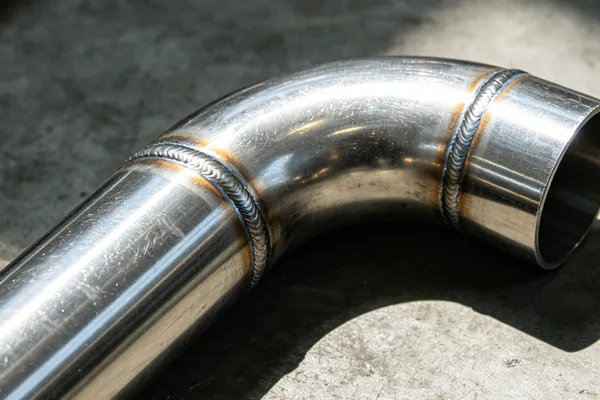
There is no single method for every project. The best choice depends on the tubing size, the finish requirement, and the bend geometry. In many industrial applications, tube bending for 304 uses hand benders, bench-top benders, electric benders, or CNC equipment, depending on the production volume and complexity. Swagelok offers hand, bench-top, and electric benders for annealed tubing and emphasizes that these tools help reduce wrinkling and damage during bending.
For simple site work or maintenance jobs, a manual tube or hand bender may be enough. For repeated production and accurate bends, a powered or cnc solution is often better because it improves repeatability and reduces operator variation.
Common industrial methods include rotary draw bending, roll bending, and mandrel bending. Rotary draw bending is usually preferred for tighter and more precise bends. Roll bending uses a series of rollers and is better for large radius curves.
Quick Comparison Table
| Method | Best for | Main advantage | Main caution |
|---|---|---|---|
| Hand or bench tube bender | Small runs, installation work | Simple and practical | Limited by tube size and wall |
| Rotary draw bending | Tight, controlled bends | Good accuracy and repeatability | Needs proper tooling |
| Mandrel bending | Tight bends on thin walls | Helps prevent collapse and wrinkling | Higher tooling cost |
| Roll bending | Large radius curves | Smooth sweeping bends | Not ideal for very small radius work |
A mandrel is used when the tube needs extra internal support during the bend. This is especially important for thin-walled tube, tight radii, and visible applications where collapse or wrinkling is unacceptable. Swagelok’s product literature focuses on reducing wrinkling and tubing damage, while many precision tube processes use mandrel bending to support the inside of the tube during tight-radius forming.
In simple terms, the mandrel helps the tube keep its shape. Without it, a tight bend on light-wall material may wrinkle inside the curve or flatten across the section. For decorative, sanitary, or fluid-system tubing, that can be a major problem. A poor inside surface can also affect fit, flow, and appearance.
If you are doing bending projects with a small radius, thin wall, or high appearance requirements, using a mandrel is often the safer choice.
They affect almost everything. A larger bend radius is usually easier on the tube. A tighter radius puts more strain into the outer wall and more compression into the inner wall. That increases the chance of kinking, wrinkles, ovality, or wall thinning. Swagelok’s manuals make clear that bend radius and wall thickness limits are tool- and size-dependent.
This is why the inside radius, outside diameter, and wall thickness should always be considered together. A heavy-wall tube can usually tolerate a tighter bend than a light-wall one. A radius of the tube that looks easy on paper may still be difficult if the wall is too thin or the tooling is wrong.
As a practical rule, tighter bends need better support and better tooling. Wider curves are more forgiving. If the application allows a large radius, fabrication usually becomes easier and more economical.
The most common problems are springback, wrinkling, flattening, surface marking, and dimensional inconsistency. Swagelok’s manual notes that stainless tubing will spring back after bending, and it says operators should expect to allow roughly 1 to 3 degrees of compensation depending on material and geometry.
Another common issue is local shape loss. A tube may wrinkle on the inside of the bend or flatten across the section if the tooling does not support the tube well enough. This is more likely with thin-walled tubing, a tight bend radius, or a poor clamp setup.
Surface damage can also matter. In visible or sanitary work, scratches from a worn bend die, dirty tooling, or poor lubrication can create quality complaints even if the shape is technically acceptable. That is why the right tools matter just as much as the raw material.
Common Challenges and Solutions
These are the most common challenges and solutions fabricators deal with when forming stainless tube.
Both welded and seamless tube can be bent, but they do not always behave exactly the same. Swagelok’s tubing data sheet refers to fully annealed seamless or welded-and-drawn stainless tubing as suitable for bending and flaring, which shows that both forms are used in bending work when supplied in the right condition.
For some applications, seamless tube is preferred because of consistency and pressure-service expectations. For others, welded-and-drawn tube is completely acceptable and more economical. What matters most is the finished quality, the annealed condition, the wall consistency, and whether the tube meets the forming and service requirements.
If the bend crosses a weld seam in lower-quality tubing, the result can be less predictable. That is one reason industrial buyers usually prefer well-controlled tube from a reliable source instead of unknown stock.

In many practical fabrication jobs, 304 tube is cold bent. Alleima’s 3R12 datasheet, which corresponds to ASTM 304L/304, says annealing after cold bending is not normally necessary, though the final need depends on the degree of bending and the service conditions. It also states that hot bending is carried out at 1100 to 850°C and should be followed by solution annealing.
That gives a clear rule for most buyers: if the bend can be done well by cold forming, that is often the simpler route. Hot bending is usually a more specialized option and adds heat-treatment considerations afterward. For many industrial tube sizes, cold bending with the right bender, proper support, and correct geometry is enough.
This is also why experienced fabricators prefer to start with the right temper and geometry instead of trying to solve everything with heat later.
This is where purchasing and production meet. If you are sourcing for distributors, contractors, or OEM lines, do not ask only for “304 tube.” Ask for the full forming context. Confirm alloy, finish condition, outside diameter, wall thickness, dimensional tolerance, and whether the tube is expected to be bent by hand, by hydraulic equipment, or by CNC production.
Ask whether the tubing is fully annealed and suitable for bending. Swagelok’s data sheet uses that wording directly for 304 tubing, and that is exactly the kind of requirement B2B buyers should define up front.
It is also smart to discuss the application. Is the tube for a visible product, a structural fitting, sanitary equipment, hydraulic tubing, or precision instrument lines? Different uses may demand different surface quality, tighter tolerances, or different forming support. If chloride exposure is important, buyers may also compare 304 and 316, since 316 is generally chosen for stronger chloride resistance than standard 304 grades in harsher environments.
Can you bend 304 stainless steel tubing by hand?
Yes, small sizes of annealed 304 stainless steel tubing can be bent with a proper hand tube bender. Tool capability depends on tube size and wall thickness, so you should always check the bender’s limits first.
Is 304 stainless steel difficult to bend?
It is bendable, but it can be more difficult to bend than softer metals because stainless tends to spring back and work harden. That means tooling and setup matter more.
Do I need a mandrel to bend stainless steel tube?
Not always. A mandrel is most helpful for tight-radius bends, appearance-critical parts, or thin-walled tubing where collapse and wrinkling are risks.
Can welded 304 stainless tube be bent?
Yes. Fully annealed welded-and-drawn 304 tubing is also used for bending and flaring applications. Quality and consistency still matter.
What is the best method for bending 304 stainless steel?
For many precision jobs, rotary draw bending or mandrel bending gives the cleanest result. For simpler work, a hand or bench bender may be enough. The best method depends on the size, wall, radius, and quality target.
Should 304 stainless be hot bent?
Usually, cold bending is the practical first choice. If hot bending is used, Alleima states it should be done at 1100 to 850°C and followed by solution annealing.
Yes, you can bend 304 stainless steel tubing.
304 is an austenitic grade with good formability and weldability.
Fully annealed tubing is usually easier to form than hard-worked tubing.
Wall thickness, bend geometry, and tooling decide whether the part bends cleanly or distorts.
Tight bends on light-wall tube often need a mandrel and better support.
Springback is normal, so accurate bending requires compensation and experience.
For B2B buyers, the right order spec should include alloy, temper, dimensions, tolerance, and bending use case.
Good bending results come from both the right tube and the right process.
واتساپ