05 2026/08

Stainless Steel Pipe Grades & Maintenance for Longer Service Life

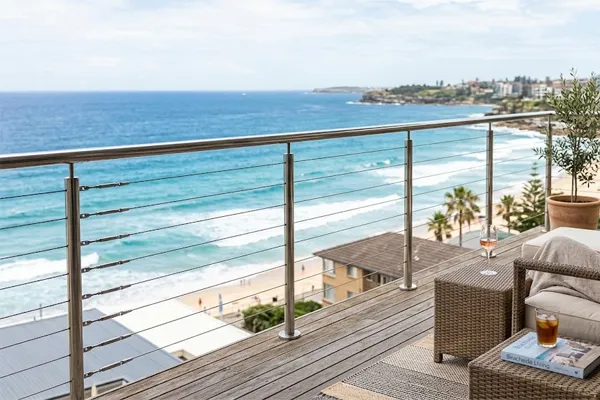
Seilgeländer für den Balkon einer Wohnung am Meer

Stainless steel pipes are divided into decorative pipes, fluid‑transfer pipes and industrial pipes. Different grades serve different purposes. Rusting is mostly caused by environment, chloride ions or surface damage, not necessarily poor material quality.

Common Stainless Steel Pipe Grades

201 (1Cr17Mn6Ni5N)

  • Composition: High manganese, low nickel
  • Performance: Moderate rust resistance; poor chloride‑ion resistance. Prone to rust in humid, coastal or salty environments; low cost.
  • Application: Indoor decorative pipes for railings, handrails and window trim. NOT for water or fluid conveyance. Not suitable for outdoor exposure.
Only for dry indoor use; surface rust will appear quickly outdoors.

304 (06Cr19Ni10 / SUS304) ✨ Most common for household use

  • Chromium ~18%, nickel ~8%, austenitic stainless steel; non‑magnetic or weakly magnetic.
  • Performance: Resists normal moisture, weak acids and alkalis. Works for indoor and general outdoor conditions. Limited chloride‑ion resistance; pitting rust may occur under long‑term contact with salt‑water or seawater.
  • Application: Thin‑wall domestic water pipes, outdoor railings, equipment pipelines, gas pipelines, water supply and drainage fittings.
304 is the mainstream grade for household stainless steel water pipes.

316L (022Cr17Ni12Mo2 / SUS316L) ⭐ Superior corrosion resistance

  • Molybdenum added; “L” stands for low carbon. Greatly improved resistance to chloride ions; withstands salt spray, seawater and chemicals.
  • Performance: Far better anti‑rust performance than 304; excellent for coastal/salty environments; reduced inter‑granular corrosion after welding.
  • Application: Coastal projects, chemical pipelines, seawater equipment, high‑end drinking‑water pipes, swimming‑pool pipelines. Price is 30‑60 % higher than 304.

321 (06Cr18Ni11Ti)

  • Titanium‑stabilized grade; good high‑temperature performance, resists inter‑granular corrosion at high temperature.
  • Application: High‑temperature boilers, heat‑exchanger tubes; rarely used in residential projects.

430 (Ferritic stainless steel)

  • Strong magnetic property, mediocre corrosion resistance. Mostly for decoration, seldom used as pressure‑bearing pipes.
Important misconceptions
  1. A magnet cannot judge quality: Cold‑bent 304 may become magnetic; 201 can be non‑magnetic. Do not test with magnets.
  2. Meaning of “L”: Low carbon. 304L / 316L are preferred for welded pipes to lower post‑weld corrosion risk.

Pipe type notes

  1. Decorative pipe: Bright polished surface, thin wall, low pressure resistance. Only for railings & handrails; do NOT use for water supply.
  2. Industrial fluid / thin‑wall water‑supply pipe: Smooth inner wall, uniform wall thickness, meets pressure standards, for water and media transport.

Grade Selection Guide

表格
SzenarioEmpfohlene NoteNot Recommended
Indoor domestic water pipes & handrails304201 (never for water pipes)
General outdoor railings304201 (rusts within 1‑3 years)
Seaside, salt‑spray, swimming pool, chemical service316L304 (subject to pitting corrosion)
High‑temperature process piping321 / 316L201, standard 304

Maintenance Tips to Extend Service Life

Stainless steel relies on a passive chromium‑oxide surface film for corrosion resistance. Damage to this film leads to rust. Maintenance aims to protect this passive film.

✅ Good Practices

  1. Remove salt deposits, dust, cement and mortar timely

    Salt spray (coastal areas), cement and lime residues accelerate pitting corrosion. Rinse surfaces promptly. Clean sheltered corners where rain cannot reach.

  2. Cleaning: Use water plus neutral detergent with soft cloth or sponge.

    After cleaning, wipe off standing water. Avoid trapped water on pipe surfaces, gaps and welds — welds are high‑risk corrosion zones.

  3. Special care for welds

    Remove welding slag and oxide scale after welding. For outdoor / coastal installations, apply dedicated stainless‑steel protective wax if possible.

  4. For potable‑water stainless‑steel pipes

    If local water has high chloride content (groundwater, coastal tap water), select 316L. Avoid long‑term stagnant water; run taps periodically.

❌ Things You Must Avoid (cause rapid corrosion)

  1. Do not use steel wool or steel wire brushes. They scratch the passive film; scratches trap dirt and speed up pitting. For stubborn stains use soft white scouring pads only.
  2. Avoid bleach, chlorine‑containing disinfectants and chlorine‑based cleaners. Chloride ions destroy the passive oxide layer and cause rust spots.
  3. Do not leave salty, acidic or chemical residues sitting on pipe surfaces for long periods.
  4. Prevent prolonged contact with cement, plaster and salty soil.
Once deep pitting corrosion occurs, damage to the passive layer is permanent and cannot be fully repaired by cleaning alone.


whatsapp

Kontakt

Eine Nachricht verfassen

Unser Unternehmen verpflichtet sich, Ihre persönlichen Daten nicht an ohne Ihre ausdrückliche Zustimmung an Dritte weiterzugeben.

Kostenloses Angebot einholen

Wir werden Ihnen innerhalb von 24 Stunden antworten. Wenn für dringenden Fall, fügen Sie bitte WhatsApp/WeChat: +86-15053272126,. Oder rufen Sie +86-15053272126 direkt.

*Wir respektieren Ihre Vertraulichkeit und alle Informationen sind geschützt. Wir werden Ihre Daten nur zur Beantwortung Ihrer Anfrage verwenden und niemals unaufgefordert E-Mails oder Werbenachrichten versenden.