Choosing a railing sounds easy—until rust spots show up, a contractor complains about weld issues, or the inspector flags your guard height. That’s expensive. And annoying. The fix is simple: match the steel grade to the environment, the railing system design, and the code basics.
The best steel for railing is usually stainless steel—304 for most indoor use, 316 for outdoor environments near salt or chemicals, and 2205 stainless steel for very harsh environments. For budget projects, a coated carbon steel railing can work, but it needs regular maintenance and good protective coating. Code requirements (height and openings) also matter as much as material.
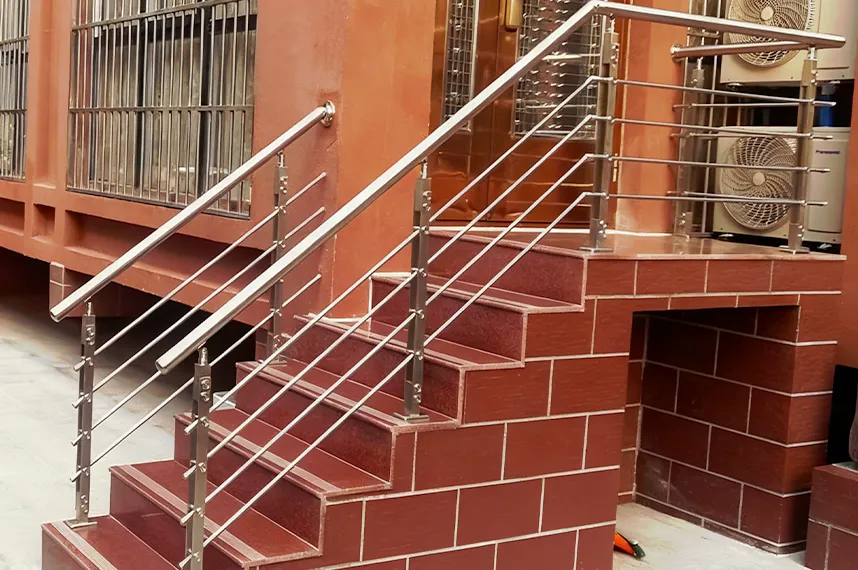
Merdiven Korkulukları
What makes a great railing material—beyond looks?
Which building codes affect a railing system (height, openings, handrail)?
Is stainless steel the best option for a steel railing system?
304 vs 316 stainless steel: which grade fits your railing project?
When should you specify 2205 stainless steel for corrosion resistance?
Carbon steel railing: when does coated steel make sense?
Glass railing and cable railing: what steel parts matter most?
Aluminum railing vs stainless steel: lightweight versatility or long-life strength?
Fabrication and finish: weld quality, stain, scratch, and low maintenance
How to buy railing materials in bulk from China (OEM/ODM + QC checklist)
When clients ask me “Which steel is best for railing?”, I always start with the same question: Where will this railing live? A railing on an indoor staircase has a very different life than a seaside balcony. Indoors, the main threats are fingerprints, cleaning chemicals, and daily wear. Outdoors, it’s water, salts, pollution, and temperature swings.
Here are the factors to consider when choosing the right railing material:
Corrosion risk (rain, salt spray, pool chemicals, industrial air)
Durability under bumps, crowds, carts, and tools
Aesthetics (brushed, mirror, matte, modern)
Cleaning needs: true low maintenance vs “looks fine until it doesn’t”
Cost over time (not just the first invoice)
A railing system isn’t only the top rail. It includes the handrail, posts, anchors, fittings, and sometimes glass panels or cable. One weak component can cause the whole system to fail early—especially outdoors.
Material choice is only half the story. A “perfect” metal railing can still fail inspection if the dimensions aren’t right. Many projects follow model building codes such as IBC (commercial) or IRC (residential). Local rules may vary, but these basics show up again and again.
Commercial guard height (IBC): IBC Section 1015.3 states required guards shall be not less than 42 inches high in many cases.
Residential guard height (IRC guidance): An IRC commentary summary explains guards at open-sided walking surfaces must be not less than 36 inches high, with stair exceptions.
Opening limits (child safety): That same IRC commentary summary notes opening limitations commonly use a 4-inch sphere rule.
Handrail height (ADA): For accessibility, ADA handrail height is typically 34–38 inches to the top of the gripping surface.
Quick code reminder (plain language):
Guards are about fall protection (think balcony edge).
A handrail is for support (think stairs).
Sometimes the top of the guard acts as a handrail—so your rail height rules overlap.
Let’s tackle the common myth: “steel is the best.” It can be true—if you pick the right steel and finish. For railings, stainless steel is popular because it resists rust, keeps its look, and fits modern architecture.
What I see in real projects:
Paslanmaz çelik korkuluk stays clean-looking longer with less fuss.
Carbon steel can be strong, but it depends heavily on coatings.
Mixed metal designs (like steel and aluminum) can create corrosion problems if the details are sloppy.
Stainless steel is also used in railing systems because it’s predictable: it welds well, polishes well, and keeps a stable surface in many environments. That makes it a favorite for residential and commercial projects where image and safety both matter.

This is the most common decision buyers face: 304 or 316.
304 paslanmaz çelik: the “everyday” winner (especially indoors)
For many interior applications, 304 is cost-effective and reliable. It contains chromium and nickel, which help form a protective surface layer that slows rust. (Composition ranges can vary by standard and supplier; always confirm on your MTC.)
Where 304 usually shines:
Indoor use stair railing and handrail
Offices, malls, and clean public areas
Dry outdoor applications with low salt exposure (depending on design and cleaning)
316 paslanmaz çelik: better for chlorides and coastal air
316 adds molybdenum, which improves resistance to chloride attack and pitting (tiny deep “pin” damage that spreads). If you’re near the ocean, pools, de-icing salts, or chemical sites, 316-grade stainless is often the safer call.
Where 316 is often “worth it”:
Outdoor environments with sea breeze
Poolside decks, resorts, coastal balconies
Industrial walkways with chemical splash risk
A simple way to decide (what I tell contractors):
If you can smell salt or you see white salt marks on nearby surfaces, pick 316 for the railing. If it’s clean, dry, and indoors, 304 is usually fine.
Comparison table (practical, buyer-friendly)
| Öğe | 304 | 316 | Notlar |
|---|---|---|---|
| Best fit | indoors, mild exterior | outdoor applications, coastal/chemical | Match grade to corrosion risk |
| Risk | surface rust stains in salt zones | better resistance to corrosion | Cleaning still matters |
| Weld & finish | good | good | Use proper weld practice |
| Maliyet | lower | higher | Often lower lifecycle cost outdoors |
Sometimes 316 isn’t enough. If your railing sits in very aggressive, corrosive environments (think constant salt spray, desalination plants, chemical handling, or heavy industrial air), you may want 2205 stainless steel.
2205 stainless steel (a duplex grade) is known for strong performance against localized corrosion and higher strength than common austenitic grades in many use cases. You’ll often see it specified for extreme marine and industrial zones where pitting and crevice issues are frequent.
When I recommend 2205 for a new railing system:
Coastal structures with constant wind-driven salt
Ports, docks, and heavy spray areas
Chemical plants or harsh conditions with high chloride exposure
A key idea you’ll hear engineers mention is “pitting resistance” and how alloy additions (including molybdenum) affect it. The details can get technical fast, but the takeaway is simple: 2205 gives you a bigger safety margin when corrosion risk is high.
A steel railing made from carbon steel can work well when budget is tight and corrosion exposure is controlled. But it’s not “set and forget.” If you choose carbon steel, you’re really choosing the coating system.
Two common protection routes:
Powder coating (nice look, decent protection, but chips can expose bare steel)
Paint systems + protective coating maintenance plans
Carbon steel is often fine for:
Indoor industrial platforms where impact resistance matters
Short-life projects
Interiors where cosmetics matter less than strength and durability
But be honest about maintenance. If the finish chips, moisture gets in, and rust spreads under the coating. That’s why carbon steel often needs regular maintenance—especially at weld seams, corners, and fasteners.
Also, carbon steel can hide damage until it becomes a problem. A small scratch might look minor, but it can become the starting point for corrosion.
A glass railing looks clean and premium, but the metal parts do the hard work: posts, clamps, base shoes, and top rail. If those parts corrode, the whole system looks “dirty” fast—even when the glass is spotless.
For glass railing systems, I usually focus on:
Base shoe material and drainage design
Post and clamp grade (304 vs 316 vs 2205)
Surface finish (brushed hides marks better than mirror)
Isolation from dissimilar metals
Now let’s talk about cable railing. A cable railing system often uses tensioned wire plus fittings. This setup puts a lot of stress on end posts and anchor points. So your cable choice and fitting grade matter.
For cable railing systems:
Choose the right cable grade for salt exposure (316 is common for coastal)
Use quality swage/turnbuckle fittings
Keep water from sitting in pockets—standing water is a corrosion accelerator
If you want a crisp modern look, cable railing can be great. But it must be engineered well, installed correctly, and inspected. A loose line is not just ugly—it’s unsafe.
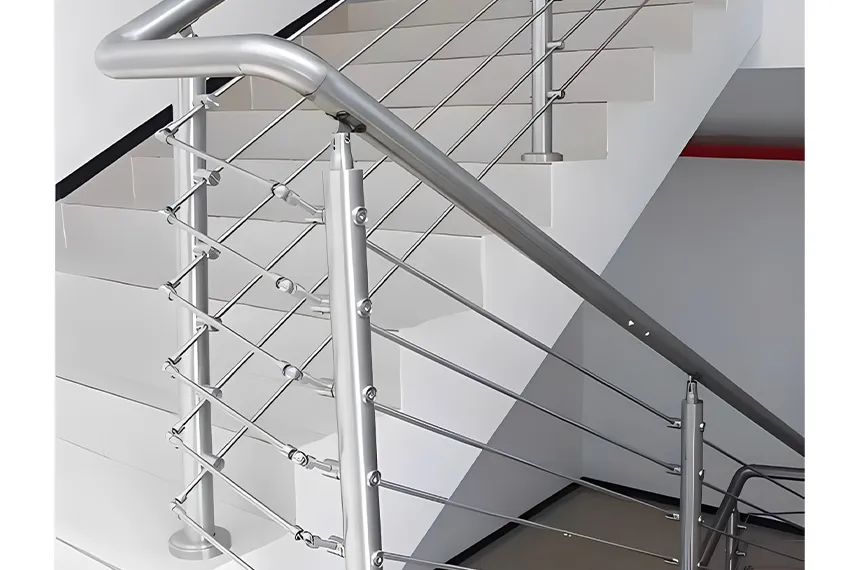
Merdiven Çelik Izgara Tasarımı
An aluminum railing is popular because it’s light, easy to handle, and often budget-friendly. That’s the “lightweight versatility” advantage.
But aluminum has tradeoffs:
It can dent and show scratches and dents more easily.
It can look “chalky” over time if coatings degrade.
In some mixed-metal builds, aluminum next to stainless-steel can create corrosion issues if water bridges the contact points.
Stainless steel often wins when you need:
Better long-term appearance in harsh environments
Stronger resistance to corrosion without depending entirely on coatings
A premium feel for high-traffic public spaces
If your project is strictly indoors and you want easy handling, aluminum railing may be fine. If the project faces high humidity, salt air, or constant cleaning chemicals, stainless steel is usually safer.
This is where many railings fail early—even when the grade is correct.
Weld quality matters
A bad weld can create crevices, heat tint, and weak spots. Those areas can collect moisture and contaminants, which leads to surface stain or corrosion. Proper finishing—pickling/passivation when required by spec—keeps the surface stable.
Surface finish affects real-world aesthetics
Brushed finishes hide fingerprints and small marks.
Mirror finishes look great but show every smudge and scratch.
Also watch the details:
Avoid water-trap geometry (tiny ledges that hold moisture)
Add drainage paths in base shoes and post caps
Don’t ignore the “small stuff” like end caps and fastener grade
And here’s a word people forget: pit. Pitting corrosion can start as tiny dots and then grow deeper. That’s why coastal and pool zones often justify 316-grade stainless or duplex grades.
If you want a truly low maintenance railing, design + finish + grade must work together. Don’t rely on material alone.
Now I’ll speak directly as a professional stainless steel manufacturer and exporter based in China.
When distributors, engineering contractors, and OEM/ODM buyers source railing material from overseas, they want three things: consistent quality, stable supply, and clear paperwork. That’s exactly how we structure projects for B2B buyers.
What we typically support for bulk buyers
Stainless steel tube, sheet, plate, bar for railing and handrail fabrication
Custom-cut lengths, CNC laser cutting, and fabrication support
Material Test Certificates (MTC), packing lists, and export documents
Stable batching for color/finish consistency across a railing system
A simple QC checklist you can use
Confirm grade (304 / 316 / duplex) and request MTC
Confirm surface finish (2B, BA, brushed, mirror) and sample approval
Confirm dimensional tolerances (tube OD, thickness, straightness)
Confirm packaging method (to prevent scratches during shipping)
Confirm weldability expectations (if you fabricate locally)
Which stainless steel is best for railing outdoors?
For many outdoor applications, 316 is the safer choice because molybdenum improves chloride-related corrosion resistance.
Is 304 stainless steel okay for indoors?
Yes. 304 is commonly used indoors because corrosion exposure is low and it offers a strong cost-to-performance balance.
When should I use 2205 stainless steel for a railing?
Use 2205 stainless steel in corrosive environments like heavy salt spray zones or industrial sites where pitting risk is high and long service life matters.
What guard heights are common in commercial and residential projects?
IBC commonly references 42 inches for many required guards, while IRC guidance commonly references 36 inches in many residential cases, with stair-related exceptions.
What’s the ADA handrail height range?
ADA guidance commonly uses 34–38 inches for handrail gripping surface height.
Is aluminum railing better than stainless steel?
Aluminum railing offers easy handling and lightweight versatility, but stainless steel often wins in harsh environments and long-term appearance—especially where corrosion and cleaning are frequent.
Start with environment: indoors vs outdoor environments vs corrosive environments.
Most indoor railing: 304 is often enough.
Most outdoor railing in salt/pool/industrial air: 316-grade stainless is often smarter.
Extreme marine or harsh environments: consider 2205 stainless steel.
Codes matter: height and opening rules can make or break approval.
Design + finish + grade work together—don’t ignore weld quality and water traps.
For bulk buyers: demand MTCs, finish samples, and packaging that prevents shipping scratches.
Korkuluk için En İyi Çelik Hangisidir? Paslanmaz Çelik Korkuluk Sistemi Kılavuzu (304 vs 316 vs 2205)
Doğru Merdiven Rayı ve Küpeşte Nasıl Seçilir: Hayalinizdeki Eve Uygun Merdiven Korkuluk Fikirleri
Balkon Korkulukları için Paslanmaz Çelik Korkuluklar: Hangi Çelik En İyisidir?
Korkuluk için Hangisi Daha İyi? Ferforje mi Çelik Korkuluklar mı? Dayanıklılık, Paslanma ve Maliyet İçin Basit Bir Kılavuz