Cable railing looks sleek—until salt mist, fingerprints, and loose lines make your deck feel “unfinished.” That pain grows fast when a cable starts to sag, or you spot rust and worry about safety. The fix is simple: choose the right stainless materials and follow a short, repeatable routine.
Cable railings are not hard to maintain when the rail system uses stainless steel components and correct installation. Most owners only need soap and water, a clean cloth, and occasional re-tensioning to tighten the cable. In harsh environments, choosing 316 stainless steel helps reduce corrosion risk and keeps the railing long-lasting.
In day-to-day life, тросовые перила is usually easier than people expect. A cable rail has fewer flat surfaces than a picket-style traditional railing, so dust and pollen don’t “pile up” as much. Many homeowners choose cable for a deck because it keeps a sleek appearance and open views.
But cable isn’t “no work.” Cable rail systems still need proper maintenance for two reasons: the steel cable must stay tight, and the exposed metal must stay clean to reduce corrosion over time.

Система тросовых перил из нержавеющей стали
A rail system becomes low maintenance when the design supports stable tension and the materials resist weather. In B2B sourcing, the “maintenance cost” often comes from poor material choices or weak posts.
Most owners can clean and maintain a cable railing with a short routine. The key is consistency. You don’t need special tools.
| Окружающая среда | Rinse/Wipe | Wash with mild soap | Проверка оборудования |
|---|---|---|---|
| Inland / covered deck | monthly | 2–4× per year | 2× per year |
| Rainy / high humidity | monthly | 4–6× per year | 2× per year |
| High exposure (salt / pool / chemicals) | monthly + after storms | 6–12× per year | 2–4× per year |
Для stainless steel cable railings, gentle cleaning wins. Scratches collect dirt and make future cleaning harder. That’s why I always recommend non-abrasive methods.
If you need a stronger option, use a stainless steel cleaner for architectural stainless—apply gently, then rinse and dry.
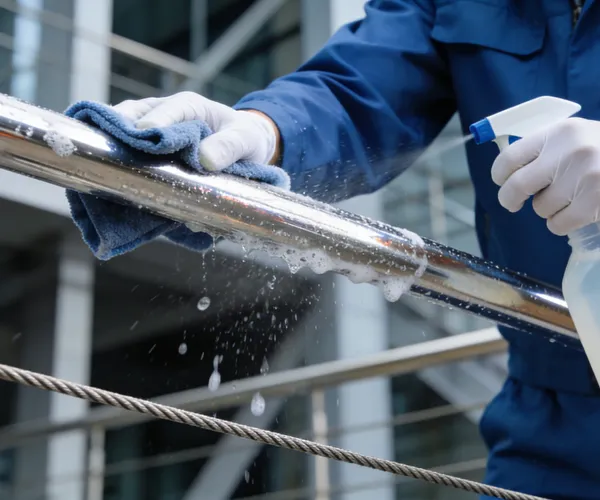
How do you clean stainless steel cable railings
Yes, it can happen. Most cable rail systems settle after installation. Temperature changes, post movement, and terminal settling can reduce tension, causing visible sag.
The good news is simple: cable systems are built for adjustment. Cable railings require occasional re-tensioning, not constant work.
When you adjust, do it evenly across all lines. That keeps the cable railing looking straight and protects the safety of your cable guard.
A quick inspect routine protects both appearance and safety. It also prevents small issues from becoming expensive replacements.
Pay extra attention at corners, stair transitions, and base plates. These areas collect water and residue, increasing the risk of rust and corrosion.
Grade selection affects maintenance. In mild conditions, 304 can perform well. In high exposure zones, type 316 is often the safer choice.
Most maintenance complaints start with railing installation, not cleaning. A good installation keeps tension stable and prevents rubbing points.
A good install:
A poor install:

Профессиональная установка
Here are the most common issues and the clean fixes.
Cause: salt, iron dust, residue.
Fix: more frequent rinse + regular cleaning with mild soap. Dry the surface.
Cause: settling, post movement, temperature change.
Fix: use the tensioner and re-tension evenly; reinforce posts if needed.
Cause: abrasive pads, gritty cloth.
Fix: switch to non-abrasive methods and soft cloth.
Cause: trapped water or dissimilar metal contact.
Fix: improve drainage and isolation; choose 316 in harsh environments.
These fixes help keep your cable system safe and visually appealing.
This section is for B2B buyers who need reliable supply—not just advice.
Send these details to get a quick proposal:
CTA: If you send the RFQ checklist above, we can propose a rail system configuration and confirm the right stainless grade for your site.
Most homeowners find cable railing manageable. A short routine helps you keep cable railings clean and stable.
Use mild soap and water, rinse, and dry with a soft cloth. Avoid abrasive pads and harsh cleaners.
Many systems need a check a few weeks after installation, then seasonally. If you see sag, it’s time to tighten the cable.
Stainless steel resists rust, but surface staining can happen—especially in harsh environments. Rinsing and gentle cleaning helps prevent rust and corrosion, and type 316 reduces risk.
Yes. Poor railing installation creates movement and rubbing points, which increases maintenance. A stiff, correctly aligned rail system stays stable.
Ask for clear material grade, hardware details, packing, and a documentation package. Use the RFQ checklist above to speed up quotes.
Stainless Steel Stair and Handrail Systems Supplied for an Indoor and Outdoor Precinct Project in Australia
Stainless Steel Staircases and Handrail Systems Delivered for an Indoor and Outdoor Precinct Project in Australia
Which Type of Stainless Steel Is Good for Railings? Choosing the Best Stainless Steel Railing System for Long-Term Performance
How to Identify Stainless Steel and Mild Steel: Key Differences Between Stainless Steel and Mild Steel