10 2026/02

Are Cable Railings Hard to Maintain? A B2B Guide to Cleaning, Tension, and Long-Term Care for Deck Cable Rail Systems

Cable railing looks sleek—until salt mist, fingerprints, and loose lines make your deck feel “unfinished.” That pain grows fast when a cable starts to sag, or you spot rust and worry about safety. The fix is simple: choose the right stainless materials and follow a short, repeatable routine.

Cable railings are not hard to maintain when the rail system uses stainless steel components and correct installation. Most owners only need soap and water, a clean cloth, and occasional re-tensioning to tighten the cable. In harsh environments, choosing 316 stainless steel helps reduce corrosion risk and keeps the railing long-lasting.

Esboço

  1. Are cable railings hard to maintain compared to other railing options?
  2. What makes cable rail systems truly low maintenance?
  3. How often should you clean and maintain cable railings on a deck?
  4. How do you clean stainless steel cable railings without scratching them?
  5. Do cables lose tension and sag over time?
  6. How to inspect cables and posts for safety, rust, and corrosion
  7. 304 vs 316 stainless steel: which is easier to maintain in harsh environments?
  8. Why installation matters: railing installation choices that reduce maintenance
  9. Common cable railing problems over time (and how to avoid them)
  10. B2B specs, documents, and RFQ checklist for bulk cable railing sourcing

Are cable railings hard to maintain compared to other railing options?

In day-to-day life, corrimão de cabos is usually easier than people expect. A cable rail has fewer flat surfaces than a picket-style traditional railing, so dust and pollen don’t “pile up” as much. Many homeowners choose cable for a deck because it keeps a sleek appearance and open views.

But cable isn’t “no work.” Cable rail systems still need proper maintenance for two reasons: the steel cable must stay tight, and the exposed metal must stay clean to reduce corrosion over time.

Sistema de corrimão de cabos de aço inoxidável

Sistema de corrimão de cabos de aço inoxidável

What makes cable rail systems truly low maintenance?

A rail system becomes low maintenance when the design supports stable tension and the materials resist weather. In B2B sourcing, the “maintenance cost” often comes from poor material choices or weak posts.

What helps you keep cable railings easy to maintain

  • stainless steel hardware and stainless steel cable
  • solid posts so the tension on the cables stays stable
  • reliable terminals and a good tensioner
  • clean routing so the cable runs do not rub sharp edges
  • drainage at base plates to avoid trapped water

What makes maintaining cable railings harder

  • low-grade steel cable in wet climates (faster corrosion)
  • flexible wood posts that move (tension drops faster)
  • poor installation process (misalignment, rubbing points)
  • using abrasive pads or harsh chemicals on stainless surfaces

How often should you clean and maintain cable railings on a deck?

Most owners can clean and maintain a cable railing with a short routine. The key is consistency. You don’t need special tools.

A practical schedule (works for most decks and stairways)

  • Monthly: quick wipe (dust, pollen, fingerprints)
  • Quarterly: wash using soap and water
  • Twice a year: check hardware and re-check tension
  • Coastal / pool / industrial air: rinse more often to prevent rust and corrosion

Maintenance Frequency Chart (easy to follow)

Meio ambiente Rinse/Wipe Wash with mild soap Hardware check
Inland / covered deck monthly 2–4× per year 2× per year
Rainy / high humidity monthly 4–6× per year 2× per year
High exposure (salt / pool / chemicals) monthly + after storms 6–12× per year 2–4× per year

How do you clean stainless steel cable railings without scratching them?

Para stainless steel cable railings, gentle cleaning wins. Scratches collect dirt and make future cleaning harder. That’s why I always recommend non-abrasive methods.

Best method: mild soap + soft wipe

  1. Rinse first (remove grit that can scratch)
  2. Wash with mild soap and water
  3. Wipe using a soft cloth (or clean cloth)
  4. Rinse again
  5. Dry exposed stainless steel to reduce spots

Avoid these common mistakes

  • Don’t use abrasive pads (micro-scratches trap dirt)
  • Avoid harsh chemicals that may damage the surface
  • Don’t leave cleaner residue to dry on the railing

If you need a stronger option, use a stainless steel cleaner for architectural stainless—apply gently, then rinse and dry.
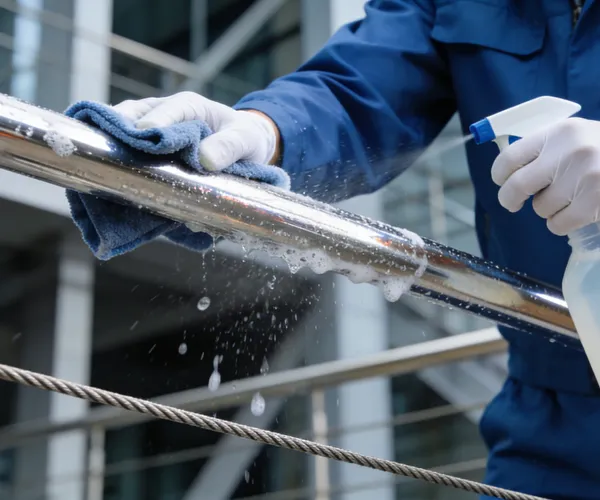
How do you clean stainless steel cable railings

How do you clean stainless steel cable railings

Do cables lose tension and sag over time?

Yes, it can happen. Most cable rail systems settle after installation. Temperature changes, post movement, and terminal settling can reduce tension, causing visible sag.

The good news is simple: cable systems are built for adjustment. Cable railings require occasional re-tensioning, not constant work.

A simple tension plan

  • After installation: check in 2–4 weeks
  • First season: check once
  • After that: check 1–2× per year

When you adjust, do it evenly across all lines. That keeps the cable railing looking straight and protects the safety of your cable guard.

How to inspect cables and posts for safety, rust, and corrosion

A quick inspect routine protects both appearance and safety. It also prevents small issues from becoming expensive replacements.

What to inspect

  • End fittings and terminals (any loosening?)
  • Posts (movement? water trapped at base?)
  • Cable alignment (any rubbing points?)
  • Surface condition (any signs of rust or stains?)

Pay extra attention at corners, stair transitions, and base plates. These areas collect water and residue, increasing the risk of rust and corrosion.

304 vs 316 stainless steel: which is easier to maintain in harsh environments?

Grade selection affects maintenance. In mild conditions, 304 can perform well. In high exposure zones, type 316 is often the safer choice.

  • 316 stainless steel usually performs better in chloride-rich air (coastal spray, pool chemicals).
  • 304 may require more frequent cleaning depending on your environment.

Why installation matters: railing installation choices that reduce maintenance

Most maintenance complaints start with railing installation, not cleaning. A good installation keeps tension stable and prevents rubbing points.

A good install:

  • uses stiff posts so cables stay properly tensioned
  • aligns holes so cables don’t cut into posts
  • keeps tension hardware accessible so you can maintain your cable railing system
  • improves drainage at base plates

A poor install:

  • makes you tighten too often
  • increases wear at contact points
  • creates water traps that increase corrosion
Instalação profissional

Instalação profissional

Common cable railing problems over time (and how to avoid them)

Here are the most common issues and the clean fixes.

1) Surface staining or spots

Cause: salt, iron dust, residue.
Fix: more frequent rinse + regular cleaning with mild soap. Dry the surface.

2) Cable sag

Cause: settling, post movement, temperature change.
Fix: use the tensioner and re-tension evenly; reinforce posts if needed.

3) Scratches

Cause: abrasive pads, gritty cloth.
Fix: switch to non-abrasive methods and soft cloth.

4) Corrosion at contact points

Cause: trapped water or dissimilar metal contact.
Fix: improve drainage and isolation; choose 316 in harsh environments.

These fixes help keep your cable system safe and visually appealing.

B2B specs, documents, and RFQ checklist for bulk cable railing sourcing

This section is for B2B buyers who need reliable supply—not just advice.

B2B Specs Quick Box (copy/paste)

  • Cable material: stainless steel cable (recommend 316 for high exposure)
  • Rail system: cable rail systems for deck/stairs/balcony
  • Posts: wood posts / aluminum posts / stainless posts (post stiffness affects tension)
  • Hardware: terminal style + tensioner type
  • Finish: brushed/polished (cleaning ease + look)
  • Installation: confirm the installation process and access for future adjustment
  • Maintenance plan: rinse + mild soap + seasonal tension checks

Quality& export documents (what serious buyers ask for)

  • Material/grade confirmation (e.g., 316 stainless steel for harsh environments)
  • Pre-shipment inspection photos (cables and posts, terminals, packing)
  • Packing plan for export and jobsite handling
  • Batch marking/labels and documentation package

RFQ checklist (fast quote)

Send these details to get a quick proposal:

  • Project type: deck / stairs / balcony
  • Environment: inland / coastal / pool / industrial
  • Grade: 304 or 316
  • Length + number of cable runs (cable bullet spacing plan if you have one)
  • Post type: wood or metal
  • Terminal/tensioner preference
  • Target market compliance needs
  • Delivery country and timeline

CTA: If you send the RFQ checklist above, we can propose a rail system configuration and confirm the right stainless grade for your site.

Perguntas frequentes

Are cable railings hard to maintain for a homeowner?

Most homeowners find cable railing manageable. A short routine helps you keep cable railings clean and stable.

What’s the safest way to clean and maintain cable railings?

Use mild soap and water, rinse, and dry with a soft cloth. Avoid abrasive pads and harsh cleaners.

How often do I need to tighten the cable?

Many systems need a check a few weeks after installation, then seasonally. If you see sag, it’s time to tighten the cable.

Do stainless steel cable railings rust?

Stainless steel resists rust, but surface staining can happen—especially in harsh environments. Rinsing and gentle cleaning helps prevent rust and corrosion, and type 316 reduces risk.

Does installation affect long-term maintenance?

Yes. Poor railing installation creates movement and rubbing points, which increases maintenance. A stiff, correctly aligned rail system stays stable.

What should B2B buyers ask for when sourcing cable rail systems?

Ask for clear material grade, hardware details, packing, and a documentation package. Use the RFQ checklist above to speed up quotes.

Principais conclusões

  • Cable railing is usually low maintenance, not “hard,” when you use stainless steel components and stable posts.
  • A simple routine works: rinse, mild soap, dry, and seasonal tension checks.
  • Avoid abrasive pads and harsh cleaners; use a soft cloth.
  • Tension settling is normal; re-tension evenly to stop sag.
  • 316 stainless steel is easier to maintain in harsh environments than 304.
  • Better installation reduces maintenance more than any cleaning trick.


whatsapp

Entre em contato conosco

Enviar uma mensagem

Nossa empresa se compromete a nunca divulgar seus dados pessoais a qualquer empresa externa sem sua permissão expressa.

Obter um orçamento gratuito

Responderemos em até 24 horas. Se o caso for urgente, adicione o WhatsApp/WeChat: +86-15053272126,. Ou ligue para +86-15053272126 diretamente.

*Respeitamos sua confidencialidade e todas as informações são protegidas. Usaremos suas informações apenas para responder à sua consulta e nunca enviaremos e-mails não solicitados ou mensagens promocionais.