Um guarda-corpo fraco é mais do que algo desagradável - é um risco à segurança e um rombo no orçamento. Quando a ferrugem aparece cedo ou o acabamento falha, você paga duas vezes: uma para construir e outra para consertar. A solução é escolher o metal certo e o sistema de proteção certo desde o primeiro dia.
As grades de aço geralmente são a melhor opção para a maioria dos projetos porque são resistentes, mais fáceis de padronizar e mais fáceis de proteger contra a corrosão com revestimentos como galvanização e pintura. O ferro forjado ganha quando você precisa de designs complexos e elegância clássica, mas geralmente precisa de manutenção mais regular para controlar a ferrugem. Para pouca manutenção, os guarda-corpos de alumínio também são populares, e o aço inoxidável pode ser a melhor opção para ambientes externos adversos.
Trilhos de ferro forjado ou aço
Noções básicas sobre guarda-corpos: o que é mais importante para a segurança e a durabilidade?
Ferro forjado: por que as grades de ferro são tão elegantes?
Corrimãos de aço: por que as empreiteiras preferem sistemas de aço e ferro para seus projetos?
Ferro ou aço: qual deles lida melhor com a ferrugem e a corrosão em ambientes externos?
Manutenção de guarda-corpos de metal: o que “baixa manutenção” realmente significa
Estética versus desempenho: as grades oferecem elegância atemporal e durabilidade?
Guarda-corpo de alumínio: quais são os benefícios do alumínio para sistemas de guarda-corpo modernos?
Custo e valor: qual material de guarda-corpo é mais econômico a longo prazo?
Onde cada guarda-corpo funciona melhor: guarda-corpo de varanda, guarda-corpo de deck e aplicações externas
Escolhendo o guarda-corpo perfeito para sua casa ou empresa: uma lista de verificação de decisões
Quando os compradores me perguntam qual é o melhor corrimão, começo com uma regra simples: segurança e durabilidade vêm em primeiro lugar, e estilo vem em segundo. Um sistema de guarda-corpo deve impedir quedas, guiar as pessoas com segurança e permanecer estável durante anos de uso e desgaste.
Aqui estão os principais fatores a serem considerados ao escolher um material para o guarda-corpo:
Resistência e durabilidade: ele permanecerá rígido e seguro?
Resistência à corrosão: ele combaterá a ferrugem e a corrosão na chuva, na neve ou no ar do litoral?
Requisitos de manutenção: ele precisará ser repintado com frequência?
Estética: combina com o estilo do edifício?
Custo total: instalação + manutenção + reparos (é aqui que muitos compradores avaliam mal o valor)
Como um Fabricante e exportador profissional de aço inoxidável Na China, trabalhamos com compradores B2B que se preocupam com a qualidade repetível. Distribuidores, empreiteiros, fabricantes e equipes de OEM querem um fornecimento estável, especificações consistentes e menos retornos de chamada. Por isso, sempre avaliamos as opções de trilhos como um gerente de projeto: “Qual será a aparência e o desempenho disso em 3, 5 e 10 anos?”
O ferro forjado é famoso por seu estilo clássico. Muitas pessoas imaginam uma cerca de ferro com volutas e curvas, ou uma escada de cidade antiga com detalhes ornamentados. Esse é o principal motivo pelo qual os compradores ainda adoram um corrimão de ferro forjado: a elegância atemporal.
O que torna o ferro forjado especial é o fato de ele suportar bem designs complexos. É possível dobrar, moldar e construir curvas ornamentais que parecem “feitas à mão”. É por isso que as grades ornamentais geralmente usam ferro forjado ou uma abordagem decorativa semelhante.
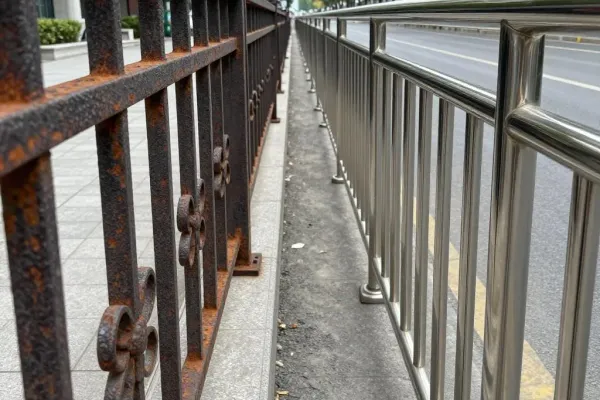
Mas aqui está a desvantagem do mundo real: o ferro forjado geralmente precisa de mais cuidados ao ar livre. Em climas úmidos, ele pode desenvolver ferrugem e talvez seja necessário repintá-lo e inspecioná-lo com mais frequência. É por isso que muitos compradores modernos escolhem estilos modernos de ferro forjado feitos com acabamentos aprimorados e melhores sistemas de revestimento.
Observação prática: se você gosta do visual do ferro forjado, planeje o revestimento e a manutenção desde o início. Sem manutenção regular, a beleza pode desaparecer.
Em muitos projetos comerciais e de infraestrutura, grades de aço são a escolha ideal. O aço é amplamente disponível, previsível e fácil de fabricar em volume. Para os compradores B2B, isso significa prazos de entrega mais rápidos e resultados mais consistentes.
Um dos principais motivos pelos quais as empreiteiras gostam do aço é simples: o aço oferece um desempenho sólido com padronização mais fácil. Um fabricante pode cortar, encaixar e soldar o aço rapidamente. O aço também suporta muitos estilos de design - desde barras retas simples até linhas modernas e limpas.
O aço também funciona bem com sistemas de proteção comprovados. Por exemplo, a galvanização por imersão a quente é comumente usada para proteger o aço fabricado em ambientes corrosivos, e a ASTM A123/A123M é a principal especificação que abrange esses revestimentos galvanizados para produtos de ferro e aço fabricados.
Portanto, quando as pessoas perguntam “aço ou ferro?”, a resposta honesta é: o aço costuma ser a opção comercial mais segura para projetos repetidos, especialmente quando se deseja um fornecimento escalável e um desempenho previsível.
Vamos falar sobre o inimigo: a corrosão. Se você instalar grades externas e ignorar o risco de corrosão, você lidará com a ferrugem mais tarde. A questão não é “vai enferrujar?”. É “quando e quanto?”.”
Tanto o ferro forjado quanto o aço são metais à base de ferro.
Ambos podem enferrujar se a proteção da superfície falhar.
A diferença real geralmente vem da qualidade do acabamento, não apenas do metal base.
Muitos guias práticos observam que o aço é comumente visto como tendo melhor resistência à corrosão do que o ferro forjado em contextos de corrimão externo, embora ainda enfatizem que ambos precisam de bons revestimentos.
Para projetos ao ar livre, o aço geralmente é protegido por uma tela:
galvanização (revestimento de zinco)
sistemas de pintura com primer + topcoat
acabamentos com revestimento em pó (comum em algumas montagens)
A ASTM A123/A123M trata especificamente de revestimentos galvanizados por imersão a quente destinados a produtos fabricados em ferro e aço expostos a condições ambientais corrosivas.
Meu conselho de campo: Se o seu projeto enfrentar condições climáticas adversas, não discuta ferro versus aço isoladamente. Decida primeiro o sistema de revestimento. Em seguida, escolha o estilo de corrimão adequado.
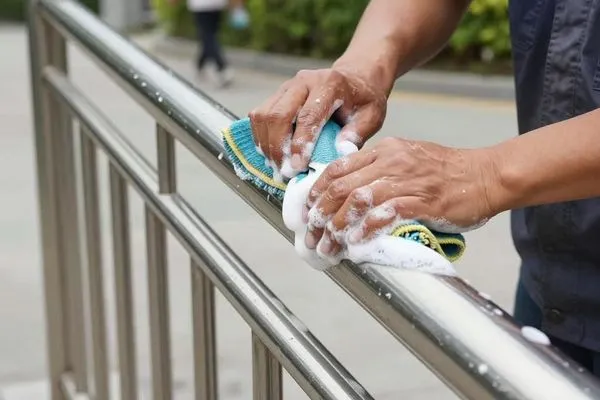
Todo guarda-corpo de metal precisa de alguns cuidados. A questão é com que frequência e com que intensidade.
Muitos compradores dizem que querem pouca manutenção. Na vida real, isso significa:
Limpeza fácil
menos retoques
menos ciclos de repintura
cor e acabamento estáveis
Esta é uma maneira simples de comparar as opções comuns de guarda-corpos:
| Opção de corrimão | Necessidades típicas de manutenção | Pontos de risco |
|---|---|---|
| Ferro forjado | Inspecionar e retocar a pintura com mais frequência | chips podem expor o metal → ferrugem |
| Grades de aço | Médio; depende do revestimento | arranhões podem causar corrosão |
| Corrimão de alumínio | Baixo; enxágue/limpe + inspecione o revestimento | arranhões profundos podem expor a base |
| Aço inoxidável | Baixo-médio; limpar + evitar armadilhas de cloreto | os cloretos costeiros podem manchar os graus inferiores |
No caso do alumínio, muitas fontes geralmente citam a longa vida útil dos sistemas com revestimento em pó - geralmente em torno de 20 a 30 anos com cuidado em muitos ambientes.
Uma das maiores vantagens de planejar a manutenção com antecedência é simples: ela protege seu orçamento e reduz o risco de segurança.
Sim - se você escolher de forma inteligente.
Muitos compradores acham que é uma das duas coisas:
pretty (elegância), ou
resistente (durabilidade)
Mas você pode obter ambos com boas escolhas de design:
Use formas metálicas modernas com revestimentos protetores.
Use aço para a estrutura e adicione elementos decorativos para a aparência.
Escolha um acabamento que permaneça estável em ambientes externos.
Os estilos de metal em ferro forjado ainda podem funcionar em edifícios modernos, especialmente quando combinados com acabamento de alta qualidade. Muitos arquitetos preferem o aço porque ele é elegante e moderno e, ao mesmo tempo, resistente.
Se você é um proprietário que está escolhendo um corrimão para sua casa, a estética é importante. Mas se você for um distribuidor, empreiteiro ou desenvolvedor, o desempenho e a repetibilidade são ainda mais importantes. A melhor solução geralmente é aquela que gera menos chamadas de serviço.
Sejamos honestos: às vezes, a melhor resposta não é o ferro ou o aço. É o alumínio.
Os guarda-corpos de alumínio são populares porque são leves, não enferrujam da mesma forma que os metais à base de ferro e, em geral, proporcionam uma experiência de baixa manutenção. Em termos simples: o alumínio não forma ferrugem vermelha como o ferro.
Muitos fornecedores e artigos do setor enfatizam a resistência do alumínio à corrosão e o valor protetor do revestimento em pó para uso externo.
Então, quais são os benefícios do alumínio?
ótimo para decks e varandas
manuseio mais fácil no local
opções de acabamento limpo e consistente
frequentemente menos ciclos de repintura
Os guarda-corpos de alumínio oferecem um grande valor quando os compradores querem um desempenho do tipo “instale e esqueça”. Dito isso, o alumínio pode amassar mais facilmente do que o aço mais pesado em algumas situações de impacto - portanto, nós o adequamos ao trabalho.
É nesse ponto que os compradores inteligentes ganham.
Muitas pessoas compram pelo preço inicial. Mas as equipes de compras B2B compram pelo custo do ciclo de vida. Isso inclui:
instalação
sistema de revestimento
manutenção e repintura
risco de substituição
Aqui está uma simples “lente de valor”:
O ferro forjado pode ser caro quando os designs são ornamentados e quando a manutenção é alta.
As grades de aço podem ser muito econômicas quando padronizadas e protegidas adequadamente.
Os guarda-corpos de alumínio costumam ser econômicos devido à baixa manutenção e à longa vida útil.
O aço inoxidável pode ter um preço premium, mas pode ser compensado em ambientes adversos quando a classe correta é escolhida.
Se estiver fazendo projetos costeiros, a seleção do aço inoxidável é importante. Muitas referências explicam que o 316 é geralmente preferido ao 304 em ambientes marinhos ou com alto teor de cloreto porque o molibdênio melhora a resistência à corrosão.
Como fabricante de aço inoxidável, ajudamos os compradores B2B a escolher classes e acabamentos que correspondam às condições reais - para que você não pague a mais, mas também não faça uma especificação inferior e se arrependa.
Lugares diferentes geram estresse diferente.
Corrimão da varanda: aço ou alumínio são comuns; o aço inoxidável é ótimo para locais de alto padrão ou costeiros
Trilhos do deck: o alumínio é popular por sua baixa manutenção; o aço funciona bem com um bom revestimento
Cerca de ferro e entradas ornamentais: o ferro forjado brilha para causar impacto visual
Aplicações externas em climas rigorosos: priorize os revestimentos e o planejamento de corrosão
Se o seu local tiver ar salgado, chuva forte ou alta umidade, escolha sistemas resistentes à corrosão. Se você espera impactos (escadas públicas, áreas de trânsito), o aço geralmente oferece confiança porque é conhecido por sua resistência.
Ideia-chave: Suas grades podem parecer semelhantes no primeiro dia. A diferença real aparece no quinto ano.
Agora vamos tomar a decisão certa.
Abaixo está uma lista de verificação simples que você pode usar para tomar uma decisão informada - seja para uma casa, uma escola, uma fábrica ou um projeto urbano.
Ambiente: É interior, litoral, com neve, úmido?
Necessidades de design: Você precisa de designs complexos ou de uma linha simples?
Manutenção: A equipe do site pode fazer retoques ou você precisa de pouca manutenção?
Segurança: O projeto suporta o espaçamento e a resistência em conformidade com os códigos?
Realidade orçamentária: Você está comprando uma vez ou planejando para décadas?
| Prioridade | Escolha esta opção |
|---|---|
| Máximo clássico elegância | ferro forjado |
| Força equilibrada + preço | grades de aço |
| Manutenção mais baixa em muitos climas | corrimão de alumínio |
| Resistência premium à corrosão | aço inoxidável (geralmente 316 para litoral) |
Se o objetivo do comprador for “o melhor metal para o trabalho”, a resposta dependerá do local. Mas, para muitos projetos, os debates sobre aço e ferro desaparecem quando você se concentra em revestimentos e planejamento de manutenção.
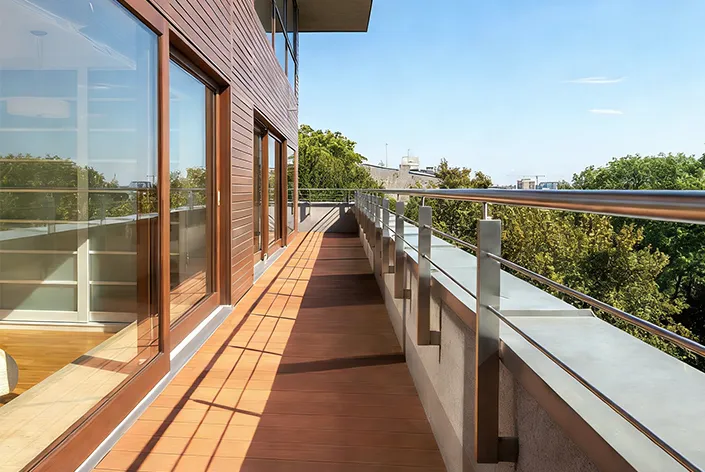
Corrimãos de varandas residenciais
O que é melhor: corrimão de ferro ou de aço?
Para muitos projetos, as grades de aço são melhores porque são mais fáceis de padronizar, fabricar e proteger contra a corrosão com sistemas de revestimento comprovados. O ferro forjado é melhor quando se deseja uma estética detalhada e uma elegância atemporal, mas pode precisar de mais manutenção.
As grades de ferro forjado enferrujam mais rápido?
É possível, especialmente se a tinta lascar e expor o metal nu. Com um revestimento forte e manutenção planejada, o ferro forjado pode durar décadas, mas sem manutenção regular, os problemas de ferrugem podem aparecer mais cedo.
As grades de alumínio são realmente de baixa manutenção?
Em geral, sim. Os sistemas de guarda-corpos de alumínio são populares porque resistem bem à corrosão e podem durar décadas com cuidados básicos, especialmente quando recebem revestimento em pó. Muitas fontes geralmente citam cerca de 20 a 30 anos, dependendo do ambiente e dos cuidados.
O aço inoxidável é bom para grades externas?
Sim. O aço inoxidável é geralmente escolhido pelo desempenho de longo prazo contra a corrosão. Para áreas costeiras ou com muito cloro, muitas referências recomendam o 316 em vez do 304 porque o molibdênio melhora a resistência à corrosão.
Qual é a melhor maneira de evitar a ferrugem em trilhos de aço?
Use um sistema de proteção adequado: galvanização, primer + topcoat ou outros revestimentos projetados e repare os arranhões rapidamente. A ASTM A123/A123M é amplamente referenciada para revestimentos galvanizados por imersão a quente em produtos fabricados de ferro e aço expostos a condições corrosivas.
Qual guarda-corpo é melhor para ambientes externos com condições climáticas adversas?
Se você deseja uma forte resistência a impactos, é comum usar aço com um sistema robusto de proteção contra corrosão. Se você deseja uma manutenção mínima, o alumínio funciona bem. Para obter durabilidade premium em áreas costeiras, o aço inoxidável (geralmente 316) é uma boa escolha - desde que o projeto e a limpeza sejam corretos.
As grades de aço costumam ser a melhor opção geral para a maioria dos projetos B2B: fortes, escaláveis e fáceis de proteger.
O ferro forjado oferece elegância e designs complexos, mas geralmente precisa de mais manutenção para controlar a ferrugem.
O guarda-corpo de alumínio é uma opção forte e de baixa manutenção, sendo amplamente utilizado em decks e varandas.
O aço inoxidável é uma opção premium quando o risco de corrosão é alto, especialmente em ambientes costeiros ou químicos.
O verdadeiro vencedor é o plano certo de sistemas de guarda-corpo: escolha o metal certo, o revestimento certo e a abordagem de manutenção certa.