A rusty, shaky rail can turn a simple stairway into a safety risk and a constant repair job. It wastes time, delays work, and makes your client lose trust. I’ve seen this happen when specs are unclear or the wrong grade gets used. Let’s fix it with a clear, practical plan.
Outdoor stainless steel railing is a long-life choice for exterior stairs and decks because it resists rust, stays clean-looking, and supports many railing systems (cable, glass, or panels). Choose the right grade (often 304 or 316), match the finish to the environment, and specify the fittings and tolerances up front—then fabrication and installation go smoothly.
If you’re a distributor, contractor, or OEM buyer, you want two things at once: repeatable quality and predictable total cost. Stainless steel helps because it stays stable, doesn’t need frequent repainting, and handles daily touch without flaking. That’s why we see it used again and again in public works, equipment platforms, and building entrances—places where people lean, pull, and move fast.
From a design view, it also gives you freedom. You can choose a clean round or rectangular profile, match different heights, and keep a consistent look across a whole project. When your client asks for a sleek upgrade, you can deliver a beautiful stainless steel line that still feels strong in the hand. And when you’re buying in bulk, it’s easier to keep one material family across multiple SKUs.
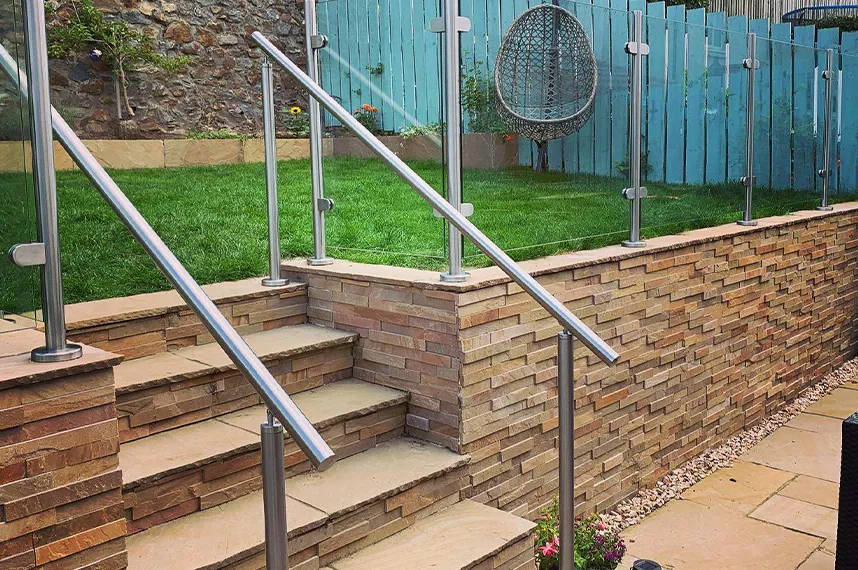
Handrails for Concrete Steps
Most buyers start here, and they should. In simple terms: 304 works well for many normal environments; 316 is the “step up” when chlorides and warm wet conditions raise the risk of pitting. ASSDA (Australian Stainless Steel Development Association) explains that 316’s key advantage over 304 is improved resistance to pitting and crevice attack in warm chloride environments.
Here’s the practical rule I share with new purchasing teams:
A quick fact that helps buyers explain this internally: seawater is extremely chloride-rich; ASSDA uses ~20,000 ppm chloride as a reference point for seawater, which is far above normal tap water. That gap is why grade selection matters.
Grade selection table (fast reference)
| Environment (simple) | Typical risk driver | Common pick | Notes |
| Inland / normal city | rain + dust | 304 | good value in bulk |
| Coastal / pool / de-icing salts | chlorides | 316 | better pitting resistance |
| Very aggressive industry | hot chlorides / chemicals | higher alloys | talk to engineering/spec team |
“Both molybdenum and nitrogen increase resistance to pit initiation in the presence of chlorides.”
When buyers say “rail package,” they often mean multiple parts that must work together, not one item. In our quotations, I push teams to think in systems, because that’s where delays usually happen.
A typical build includes:
This is where a small detail becomes a big cost. If you don’t define hole patterns, base plate thickness, and tolerances, the fabricator must guess—or the installer drills on-site. That adds risk and time. I recommend you specify every component that affects alignment, especially at corners and transitions.
Common “missed spec” checklist
If your customer wants a modern style, these are the two big directions: cable railing and glass railing. Cable tends to feel lighter and is often easier to ship and store in bulk. Glass creates a premium, open view but needs careful packing and correct hole placement.
Here’s how I explain the trade-off to wholesalers and buying offices:
If the goal is “looks great + simple field work,” choose a cable railing system with standardized terminals and repeatable measurements. Many contractors tell me it’s easy to install when the drawings are clear and the terminal type is consistent across the job.
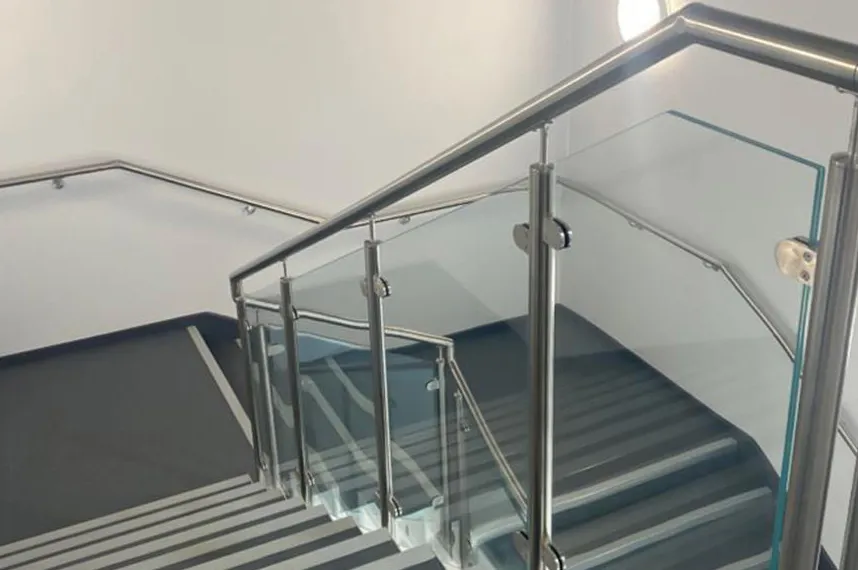
Glass SS Railing
Finishes affect both appearance and long-term performance. For many architectural jobs, buyers ask for a satin look because it hides fingerprints and small scratches better than mirror.
No.4 “satin” is widely used for decorative and architectural metalwork. A directional brushed texture is created by mechanical abrasion, giving a matte sheen and uniform lines.
Here’s a short, buyer-friendly finish table:
| Finish name | What it looks like | When it’s used | Watch-outs |
| satin | soft, low-glare | public buildings, stairs | keep grain direction consistent |
| brush | visible lines | modern interiors/exteriors | protect during fabrication |
| highly polished | mirror-like | premium accent areas | shows scratches easily |
If you’re sourcing for contractors, align finish with cleaning reality. A shiny surface can look amazing on day one, but it can also show every mark on day thirty. Pick what matches the site’s maintenance plan.
Now let’s talk layout. A common choice is horizontal cable because it looks clean and keeps views open on a deck edge. Another choice is vertical infill, which can feel more traditional and can simplify compliance in some jurisdictions.
On a staircase, the big issues are geometry and consistency. Your design must account for slope changes, landing transitions, and end conditions. If you don’t, the installer must “make it fit” on site, which can cause uneven gaps.
Here are simple checks I recommend to fabricators:
This keeps the system built to last, because stress loads distribute as expected instead of concentrating at one corner.
If you want accurate pricing and fast sampling, your RFQ needs to remove guesswork. This is especially true for OEM/ODM buyers who need tailored parts for specialized production.
I suggest you include:
Add one clear option list. For example: base plate cover style, terminal type, and whether you need pre-assembled submodules. We can then offer a clear bill of materials and a stable production plan.
RFQ quick table (copy/paste)
| RFQ item | What to write | Why it matters |
| Material | 304 / 316 | cost + durability |
| Finish | satin / brushed / polished | appearance + handling |
| Quantity | per SKU + total | factory pricing tiers |
| Packaging | pallet/carton/wood crate | damage control for export |
| Documents | MTC, inspection plan | importer compliance |
This approach is a real solution for buying offices because it reduces back-and-forth and prevents “hidden” variations in later batches.
This is where desire turns into confidence. As a China-based manufacturer and exporter, I know overseas buyers worry about consistency: “Will batch #3 match batch #1?” That’s fair. Our process is built around repeatability, especially for Industrial Distributors and Steel Wholesalers who sell to multiple customers.
For stainless steel railing systems, we focus on:
Why does this matter? Because the visual face is part of the value. If the brushed direction changes or the corners get dented in transit, the site team blames the supplier—even if the metal is fine. We pack to protect the cosmetic face and reduce claims.
Also, we can support mixed orders: stock sizes for wholesalers plus custom-cut pieces for fabricators. That’s how we help buyers keep margin while meeting a contractor’s deadline with high-quality stainless steel.
Here’s an example pattern I see often (details simplified): a seaside commercial entrance with heavy foot traffic, salt spray, and minimal cleaning time. The spec used 316, plus a smoother finish to reduce salt buildup. IMOA’s coastal fence case study notes that Type 316 contains about 2% molybdenum, helping prevent pitting and crevice attack caused by deposited salts, and it emphasizes the value of a smooth finish in low-maintenance applications.
In our shipments for similar jobs, the winning approach is standardization:
The result is a modern stair feel that’s clean and premium, without slowing the schedule. It delivers that modern look owners want, while still meeting practical site limits.
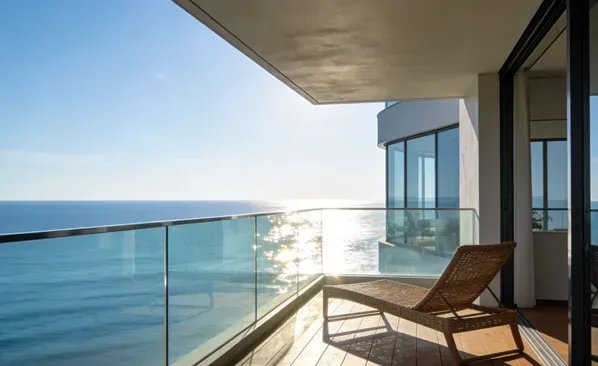
modern stair with glass and a cable railing system
If you buy in bulk, you don’t just buy metal—you buy predictability. Use this checklist before you place a PO:
Also think about substitutions. Some buyers compare stainless with aluminum or wood systems. That can work in some use cases, but if your customer wants long-term durability and stable appearance, stainless usually wins. If your client insists on colored parts, consider powder-coated components in non-touch areas (and keep touch zones in stainless).
This is where versatility helps you close deals. You can serve residential villas, commercial public works, and industrial platforms with the same supplier network—if you standardize specs and keep your RFQs clean.
Most buyers choose 316 because its molybdenum content improves pitting resistance in chloride-rich environments compared with 304.
Cable is lighter to ship and stock; glass offers a premium look and open views. Pick based on logistics, site handling, and how much breakage risk you can accept.
No.4 satin is a common, practical choice because it hides fingerprints and light scratches better than mirror finishes.
Common requests include mill test certificates, inspection records, packing lists, and traceability info tied to heat numbers. Standardizing these per batch helps repeat orders.
Yes. For contractors and OEM buyers, we support custom lengths, hole patterns, and matching accessory sets so your fabrication line stays consistent.
Specify the full system (posts, terminals, infill, and fasteners), lock tolerances, and require protective packing for cosmetic faces. That prevents damage and mismatched parts during installation.
Outdoor Stainless Steel Railing & Stainless Steel Handrail for Stair Design
Outdoor Stainless Steel Railing & Stainless Steel Handrail for Stair Design
The Definitive Guide to Modern Staircase Railing Designs in 2026
Demystifying Frameless Glass Balustrades: The Engineering Behind Their Safety