Poor weld choices can ruin otherwise good stainless steel work. Use the wrong filler, overheat the joint, or ignore post-cleaning, and you may lose strength or corrosion resistance right where it matters most. The good news is simple: 316 stainless can absolutely be welded when the process and consumables are chosen correctly.
Yes, 316 stainless steel can be welded. In fact, 316 and 316L stainless steel are widely welded in tanks, piping, frames, marine parts, and process equipment. For most fabrication work, TIG welding, MIG welding, and even stick welding can all work. The key is proper heat control, correct filler metal, and smart post-weld cleaning to protect corrosion resistance, especially in corrosive environments.
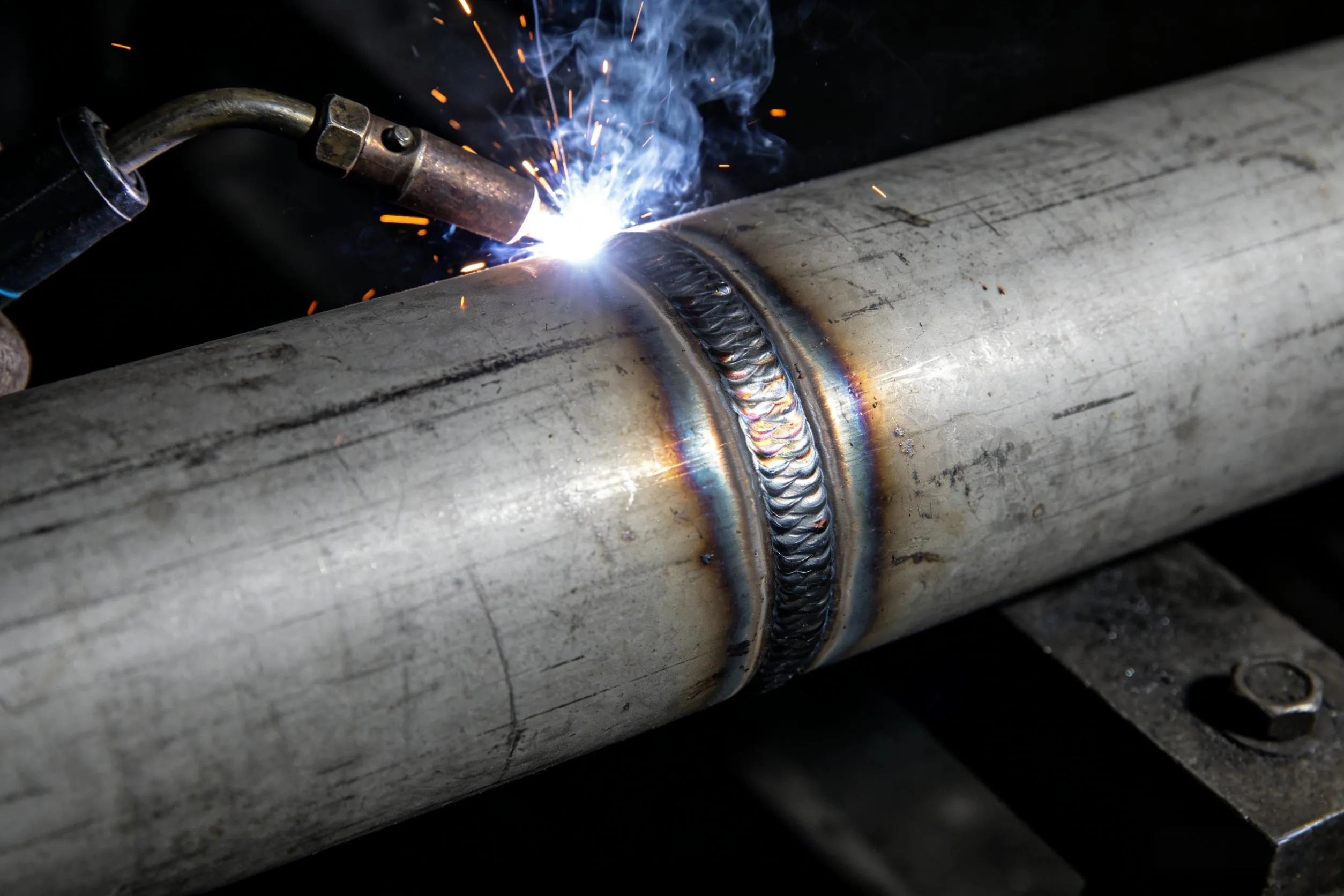
316 Stainless Steel Be Welded
What is 316 stainless steel, and why is it welded so often?
Can you weld 316 stainless steel easily?
What is the difference between 316 and 316L?
316 vs 316L stainless steel: which one is better for welding?
What are the best welding methods for 316 stainless?
TIG welding vs MIG welding vs stick welding for 316 stainless
What filler should you use for 316 stainless steel?
How does 316 compare with 304 and 304 stainless steel in welding?
What can go wrong when welding 316 stainless steel?
What are the best practices for welding and post-weld finishing?
Why B2B buyers choose professional Chinese stainless steel manufacturers
316 stainless steel is a common austenitic stainless steel in the 300 series. It contains chromium, nickel, and molybdenum, and that molybdenum addition is a big reason it performs so well in chloride-rich and other corrosive environments. Compared with 304 stainless steel, 316 usually offers better pitting and general resistance to corrosion, which is why engineers often specify it for marine parts, food equipment, chemical systems, and heat exchangers.
For B2B buyers, that matters in very practical ways. Industrial distributors want a reliable grade they can move in volume. Fabricators want a material that can be cut, formed, and joined into stable assemblies. OEM/ODM manufacturers want predictable quality for repeated production. Construction and infrastructure buyers want durable metal that performs in service. In all of those cases, 316 stainless steel contains the chemistry that helps it stay useful in demanding conditions.
From our experience as a professional stainless steel manufacturer and exporter based in China, customers do not ask only whether they can weld 316. They also ask whether the final joint will hold up in salt exposure, humidity, washdown service, or high-purity systems. That is the real buying question.
Yes, you can weld 316 stainless successfully, and in general it is considered weldable. Like other grades of stainless steel in the austenitic family, it is widely used in fabrication because it has good weldability and does not require the same preheat routines common with some hardenable steels. Outokumpu’s welding guidance and the Nickel Institute both describe austenitic stainless grades as readily weldable with conventional methods when the correct practices are followed.
That said, “easy to weld” does not mean “hard to ruin.” A poor welder can still overheat the joint, choose the wrong filler material, contaminate the surface, or create poor shielding. Then the finished part may look acceptable but perform badly. With stainless, appearance alone is not enough. You need a quality weld plus preserved surface chemistry.
So, the short answer is this: weld 316 with the right process, the right heat control, and the right consumables, and it is a very practical fabrication material.
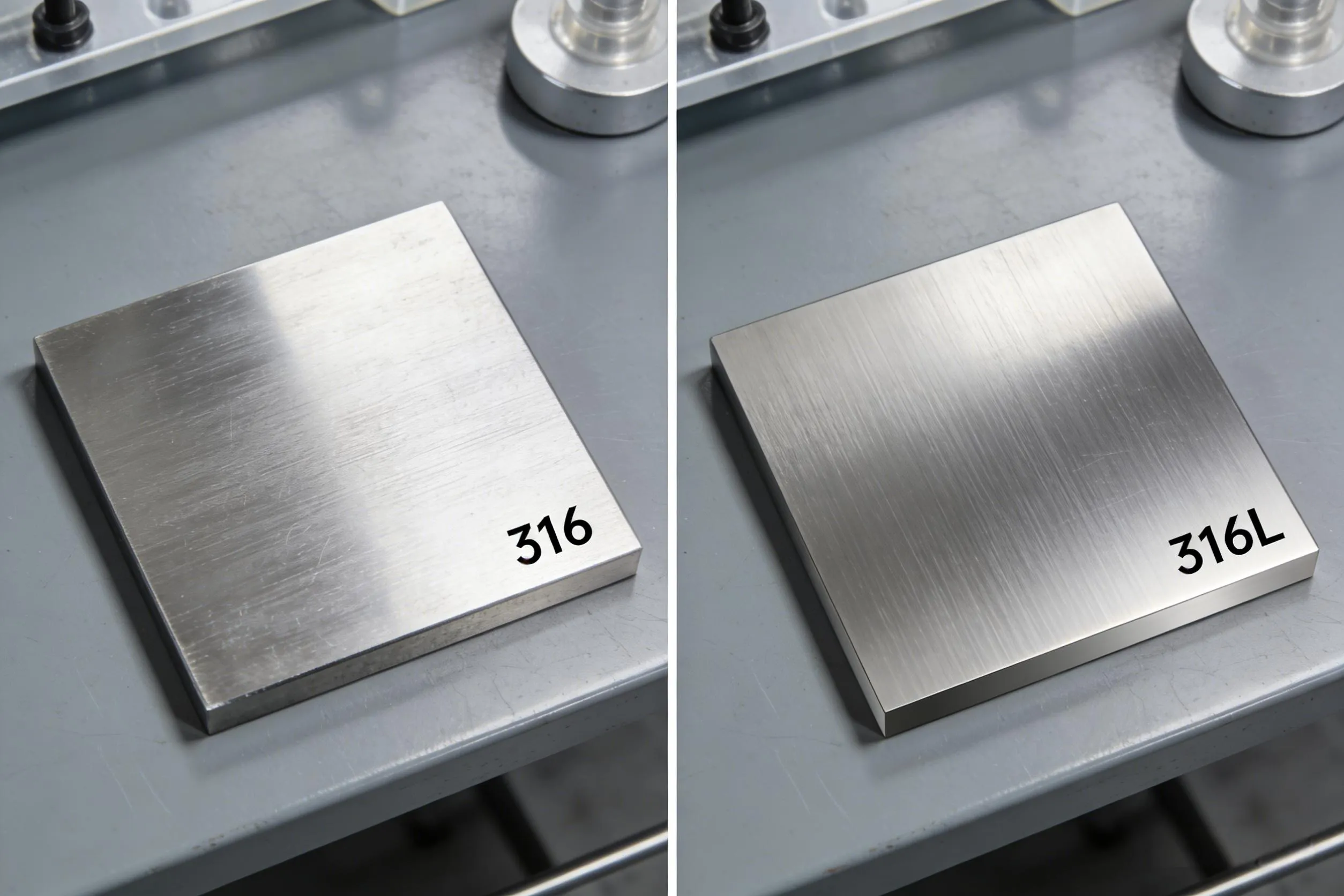
The main difference between 316 and 316L is carbon content. Standard 316 allows a higher carbon level than 316L, while 316L has a lower carbon content. That one change matters because lower carbon reduces the risk of harmful carbide precipitation during welding, which helps preserve corrosion behavior in and near the heat-affected zone. TWI explains that lower-carbon “L” grades are preferred where the best corrosion resistance after welding is required.
In simple terms, 316l and 316 may look similar on paper, but 316L is often the safer choice for welded fabrication. When a part will be welded and then exposed to aggressive service, buyers often choose low-carbon material to reduce the chance of weld decay and related loss of corrosion resistance near the joint.
This is why so many buyers today specify dual-certified material or go directly with 316l stainless steel. It gives them more flexibility in fabrication with a reduced risk of sensitization problems.
If the question is purely about post-weld corrosion performance, 316L usually wins. In the classic 316 vs 316l stainless steel comparison, the low-carbon version is generally preferred for welded assemblies because it is less likely to form chromium carbides during welding. That means better protection against local corrosion in the haz and nearby heat-affected areas.
That does not mean plain 316 cannot be welded. It can. But when buyers know welding is part of the job, many specifiers prefer 316l and 316 comparisons to end with 316L for welded service. This is especially true in piping, tank work, food systems, and chemical equipment.
A simple rule of thumb:
| Grade | Main advantage | Best fit |
|---|---|---|
| 316 | Good strength and corrosion performance | Noncritical or lower-risk welded assemblies |
| 316L | Low carbon and better post-weld corrosion behavior | Most welded stainless fabrication |
| 304 / 304L | Lower cost, good general use | Less demanding service than 316 |
For many projects, the most practical answer is: if you know you will weld it and the service is wet, chemical, or coastal, choose 316L.
316 vs 316L Stainless Steel
There is no single “best welding” method for every part. The right welding process depends on thickness, joint type, production speed, and final finish requirements. For most fabricators, tig welding, mig welding, and stick welding are the main choices.
TIG welding is often preferred for cleaner, more precise work. It uses a tungsten electrode and inert gas shielding, commonly argon, and it gives excellent control over heat and bead appearance. This makes it popular for tubing, thin sections, sanitary work, and visible joints.
MIG welding is usually faster and can be better for longer runs or production settings. It is common when throughput matters and section thickness supports it. Stick welding still has value for field work, repairs, and situations where portability matters more than cosmetic finish. Outokumpu and the Nickel Institute both recognize these conventional stainless welding methods as viable, provided consumables and parameters are selected properly.
Let’s make it practical.
TIG welding
Use TIG welding when you need precision, clean beads, and strong operator control. Many tig welders prefer it for thinner-gauge stainless steel, hygienic tubing, visible surfaces, and custom-fabricated parts. It is slower, but it often gives the best appearance and controlled heat input.
MIG welding
Use MIG or mig welding when productivity matters more. This is common in structural fabrications, repeated parts, medium-thickness sections, and shop environments using a consistent welding machine setup. It can be very efficient in various industries, especially for OEM production.
Stick welding
Use stick welding for site repairs, outdoor work, or when simple equipment matters. It is less elegant, but still useful. Skilled, experienced welders can produce sound joints, especially when conditions are not ideal for gas-shielded methods.
Quick comparison:
| Method | Best for | Main strength | Main caution |
|---|---|---|---|
| TIG | Thin to medium sections, sanitary or visible joints | Precision | Slower |
| MIG | Production and shop fabrication | Speed | Heat/spatter control |
| Stick | Field work and repair | Simplicity | Finish quality varies |
For 316-to-316 or 316 or 316l joints, a matching 316L-type filler metal is commonly used to maintain corrosion performance. If the goal is maximum corrosion resistance, using a compatible 316L consumable is the usual choice. Industry guidance also shows filler selection should consider the base metal, service environment, and cracking control.
This is where buyers can get confused. They hear numbers like 308, 308l, or 309l filler and assume all stainless filler works the same. It does not. For example, use 308 or 308L commonly for 304-to-304 welding, while 316/316L work usually calls for 316L-class consumables if corrosion performance must match the parent material. For dissimilar joints, such as carbon steel to stainless, 309L filler is often considered.
That is why filler selection should never be guessed. The right stainless steel filler supports both cracking resistance and long-term service performance.
The most common shop-floor comparison is 304 and 316. Both are austenitic grades and both are widely welded. But 316 contains molybdenum, and that usually gives it better performance in chloride-bearing and more corrosive service than 304 stainless. Nickel Institute guidance on stainless selection and chemical-process use reflects that 304L and 316L are both widely used, but 316L is favored where corrosion demands are higher.
In simple terms, 304 is great for general indoor, food, and light industrial use. 316 stainless is often chosen for harsher wet service, chemical exposure, and marine environments. That is why many buyers say 316 has more corrosion resistance than 316? That phrase is incorrect; the real comparison is that 316 has more corrosion resistance than 304 in many chloride-related cases.
For welding, both can be joined successfully, but 316/316L may need a bit more attention to filler selection if you want the weld metal to retain matching corrosion properties.
The biggest risks are overheating, contamination, poor shielding, and wrong filler choice. If the weld area is held in a sensitizing range too long, carbides can form at grain boundaries and create weld decay. TWI notes that the lower the carbon level, the lower the likelihood of this becoming a real issue during normal welding cycles, which is exactly why 316L is so widely specified.
There are also cracking concerns. The Nickel Institute identifies two key welding objectives for austenitic stainless: preserving corrosion resistance and preventing cracking. Poor procedure can increase the chance of hot cracking, especially if weld metal chemistry and restraint conditions are not managed properly.
Surface contamination is another hidden problem. If stainless is handled with tools used on mild steel or carbon steel, iron contamination can contribute to staining and surface corrosion later. The weld may look fine on delivery day, then disappoint in service.
Here are the best practices for welding 316 and 316L in real shop use:
Choose 316L when welded corrosion performance matters
Match the filler to the joint and service conditions
Keep heat input controlled
Maintain clean surfaces and dedicated stainless tooling
Use proper shielding gas, often argon-based for TIG
Avoid unnecessary overheating
Clean the weld after joining
Restore the surface with passivation where required
Post-fabrication finishing matters more than many buyers realize. After welding, remove heat tint and surface contamination. In corrosion-critical service, proper post-weld cleaning and passivation help restore the protective stainless surface. Industry welding and stainless guides consistently stress that weld quality is not only about fusion — it is also about preserving surface condition and corrosion behavior.
A practical shop sequence looks like this:
Material verification → Joint prep → Filler selection → Controlled welding → Cleaning → Inspection → Passivation if required
That sequence is one of the simplest ways to protect both the appearance and the service life of the fabricated part.

Square Stainless Steel Tube
For B2B buyers, the question is rarely just “Can this be welded?” The real question is: can the supplier provide the right grade, the right tolerances, the right cut size, and the right documentation for repeat fabrication?
Industrial distributors and steel wholesalers care about stable inventory and factory pricing. Contractors and fabricators want predictable plate, sheet, pipe, or profile quality. OEM/ODM manufacturers need tailored components with repeatable mechanical properties, tensile strength, and surface finish. Importers want a partner who understands export packing, traceability, and communication.
That is where we add value. As a professional stainless steel manufacturer and exporter based in China, we support buyers with consistent material sourcing, custom cutting, processing support, and quality-focused supply for various industries. When buyers need 316L sheet, tube, or fabricated parts for high temperature applications, washdown equipment, marine use, or architectural projects, they are not only buying metal. They are buying lower risk.
Can 316 stainless be welded with TIG?
Yes. TIG welding is one of the most common ways to weld 316 and 316L because it offers excellent heat control and clean results. It is especially useful for thin sections, tubing, and visible welds.
Is 316L better than 316 for welding?
Usually yes. Because of its lower carbon content, 316L is generally preferred for welded service where corrosion performance is important. It reduces the chance of sensitization and related corrosion issues near the weld.
Can you MIG weld 316 stainless steel?
Yes. MIG welding can be used successfully for 316 stainless steel, especially in shop production where speed matters. Correct filler and process settings are important.
What filler is used for 316 stainless?
For 316-to-316 or 316L-to-316L joints, 316L-type filler is commonly selected when corrosion performance must be maintained. Dissimilar joints may call for other fillers such as 309L depending on the materials involved.
Is 316 harder to weld than 304?
Not dramatically, but filler and corrosion requirements are more demanding if you need the weld zone to keep 316-level service performance. Both 304L and 316L are widely weldable.
Does 316 stainless need post-weld passivation?
Often yes, especially in corrosion-sensitive service. Cleaning and passivation can help restore the protective surface after welding and heat tint removal.
Yes, 316 stainless steel can be welded.
316L is usually preferred for welded corrosion-resistant service because of its lower carbon level.
TIG welding, MIG welding, and stick welding can all work when procedure and filler are chosen correctly.
316 offers stronger chloride-related corrosion performance than 304 stainless steel in many applications because of molybdenum.
Wrong heat input, poor filler choice, contamination, and bad post-cleaning can damage weld performance.
Good welding practice is not just about fusion. It is also about preserving corrosion resistance and finishing the weld properly.
For B2B buyers, a reliable stainless supplier helps reduce fabrication risk and improve project consistency.
If you need 316 or 316L stainless steel tubes for fabrication, contact us for fast quoting and custom support.
Can 316 Stainless Steel Be Welded? Best Practices for Welding 316 Stainless, 316L, and 316L Stainless Steel
Can 304 Stainless Steel Rust? 304 vs 316 Stainless Steel, Corrosion Resistance, and How to Prevent Rust
What Are the Two Basic Types of Tubing? Welded Tube vs Seamless Tube Explained
Which Steel Is Best for Railing? A Stainless Steel Railing System Guide (304 vs 316 vs 2205)