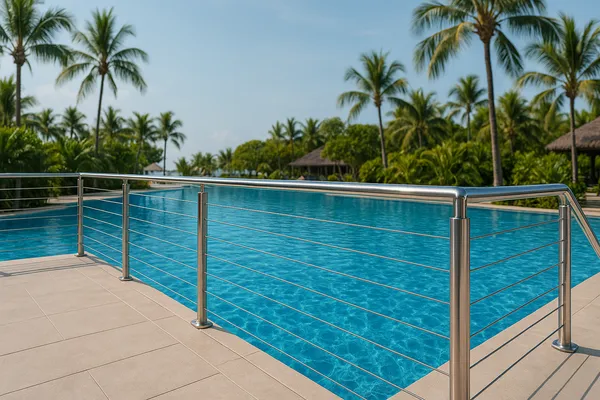
This guide provides a technical overview for the proper specification, installation, and maintenance of stainless steel pool railing systems. It is intended for architects, contractors, and property owners seeking to ensure long-term safety, durability, and aesthetic value in poolside applications.
I. Introduction: The Function and Material Science of Stainless Steel Pool Railings
A pool railing is a critical safety component, providing stable support for entry and exit while also serving as a protective barrier. The material specified for this application must withstand constant exposure to water, UV radiation, and corrosive chemicals. Stainless steel has become the industry-standard material due to its inherent properties.
The primary advantages of a correctly specified stainless steel pool railing system include:
- Exceptional Structural Integrity: The high tensile strength of stainless steel ensures the railing remains rigid and secure under load, providing reliable support.
- Superior Corrosion Resistance: Specific grades of stainless steel are engineered to resist the corrosive effects of chlorine, saline environments (saltwater), and atmospheric exposure.
- Modern and Clean Aesthetics: Stainless steel offers a timeless, high-end appearance with finishes like brushed stainless steel finish or polished stainless steel finish that complement contemporary pool designs.
- Minimal Maintenance Requirements: Unlike other materials, stainless steel does not require painting or sealing. Its non-porous surface is a hygienic railing material that is easy to clean, reducing long-term upkeep costs.
II. The Critical Specification: Selecting Stainless Steel Grade 304 vs. 316
The single most important decision in specifying a long-lasting pool handrail is the selection of the correct stainless steel grade. Failure to do so is the leading cause of premature corrosion and system failure. The choice primarily comes down to Stainless Steel 304 and Stainless Steel 316, both of which are commonly formed into a stainless steel tube for railing fabrication.
The key metallurgical difference is the addition of Molybdenum to the 316 alloy.
- Grade 304 Stainless Steel: This is a common austenitic stainless steel containing Chromium and Nickel, offering good corrosion resistance in mild atmospheric conditions. However, it lacks sufficient defense against chloride-induced corrosion, making it unsuitable for the majority of pool environments.
- Grade 316 “Marine Grade” Stainless Steel: Considered the industry standard for pool applications, this grade contains 2-3% Molybdenum. This addition significantly enhances its resistance to pitting and crevice corrosion caused by chlorides found in both traditional and saltwater pools. For this reason, it is referred to as marine grade stainless steel. Related grades include 316L marine grade steel (with lower carbon content for better weldability) and Duplex 2205 Stainless Steel, which offers even higher strength and corrosion resistance for the most demanding coastal applications. When sourcing materials, specifying a 316 bar, 316 stainless steel rod, or 316 stainless steel round bar is essential for structural components. In any comparison of 304 vs 316 stainless steel for outdoor railing systems, Grade 316 is the correct technical choice.

304 vs 316 stainless steel comparison
Technical Comparison: Grade 304 vs. Grade 316
| Technical Attribute | Grade 304 Stainless Steel | Grade 316 “Marine Grade” Stainless Steel | Engineering Implication for Pool Railings |
| Chloride Resistance | Susceptible to pitting corrosion | Excellent resistance due to Molybdenum | Grade 316 is mandatory to prevent premature staining and structural compromise in any pool environment. |
| Recommended Use | Interior architectural features, freshwater | Swimming pools, coastal installations, marine hardware | The application environment dictates the material. Pools are considered corrosive environments. |
| Lifecycle Cost | Lower initial material cost | Higher initial material cost | The superior lifespan and minimal maintenance of 316 provide a lower total cost of ownership, avoiding replacement. |
| Maintenance Protocol | Requires frequent cleaning to mitigate surface rust | Requires only periodic rinsing to remove deposits | A low-maintenance pool railing is achieved with Grade 316, reducing long-term labor costs. |
III. Design Configurations and System Types
Beyond material grade, the design of the railing system impacts both function and aesthetics. Configurations range from simple, functional handrails to complex architectural balustrades.
- Standard Handrail Profiles: These are designed for safe ingress and egress. Common profiles include Figure 4 Rails, P-Rails, and traditional stair railings for pools. A lap pool entry rail or grab bars for pools are essential functional components of a complete stainless steel handrail system.
- Architectural and Custom Designs: For a more integrated aesthetic, custom pool railings can be fabricated. Modern pool railing ideas often feature minimalist profiles, such as a plunge pool handrail or designs for an infinity pool railing design.
- Integrated Railing Systems: These systems combine multiple materials for a complete barrier solution.
- A pool handrail and ladder combo with non-slip pool ladder treads is a practical, all-in-one unit.
- Cable railing for pools utilizes high-strength stainless steel cable railing to provide a secure barrier with minimal visual obstruction.
- Glass panel pool fencing, supported by stainless steel railing posts, offers maximum transparency and a sleek, modern look. This is a very stylish pool fencing option.

Design Configurations and System Types
IV. Common Specification and Procurement Mistakes to Avoid
From an engineering and manufacturing perspective, several common errors can compromise the integrity and lifespan of a stainless steel pool railing project.
- Specifying Grade 304 for Outdoor/Pool Use: This is the most frequent and costly mistake. While appearing identical to 316 initially, Grade 304 will inevitably exhibit “tea staining” and pitting corrosion when exposed to chlorides, leading to aesthetic failure and potential structural issues.
- Overlooking the Importance of Surface Finish: A rough surface finish (e.g., a low-grit polish) can trap salt, dirt, and chemical deposits. These trapped contaminants can break down the steel’s protective passive layer and initiate corrosion, even on Grade 316. A smooth, #4 or higher brushed stainless steel finish or a mirror polished stainless steel finish is easier to clean and significantly more resistant to corrosion.
- Using Incorrect Fasteners and Hardware: Mounting a 316 stainless steel railing with galvanized or Grade 304 hardware will cause galvanic corrosion. This is an electrochemical reaction where the less noble metal (the fastener) corrodes rapidly. All components, including pool railing anchors, bolts, and handrail brackets, must be of a compatible grade, ideally 316.
- Improper Installation and Anchoring: A railing’s safety is dependent on its mounting. Insufficient anchor depth, incorrect use of cement versus epoxy, or failure to properly bond the railing to the deck’s rebar (as required by many electrical codes) can lead to a catastrophic failure of the entire system.
V. Installation and Mounting Considerations
Proper installation is critical for both safety and longevity. A DIY pool railing installation is possible but requires a high degree of precision.
- Installation Methodologies: The primary methods are deck-mounted (using a pool railing base plate and anchors) and in-ground (core-drilled). The choice depends on the deck structure and desired aesthetic. A deck mounted handrail is common, while an in-ground pool handrail offers a cleaner look. Weldless railing systems using mechanical railing flanges and fittings are often preferred for their ease of assembly.
- Professional Installation: For liability and safety assurance, professional installation is recommended. Installers are familiar with local code requirements, including proper bonding and grounding to prevent electrical shock. They possess the correct tools for drilling into concrete and setting pool railing hardware kit components securely.
VI. Maintenance Protocols for Longevity
While highly durable, stainless steel requires minimal maintenance to retain its appearance and corrosion resistance. The goal is to keep the surface free of deposits that can compromise its protective chromium oxide layer.
- Routine Cleaning: The most effective procedure for stainless steel pool railing maintenance is regular rinsing with fresh water. This removes chloride deposits from pool water. For a more thorough cleaning, use a mild soap and a soft cloth, always wiping in the direction of the grain, then rinse and dry completely.
- Stain Remediation: If surface stains appear (often due to external contaminants), a specialized stainless steel cleaner can be used. For any pool railing rust removal, avoid abrasive materials like steel wool or cleaners containing chlorides, as they will permanently damage the surface.
- Passivation: This is a chemical process that enhances the corrosion resistance of stainless steel by removing free iron from the surface and strengthening the passive layer. While typically performed during manufacturing, it can also be done on-site to restore a railing that has begun to show signs of corrosion.
VII. Compliance with Safety Standards and Building Codes
All swimming pool safety railing installations must comply with national and local building codes. These codes are not suggestions; they are legal requirements to prevent accidents.
- Key Regulatory Standards: In the United States, standards are often dictated by the International Building Code (IBC) and the Americans with Disabilities Act (ADA) for public facilities. The Access Board provides technical guidance on ADA standards. Organizations like ASTM International set material and testing standards, while the National Swimming Pool Foundation (NSPF) promotes best practices.
- Common Code Requirements:
- Pool Railing Height Requirements: Pool barrier fences must typically be a minimum height (e.g., 48 inches).
- Handrail Dimensions: Handrails for stairs must be at a specific height (e.g., 34-38 inches) and be graspable.
- Load Requirements: Railings must be able to withstand significant force without failing.
- Local Jurisdiction: Always consult the local building authority to ensure compliance with all regional codes before beginning installation. This is critical for both a residential pool railing and a commercial pool railing at a location like a hotel.
VIII. A Comparative Material Analysis
While other materials are available, they present technical trade-offs in the demanding pool environment. The versatility of stainless steel also allows for unique architectural profiles beyond standard shapes, such as oval elliptical stainless steel tubes, providing both aesthetic distinction and ergonomic benefits.
| Material | Advantages | Disadvantages vs. Stainless Steel 316 |
| Aluminum pool railing | Lightweight, lower initial cost | Lower strength, susceptible to pitting/corrosion in saltwater, finish can oxidize. |
| Vinyl-coated / Thermoplastic coated rails | Cool to the touch, resistant to salt | The coating can be damaged, leading to underlying metal corrosion. Less structural rigidity. |
| Galvanized steel railing | Strong, lower cost than stainless | Zinc coating will eventually wear away, leading to rust. Rougher surface finish. |
| Wrought iron pool fencing | Traditional aesthetic | Highly susceptible to rust; requires frequent sanding and repainting (high maintenance). |
IX. Conclusion: Specifying for Long-Term Performance
The selection of a stainless steel pool railing is an investment in long-term safety, asset protection, and aesthetic value. The critical factor for success is the specification of Grade 316 or a higher-performing alloy. While Grade 304 may offer initial cost savings, it is technically unsuited for the corrosive environment of a swimming pool and will lead to premature failure. By pairing the correct material with a quality surface finish, proper installation, and a simple maintenance routine, a stainless steel railing system will deliver reliable performance and a pristine appearance for decades.
As a specialized manufacturer, partnering with an expert who understands the nuances of material grades and fabrication for corrosive environments is key to a successful project outcome.
About Our Expertise
The engineering and fabrication teams at Jiuguang Metal possess extensive experience in the manufacturing and application of stainless steel for architectural and marine environments. Our expertise encompasses material science, modern fabrication techniques, and a deep understanding of the performance requirements for installations in corrosive settings, including commercial and residential swimming pools. This guide is based on our collective project experience and is intended to address frequently asked technical questions from our clients.