Choosing the wrong square tubing can cause weak welds, poor fit, corrosion problems, and higher project costs. A tube may look simple, but its steel grade, wall thickness, ASTM specification, tolerance, and processing quality matter. The right choice starts with understanding the application.
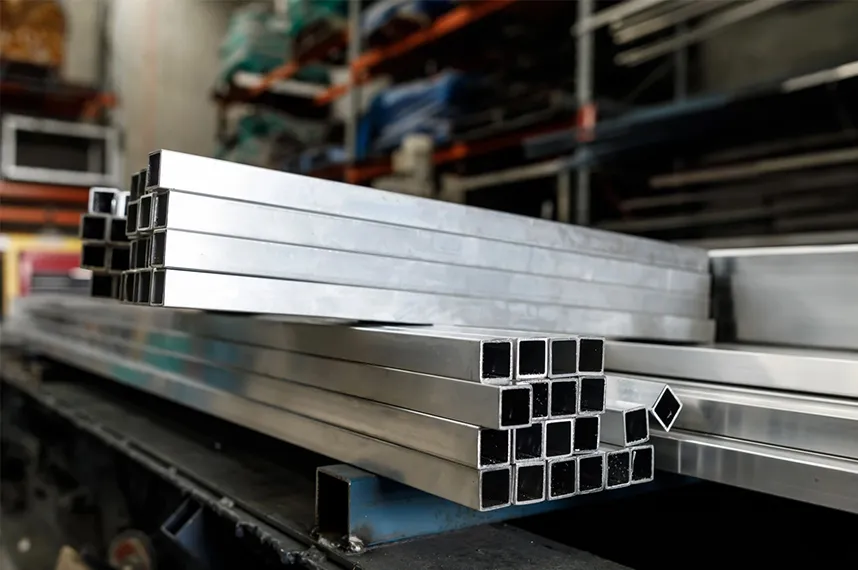
Square tubing is usually made from carbon steel, stainless steel, alloy steel, galvanized steel, or aluminum, depending on the application. For structural use, square steel tubing is commonly supplied as ASTM A500 hollow structural section tubing. For mechanical use, ASTM A513 electric-resistance-welded tubing is often used. The best steel type depends on strength, corrosion resistance, size, wall thickness, tolerance, weldability, and fabrication needs.
What type of steel is square tubing?
What is square steel tubing used for?
Is square tubing structural or mechanical steel?
What is ASTM A500 square tubing?
What is A513 mechanical steel tubing?
How do carbon steel, stainless steel, alloy steel, and galvanized square tube compare?
What size, wall thickness, and dimension should buyers check?
How is square steel tube manufactured and processed?
What processing services can a stainless steel supplier provide?
How should B2B buyers choose a square tubing supplier?
Square tubing is a hollow steel tube with a square cross-section. It can be made from different metals, but the most common material is carbon steel. Buyers also use stainless steel, alloy steel, galvanized steel, and aluminum square tubing when the project needs corrosion resistance, lighter weight, special strength, or decorative finish.
For construction and structural support, square tubing is often called structural tubing or HSS, which means hollow structural section. AISC defines HSS as manufactured hollow steel sections, usually circular, rectangular, or square in cross-section, and notes that U.S. HSS sections commonly conform to ASTM A500 or A1085.
For B2B buyers, the key point is simple: square tubing is not one single material. It is a shape. The steel type, grade, wall thickness, tolerance, surface treatment, and ASTM specification decide whether the tube is suitable for a frame, machine part, building structure, rack, fence, equipment base, or custom component.
Square steel tubing is popular because its shape is strong, clean, and easy to fabricate. The flat sides make it easier to cut, drill, weld, bolt, and connect with other metal parts. It is also easier to align than round tube in many frame and fabrication projects.
Common applications include:
| יישום | Why Square Tubing Works |
|---|---|
| Construction frames | Good structural support and clean shape |
| Industrial racks | Easy to weld and assemble |
| Machinery frames | Stable shape and good fabrication control |
| Equipment bases | Strong and easy to cut to size |
| Fencing and gates | Good appearance and durability |
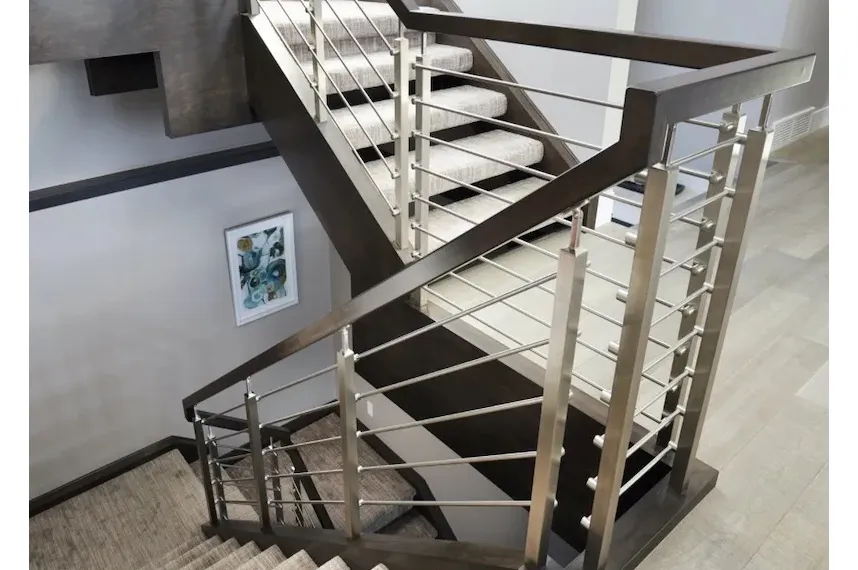
| Handrails and guardrails | Straight lines and easy connection |
| Trailer frames | Strong shape for metal fabrication |
| OEM components | Custom size and processing services available |
| Decorative structures | Clean modern appearance |
| Agricultural equipment | Practical, weldable, and versatile |
Square tubing is used in construction, mechanical fabrication, industrial equipment, furniture, transportation, agriculture, and specialty manufacturing. Its versatility comes from the balance between shape, strength, and processing convenience.
Square tubing can be either structural or mechanical, depending on the specification and application. This distinction is important because structural steel tubing and mechanical steel tubing are not always produced for the same performance requirements.
Structural tubing is used where the tube carries load as part of a building, bridge, support frame, column, truss, rack, or other structural component. Mechanical tubing is used for machine parts, equipment frames, precision components, ornamental products, and fabricated assemblies where dimension, surface, formability, or processing tolerance may matter more than building-code structural design.
A simple comparison:
| סוג | Main Use | Common Specification |
|---|---|---|
| Structural tubing | Buildings, frames, bridges, load-bearing structures | ASTM A500, ASTM A1085 |
| Mechanical tubing | Machinery, equipment, OEM parts, precision fabrication | ASTM A513 |
| Stainless square tube | Corrosion-resistant structures, food equipment, architecture | ASTM or project-specific standard |
| Galvanized square tube | Outdoor frames, fences, construction accessories | Zinc-coated steel tube |
| Aluminum square tube | Lightweight structures and non-ferrous fabrication | Aluminum alloy specification |
If the project drawing calls for structural tubing, buyers should not substitute a random mechanical tube without engineering approval. The same size may look similar, but the specification may be different.
ASTM A500 is one of the most common standards for carbon steel structural tubing. ASTM describes A500 as a specification covering cold-formed welded and seamless carbon steel round, square, rectangular, or special-shape structural tubing.
This standard is widely used for hollow structural sections in construction, frames, supports, bridges, buildings, and general structural purposes. The Steel Tube Institute explains that HSS conforming to A500 are cold-formed carbon steel tubes made by welded or seamless processes, and that the specification covers round, rectangular, and square shapes for welded, riveted, or bolted construction.
For buyers, ASTM A500 square tubing is often the right choice when the tube must act as a structural member. It is commonly selected for columns, braces, trusses, frames, platforms, building supports, and industrial structures.
ASTM A513 is a common specification for electric-resistance-welded mechanical tubing. ASTM states that A513 covers round, square, rectangular, and special-shape electric-resistance-welded carbon and alloy steel mechanical tubing made from hot-rolled or cold-rolled steel.
A513 tubing is often used for mechanical and fabricated products. It may be selected when buyers need closer dimensional control, smoother appearance, or specific processing performance for machinery, frames, furniture, automotive components, tools, or OEM parts.
In simple terms:
Different steel types solve different problems. A carbon steel צינור מרובע is strong, practical, and cost-effective. A stainless steel square tube offers better corrosion resistance and a cleaner surface. Alloy steel tubing can provide special strength or performance. Galvanized square tube adds zinc protection for outdoor or humid environments.
| Material Type | Main Advantage | Common Use |
|---|---|---|
| Carbon steel square tubing | Strong, weldable, cost-effective | Construction, frames, racks, supports |
| Stainless steel square tubing | Corrosion resistance and clean finish | Food equipment, architecture, marine, chemical use |
| Alloy steel square tubing | Special strength or mechanical performance | Machinery and heavy-duty parts |
| Galvanized square tubing | Zinc coating helps resist corrosion | Outdoor frames, fences, agricultural structures |
| Aluminum square tubing | Lightweight and easy to handle | Displays, light frames, transport parts |
Carbon steel is often the default option for many structural and industrial projects. Stainless steel is better when corrosion, hygiene, appearance, or long service life matters. Galvanized steel is useful when buyers need outdoor durability but want lower cost than stainless steel.
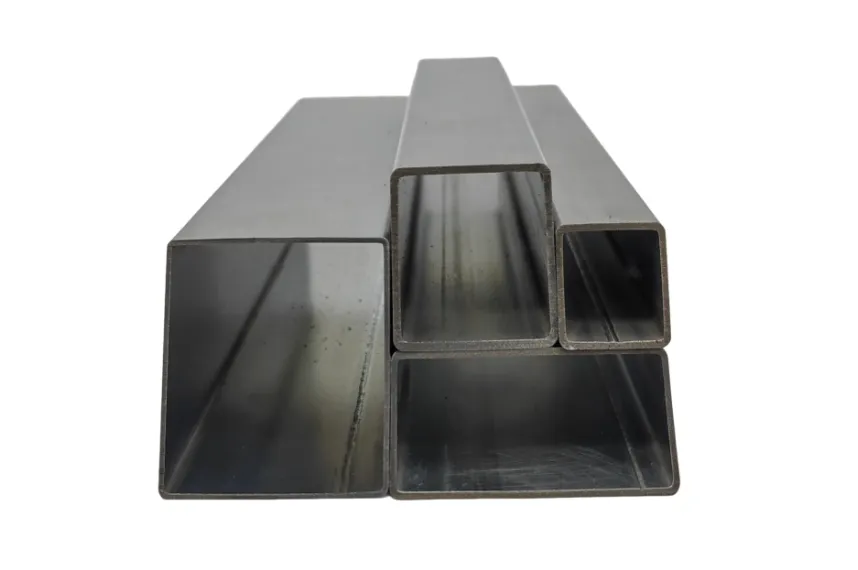
Square tubing is specified by outside size and wall thickness. For example, a buyer may request a 50 mm × 50 mm square tube with 3 mm wall thickness, or a 2 inch × 2 inch square tube with 0.125 inch wall thickness. Both size and wall thickness affect strength, weight, price, and fabrication behavior.
Key dimensions include:
| Specification Item | What It Means |
|---|---|
| Outside size | Width and height of the square tube |
| עובי דופן | Thickness of the tube wall |
| אורך | Standard mill length or custom cut length |
| סובלנות | Allowed variation in size, wall, straightness, and shape |
| Corner radius | Rounded corner shape after forming |
| גימור פני השטח | Black, pickled, galvanized, polished, brushed, etc. |
| Weight per meter | Helps calculate freight and project cost |
| Straightness | Important for frames and precision fabrication |
A larger size does not always mean better. A tube with poor wall thickness control may create welding or fitting problems. A tube with poor tolerance may be hard to assemble in OEM production. A tube with the wrong surface finish may create corrosion or appearance issues.
Many square steel tubing products are made from flat steel strip. The strip is formed into shape, welded, sized, straightened, cut, and inspected. Welded tubing is common because it is efficient and suitable for many structural and mechanical applications.
A basic production flow may include:
Some tubing may also be seamless, but seamless square tubing is less common and often more costly. For many construction and industrial uses, welded square steel tube is practical and widely accepted when made to the correct specification.
A professional supplier does more than sell inventory. B2B buyers often need processing services to reduce their own fabrication time. This is especially true for industrial distributors, steel wholesalers, engineering contractors, fabricators, OEM/ODM manufacturers, construction companies, importers, and buying offices.
Common processing services include:
| Processing Service | Buyer Benefit |
|---|---|
| Cut to size | Saves workshop labor and improves fit |
| Saw cutting | Clean length control |
| Drilling | Supports bolt connection and assembly |
| Welding support | Helps with fabricated parts |
| Surface polishing | Improves appearance and corrosion resistance |
| Galvanize or coating | Improves outdoor durability |
| Deburring | Reduces sharp edges |
| Custom packing | Protects material during export |
| Test reports | Supports quality verification |
| Mixed-size loading | Helps distributors manage inventory |
כמקצוען נירוסטה manufacturer and exporter based in China, we support buyers that need consistent quality, competitive factory prices, custom-cut stainless steel, tailored stainless steel components, and reliable export supply. For many customers, stable delivery and processing capability are just as important as the tube price.
A good square tubing supplier should understand material, specification, size, tolerance, surface, application, and export requirements. A low price is not enough if the tube arrives with defects, wrong wall thickness, poor packing, or missing test reports.
Before ordering, buyers should confirm:
| Buyer Question | מדוע זה חשוב |
|---|---|
| What steel type is required? | Carbon steel, stainless steel, alloy steel, galvanized steel |
| Is the tube structural or mechanical? | Decides ASTM A500, A513, or other specification |
| What size and wall thickness are needed? | Defines strength, weight, and cost |
| What tolerance is required? | Important for fabrication and OEM use |
| Is welding or bending required later? | Affects material and process selection |
| Is corrosion resistance needed? | May require stainless or galvanized tube |
| What surface finish is required? | Important for appearance and application |
| Are test reports needed? | Supports quality and compliance |
| Is cut-to-size processing required? | Saves buyer processing time |
| What packing is suitable for export? | Reduces shipping damage |
A reliable supplier should ask about your application before quoting. A tube for a decorative frame, a machine base, a construction column, and a stainless food equipment frame may all require different material choices.
Square tubing should be checked before use, especially for structural and OEM projects. Defects can affect strength, welding, appearance, and assembly.
Common defects include:
For distributors and wholesalers, defect control affects resale value. For OEM manufacturers, dimensional defects can stop assembly lines. For construction and infrastructure developers, structural defects can create safety and compliance risk.
A fabricator needed square steel tubing for an equipment frame. At first, the buyer asked only for size and price. After reviewing the drawing, we found that the project required better tolerance, clean weld performance, and consistent wall thickness because the frame would be assembled with other precision parts.
The final recommendation was:
| Requirement | Recommended Choice |
|---|---|
| Load-bearing frame | Structural steel tubing |
| Welded assembly | Weldable carbon steel tube |
| Precision fit | Tighter dimension tolerance |
| Outdoor use | Galvanized or coated surface |
| Export order | Bundled packing with protection |
| Quality verification | Mill test reports and inspection |
This case shows why square tubing selection should start from the application. The right tube is not only a square shape. It must match strength, processing, tolerance, and working environment.
What type of steel is square tubing?
Square tubing can be made from carbon steel, stainless steel, alloy steel, galvanized steel, or aluminum. Carbon steel square tubing is common for structural and industrial use, while stainless steel square tubing is used when corrosion resistance or clean appearance is needed.
Is square tubing structural steel?
Square tubing can be structural steel when it is produced to a structural specification such as ASTM A500. It is often used for frames, columns, supports, racks, and construction components.
What is ASTM A500 square tubing?
ASTM A500 square tubing is cold-formed welded or seamless carbon steel structural tubing used for structural applications. It covers round, square, rectangular, and special shapes.
What is A513 tubing used for?
A513 tubing is electric-resistance-welded carbon or alloy steel mechanical tubing. It is commonly used for machinery, OEM parts, frames, furniture, and mechanical components.
Is square tubing stronger than round tubing?
It depends on the load direction and design. Square tubing is easier to connect to flat surfaces and works well in frames. Round tubing may perform better in some torsional or fluid applications. Engineers should select the shape based on the structure.
Can square steel tubing be galvanized?
Yes. Square steel tubing can be galvanized to improve corrosion resistance. Galvanized square tube is often used for outdoor frames, fences, gates, agriculture, and construction accessories.
Can a supplier cut square tubing to size?
Yes. Many suppliers provide cut-to-size processing, saw cutting, deburring, drilling, polishing, and packing services for square tubing orders.
Square tubing is a hollow tube with a square cross-section.
It can be made from carbon steel, stainless steel, alloy steel, galvanized steel, or aluminum.
Carbon steel square tubing is common for construction, frames, racks, and industrial use.
Stainless steel square tubing is better for corrosion resistance, hygiene, and appearance.
ASTM A500 is commonly used for structural square tubing.
ASTM A513 is commonly used for mechanical steel tubing.
Size, wall thickness, tolerance, surface finish, and specification must be confirmed before ordering.
Square steel tubing is versatile and used in construction, machinery, OEM production, frames, supports, and metal fabrication.
A reliable supplier should provide stable inventory, processing services, test reports, export packing, and technical support.
For B2B buyers, the best square tubing choice depends on application, load, corrosion environment, fabrication method, and budget.
ווטסאפ